
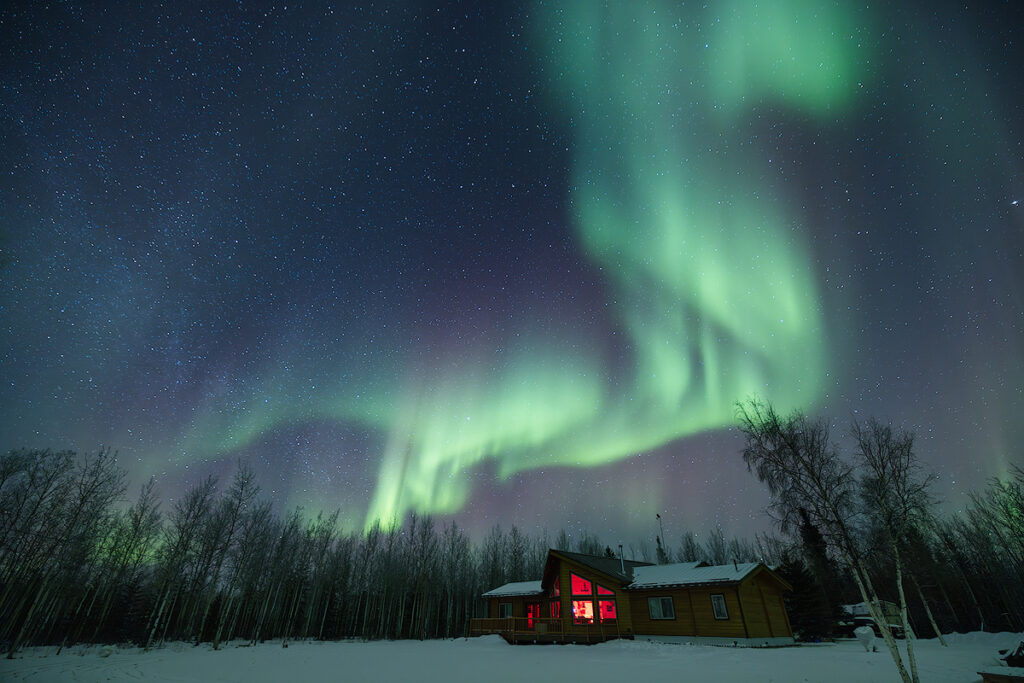
There’s a phrase that dominates every northern lights tour listing, every travel blog, every Instagram ad targeting Alaska visitors: chasing the northern lights. It sounds thrilling. Adventurous. Like you’ll be racing through the dark Alaskan wilderness in hot pursuit of some glowing green ribbon streaking across the sky. That image — that romantic, cinematic version of the experience — is exactly what sells tours.
It’s also what sets people up for disappointment.
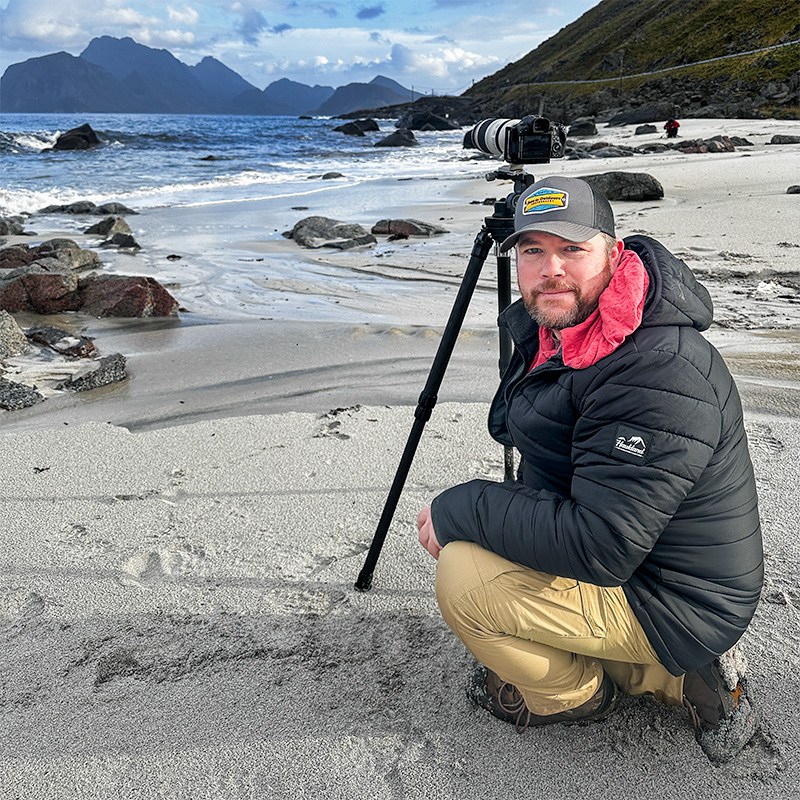
Michael Schultz has spent over twenty years watching the aurora from Alaska’s interior, first as a child and now as a photographer who guides small-group tours from a private aurora viewing lodge outside Fairbanks. He’s seen what happens when visitors arrive expecting a high-speed chase and get something very different instead. He’s watched enough people leave frustrated — not because the lights didn’t show, but because the tour they chose never gave the aurora a fair chance to appear.
Seeing the northern lights has far more to do with patience than pursuit. Understanding that distinction before you book a tour could be the difference between watching the sky erupt in green and violet overhead and spending a long, cold night staring out the window of a crowded bus.
For more information on exclusive aurora experiences, visit the Best Way to See Northern Lights of Alaska.
The Science Behind the Northern Lights
The aurora borealis begins ninety-three million miles away, on the surface of the sun. Solar flares and coronal mass ejections release streams of charged particles — what scientists call the solar wind — that race across space toward Earth. When that solar wind reaches our planet’s magnetic field, known as the earth’s magnetic field, it acts as a protective shield against harmful solar radiation, preserving life on Earth. The particles spiral along magnetic field lines toward the poles, enabling the formation of auroras.
How the Aurora Gets Its Color
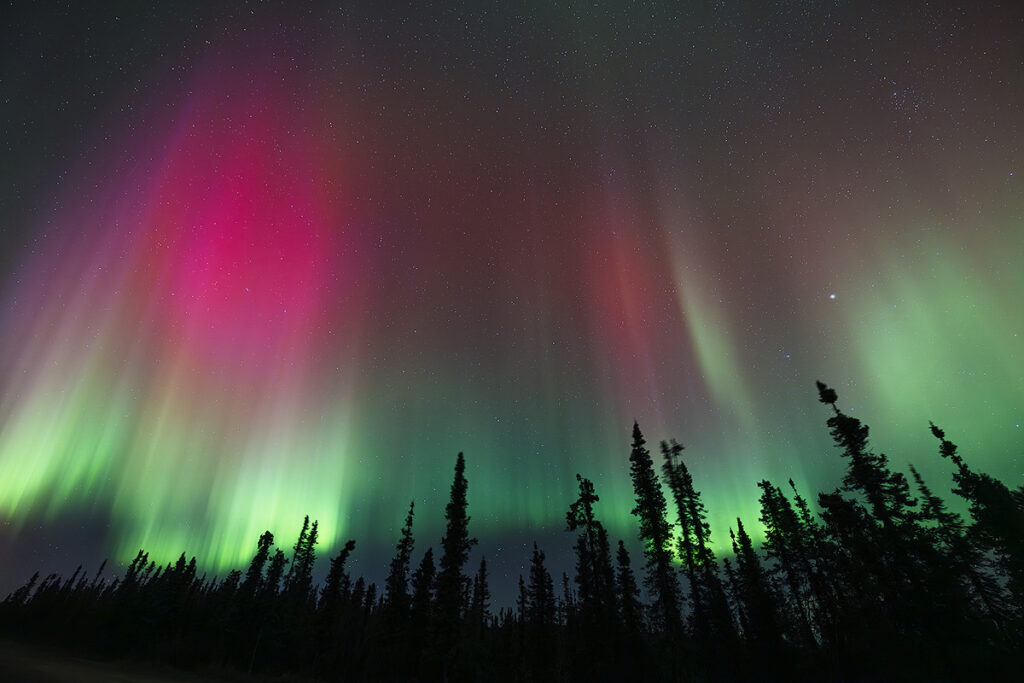
As those charged particles collide with oxygen and nitrogen molecules in the upper atmosphere — roughly sixty to two hundred miles above the surface — each collision produces light. Oxygen glows green at lower altitudes and shifts to rare reds higher up. Nitrogen contributes the blues and deep purples that pulse across the sky during intense geomagnetic storms.
The Auroral Oval and Why Fairbanks Sits Beneath It
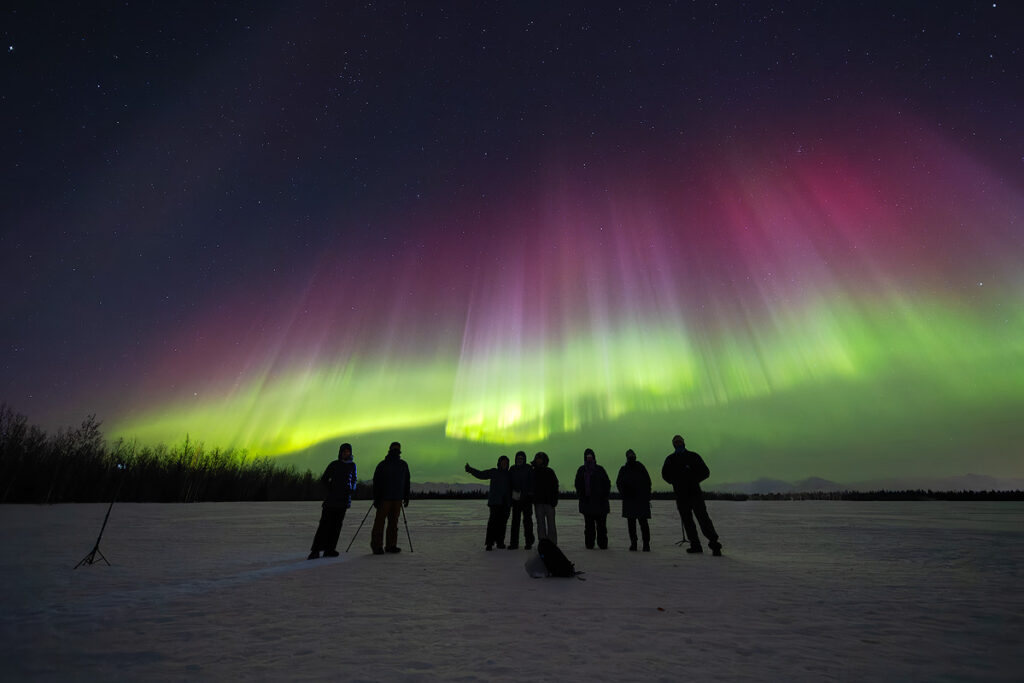
All of this activity concentrates in a ring-shaped zone around the magnetic poles called the auroral oval. Fairbanks, Alaska sits directly beneath this oval, which means the aurora appears overhead rather than on the distant horizon — a significant advantage over locations further south where even strong displays hug the skyline. Similarly, traveling further north in regions like Scotland also increases your chances of seeing the northern lights due to darker skies and better viewing conditions. This positioning is why Alaska’s interior remains one of the most reliable places in the world to see the northern lights during the aurora season, from late August through mid-April.
Why Understanding the Science Matters for Viewing
Michael has spent years watching these displays develop in real time. Knowing the science doesn’t diminish the experience — it sharpens it. Understanding that a sudden spike in solar wind speed combined with a southward-tilting Bz reading on NOAA’s data means the aurora is about to intensify lets him position guests in the right spot before the sky opens up. The physics and the wonder aren’t in conflict. They feed each other.
What “Chasing the Northern Lights” Actually Means
The term “chasing” has become so embedded in northern lights marketing that most visitors assume it’s literal — drive from location to location, scan the horizon, hope to stumble into a display. Some tours reinforce that idea, loading groups onto buses and spending half the night on the road.
The aurora borealis doesn’t work like a storm you can track on radar. According to NOAA’s Space Weather Prediction Center, aurora activity depends on geomagnetic conditions and your geographic position relative to the auroral oval — not on how many miles you cover in a night.
What the Aurora Actually Does in the Sky
The lights can appear suddenly, build slowly over hours, or pulse in waves that come and go throughout the evening. Sometimes, you’ll witness the northern lights dancing across the sky—mesmerizing ribbons of color that twist, wave, and shimmer in a spectacular, dynamic display. They don’t follow a predictable path across the sky that a bus can intercept. A faint green arc might sit low on the northern horizon for an hour before erupting into full curtains stretching overhead — or it might fade and return three hours later at 2:00 AM.
What Good Aurora Chasing Looks Like
When done well, chasing the northern lights means monitoring space weather data, reading cloud cover forecasts, and positioning yourself under dark skies with a clear view of the northern horizon. Then you wait. The single most important trait of a successful aurora viewer isn’t speed. It’s patience.
The Problem with Driving All Night to Find the Aurora
The “chase” marketing costs people real experiences the moment the bus pulls out of the parking lot.
A tour that spends most of the night driving between locations means guests are watching the road, not the sky. The aurora can materialize in minutes and fade just as fast. A display that peaked while the bus was between pullouts? Missed. A faint green glow building on the horizon that would have intensified over the next hour? Gone — the group packed up and relocated before it had a chance to develop.
The 20-Minute Pullout Problem
Michael has talked with guests who booked other tours before finding Face The Outdoors. The pattern repeats: they drove 20 minutes outside Fairbanks, parked at a roadside pullout still washing in city light pollution, waited 45 minutes, then drove to another pullout and started over. Some tours only put 15 to 20 minutes between the group and downtown — places visitors could have driven to on their own without paying for a guide.
Why Distance from City Lights Changes Everything
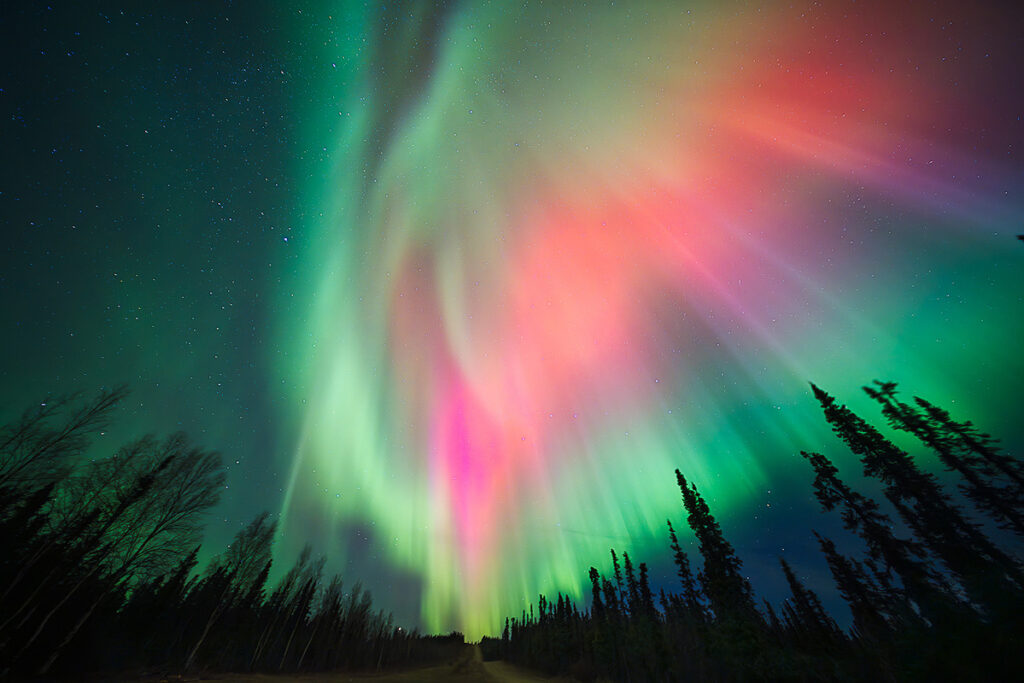
Using light pollution maps makes the problem obvious, as these maps help identify ideal viewing locations with minimal artificial light. The glow from Fairbanks — a city of over 30,000 people — washes out faint aurora arcs for miles in every direction. The difference between a pullout on the outskirts of town and a location 100 miles into the interior isn’t incremental. It’s the difference between squinting at a dim green smudge and watching vivid curtains of color fill the sky. The aurora doesn’t care how many stops you’ve made. It responds to dark skies, geomagnetic activity, and whether you’re outside looking up when it decides to show.
Why a Dark-Sky Home Base Changes the Equation
Michael built Face The Outdoors around a private viewing lodge deep in Alaska’s interior — deep in the interior of Alaska, directly beneath the auroral oval — instead of running a fleet of vans circling the city.
Eliminating Wasted Transit Time
A stationary location already positioned in prime viewing territory — far from light pollution, under the auroral oval, with an unobstructed view in every direction — eliminates the biggest variable that kills aurora nights: wasted time in transit. Guests arrive, settle in, and watch the sky develop instead of spending those hours hoping the next pullout is better than the last.
Comfort That Makes Patience Easy
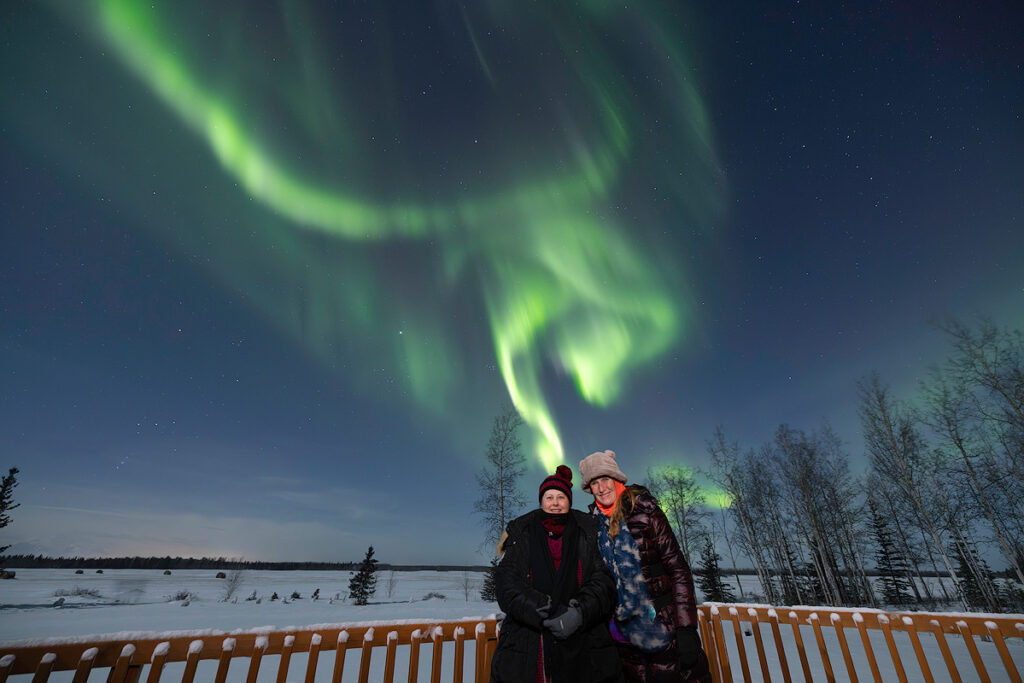
The lodge has panoramic windows and an open deck. Hot drinks. Clean restrooms. A fire going. Guests move between indoor warmth and open air at their own pace throughout the night, with no schedule dictating when they need to be back on a bus and no countdown clock ticking.
The best displays Michael has photographed over the years didn’t announce themselves at sunset. They built slowly — a faint arc of green low on the horizon, thickening over an hour, then erupting into curtains of color stretching overhead. If you’re in a bus that left that location 30 minutes earlier, you never see it.
Aurora Photography from a Stable Base
For guests interested in aurora photography, a stationary lodge changes the equation entirely. Setting up a tripod on a stable deck, dialing in camera settings for long exposures, composing shots with foreground elements — none of that works from a moving bus or a roadside pullout where the group is about to relocate. Michael assists with settings on any device — phone, DSLR, mirrorless — and the lodge’s dark-sky location means even smartphone cameras can capture vivid green lights and color detail that city-adjacent locations wash out.
Learn more about our aurora viewing lodge →
The Role of Cloud Cover in Northern Lights Viewing
Even the strongest aurora display — Kp 7, full curtains, the kind of night that lights up social media — disappears behind thick clouds. Weather conditions such as cloudiness, snow, or storms can significantly reduce your chances of seeing the northern lights, making clear skies not just preferred for aurora viewing, but required.
Reading Cloud Cover Like a Local Guide
Alaska weather moves fast, and Interior Alaska around Fairbanks has its own patterns. Cold high-pressure systems in winter often bring the clearest skies — the same conditions that drop temperatures to -20°F or colder. Coastal moisture from the Gulf of Alaska can push cloud banks inland. Valleys hold fog differently than ridgelines.
Michael reads these patterns using multiple weather apps, satellite imagery, and decades of knowing how this specific landscape behaves. When a front moves in from the west, he knows which ridgelines clear first. When low fog settles into the Tanana Valley, he knows the elevation where sky opens up.
When Broken Clouds Work in Your Favor
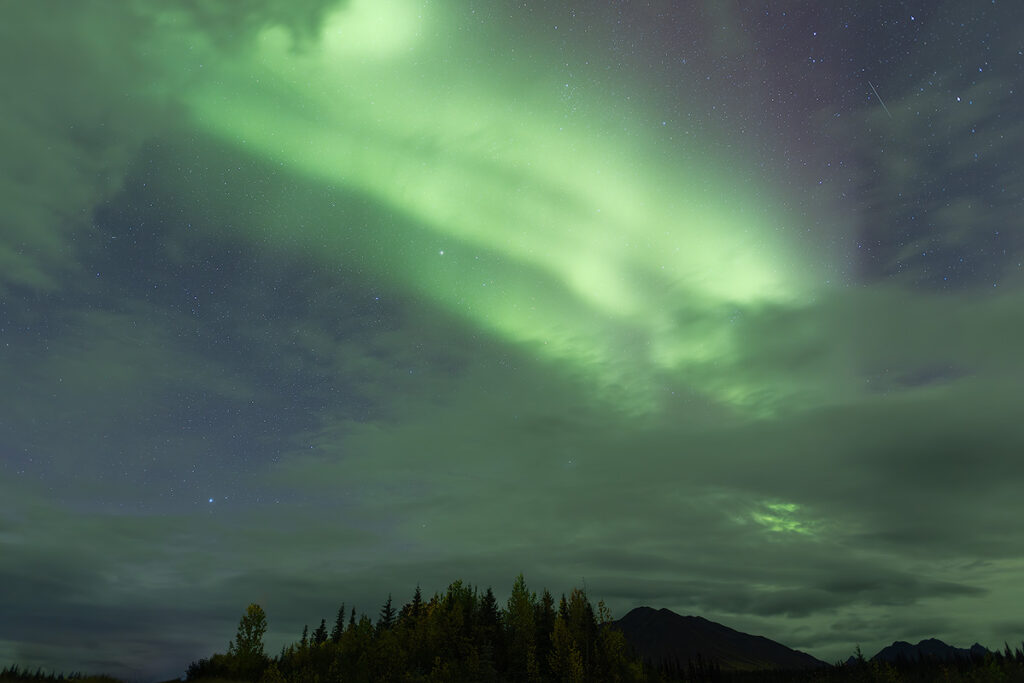
Not every cloud ruins the night. Thin or broken cloud layers sometimes catch aurora light and throw it back in ways that amplify the display — silver-edged reflections that add dimension to the sky. Learning to read cloud conditions in real time, rather than canceling a night because the forecast showed partial cover, separates experienced aurora guides from operators running a fixed script.
Understanding the Aurora Forecast
Reading an aurora forecast means layering three types of data: what the sun is doing, what Earth’s magnetic field is doing in response, and what the local weather will allow you to see. Solar particles ejected from the sun, often referred to as solar wind, interact with Earth’s atmosphere and magnetic field, causing ionization that produces the aurora.
We start each night by reviewing solar activity, cloud cover predictions, and moon phase to decide whether the lodge or a mobile chase position gives the best shot at clear, dark sky. A full moon doesn’t affect how the aurora behaves — it only changes how much of it you can see. Bright moonlight can wash out faint displays, but planning your trip solely around moon phase isn’t always the best call. Michael has seen some of his most vivid displays under a full moon, when the aurora was strong enough that the moonlight didn’t matter.
The Kp Index and What It Means in Fairbanks
The Kp index measures global geomagnetic activity on a 0-to-9 scale. Higher numbers indicate stronger potential aurora visible at lower latitudes. In Fairbanks, because the city sits directly under the auroral oval, even a Kp of 1 or 2 can produce visible aurora on the northern horizon. A Kp of 5 or above means a geomagnetic storm — widespread, vivid displays that can fill the entire sky and push aurora visible as far south as the Lower 48.
Beyond Kp — Solar Wind Speed and Bz
Experienced guides look beyond the headline Kp number. Solar wind speed and the Bz component of the interplanetary magnetic field are often more useful for real-time forecasting. When the Bz tilts south and solar wind speed climbs above 400 km/s, conditions are ripe for substorm activity — the bursts of intense aurora that create the most vivid displays.
Michael checks the University of Alaska Fairbanks Geophysical Institute forecast, NOAA’s Space Weather Prediction Center data, and magnetometer readings each afternoon before calling guests with the evening forecast. This is the same process every afternoon between 3:00 and 5:00 PM — reviewing solar activity, cloud cover predictions to decide whether the lodge or a mobile chase position gives the best shot at clear, dark sky.
Full guide to reading northern lights forecasts →
When Chasing the Northern Lights Is the Right Call
Patience works on clear nights. Alaska weather doesn’t always cooperate. A sky that was wide open at 9:00 PM can sock in by 11:00. Cloud cover is the one factor that will shut down an aurora night completely — no amount of geomagnetic activity matters if you can’t see the sky.
Chasing Clear Sky, Not Chasing the Aurora in Alaska
This is where actual chasing becomes critical. Not chasing the aurora itself — the aurora covers the entire sky above the auroral oval during active periods — but chasing clear sky. Reading weather models in real time, identifying where cloud cover is breaking, and driving to that opening before it closes.
Most lodge-based tours in Fairbanks can’t do this. They’re fixed to one location. If clouds roll in, the night is over. Most multi van-based chase tours do the opposite — they’re always moving, never settled, and burn half the night driving between mediocre stops.
The Lodge-Plus-Chase Model
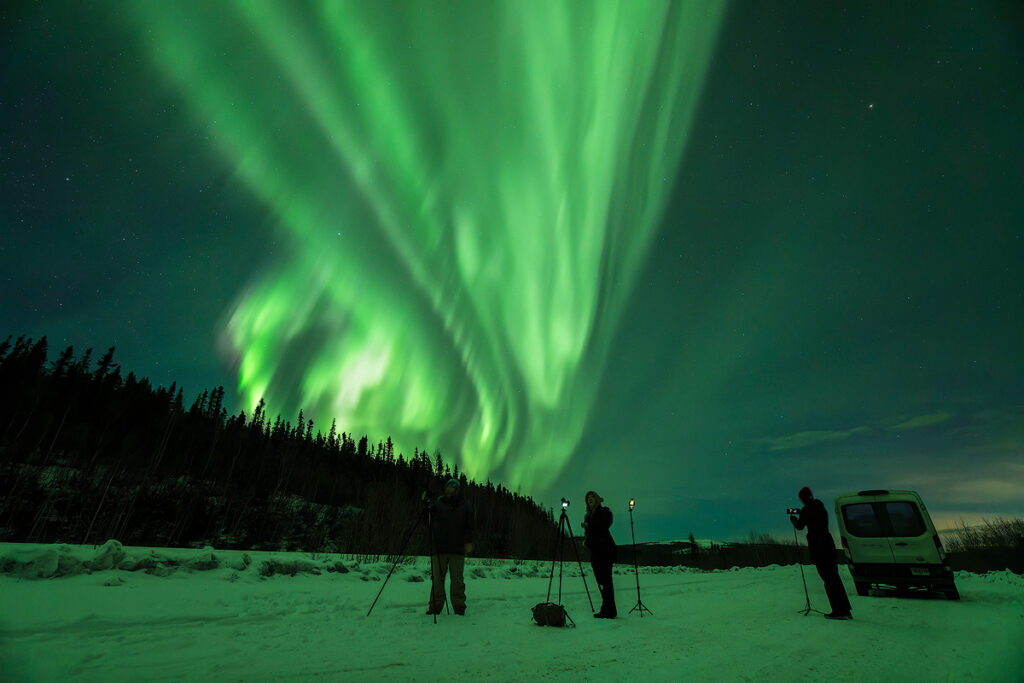
Face The Outdoors operates differently. The lodge is home base, but every tour includes mobile chasing as a built-in feature. Michael monitors weather sources throughout the night. If conditions shift and clouds threaten the lodge, the group loads the van and moves.
One guest described a night where Michael drove to a clear spot near Denali — found a reflective pond with mountain backdrops and captured images the guest called the highlight of their trip. Another booked three consecutive nights and saw the aurora every single night because Michael repositioned the group each time conditions shifted. No other aurora lodge-based tour in Fairbanks combines both: the comfort of a private dark-sky home base and the flexibility to go mobile when conditions demand it.
See full tour details and mobile chasing capability →
Why Small Group Tours Win on Northern Lights Nights
Group size might be the most overlooked factor when choosing a northern lights tour — and it matters most on nights when the group needs to relocate.
The Large-Bus & Multiple Van Logistics Problem
Large operators pack 30 to 50 people onto a single bus or run multiple vans. The per-seat price can be lower and the marketing sounds exciting. What you don’t see in the listing is what happens when clouds move in. Getting 40 strangers organized — some in the restroom, some wandering for photos, some asleep, some who don’t share a language with the guide — takes time. Fifteen minutes becomes thirty. Thirty becomes forty-five. By the time the bus reaches a new location and everyone files out, the clear window may already be closing.
Why Quick and Nimble Wins Every Time
With ten guests or fewer, the decision to move happens fast. Michael makes the call, everyone hears it, the van loads in minutes, and the group is watching sky again before a large tour would have cleared the parking lot. That speed gap compounds across a full night. A large tour that relocates twice might burn two hours on logistics alone. A small group covers the same ground in thirty minutes combined.
So many guests who booked large, heavily marketed multi van or bus tours before trying Face The Outdoors describe the same experience — and it usually had nothing to do with the aurora. The logistics of moving a crowd kept them from being in the right place at the right time.
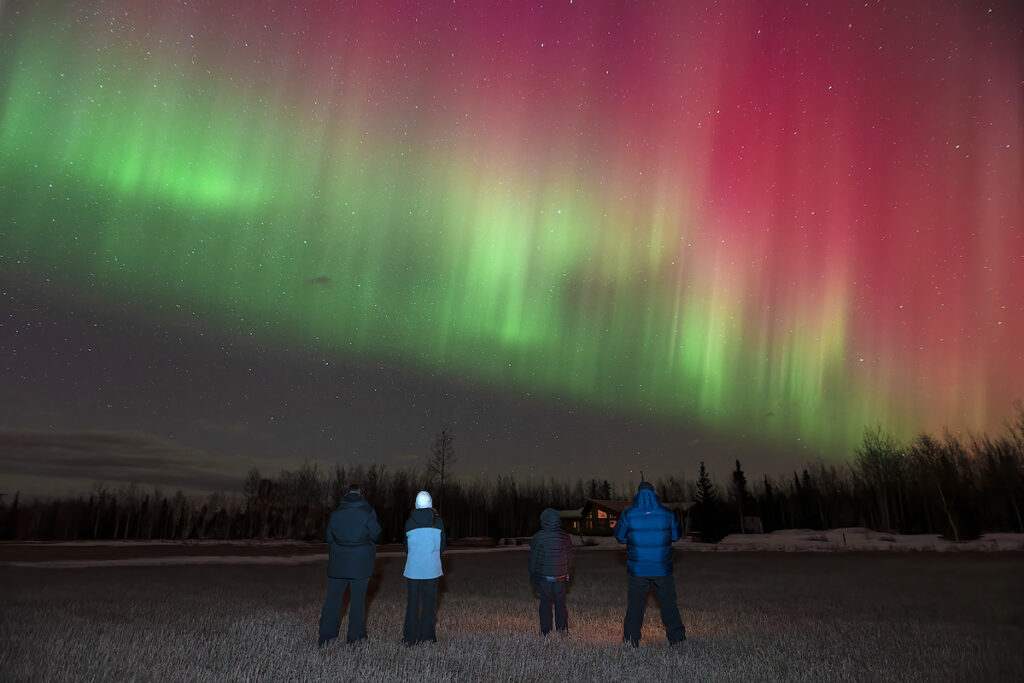
How to Choose a Northern Lights Tour That Sets You Up for Success
Some of the top destinations for chasing the northern lights include countries and regions such as Norway, Iceland, and Alaska, where aurora activity is frequent and reliable. Major cities like Tromso, Abisko, and Lyngen serve as key hubs for travelers, offering accessible starting points for Arctic adventures and northern lights tours.
Tours vary wildly in quality, and the marketing language makes it hard to tell the difference. A few factors worth evaluating before you book: Look for multi-night northern lights packages as these can greatly enhance your experience.
How Far from City Lights Does the Tour Go?
If the answer is 15 to 20 minutes from downtown Fairbanks, that’s not enough distance from light pollution. A roadside pullout on the outskirts of the city and a location 100 miles into the interior are entirely different viewing experiences. Ask for specifics. And if you are told locations such as Murphy Dome, Cleary Summit just to name a few, then you’d be better off saving your money and driving there yourself as these fall within close proximity of Fairbanks but unfortunately it’s light pollution as well.
What’s the Actual Group Size?
If the listing doesn’t say, ask directly. A group of 8 to 10 guests with a knowledgeable guide will always outperform a bus of 40 with a driver reading from a script. Smaller groups also mean more flexibility to relocate and more personal attention — especially useful if you want help with aurora photography.
Can the Tour Relocate If Weather Changes?
A fixed-location lodge that can’t move is gambling entirely on local weather holding all night. A chase-only tour that never stops moving wastes half the night in transit. The strongest format combines both — a dark-sky home base with the ability to go mobile when the forecast shifts.
Who Is Your Guide?
Seasonal hires who arrived in Alaska three months ago can learn talking points. They can’t replicate twenty years of reading these specific skies — knowing which ridgelines clear first when fronts move in from the west, which valleys hold clouds longest, where the aurora tends to appear most vivid overhead versus on the horizon.
How to Prepare for an Aurora Night in Fairbanks
Here are some practical tips and best tips to help you prepare for an aurora night in Fairbanks and make the most of your experience. Seeing the northern lights in Alaska means spending hours outdoors in temperatures that can drop to -40°F during peak aurora season. Preparation separates a comfortable night from a miserable one. The prime aurora viewing season in Alaska runs from mid September through late April, when the nights are longest and the skies are darkest—giving you the best chance to witness the aurora borealis.
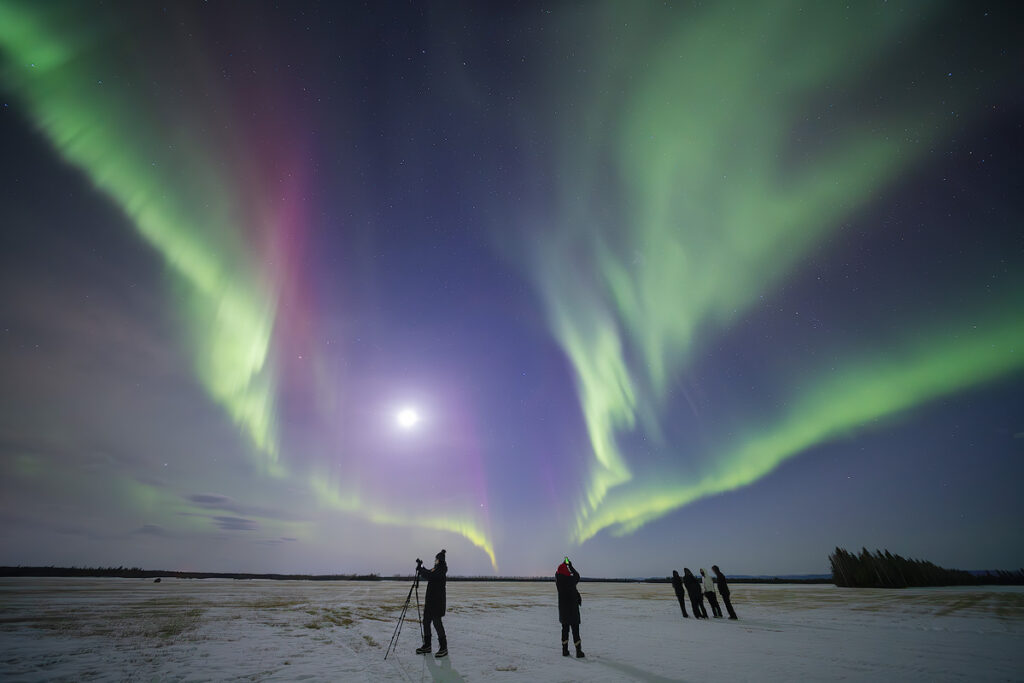
For an unforgettable Arctic adventure, consider combining your northern lights tour with dog sledding, a popular winter activity in Alaska that adds excitement and a unique perspective to your trip. While waiting for the aurora, keep an eye out for shooting stars—these fleeting moments add to the magic of the night sky and are a favorite subject for night sky photography.
Layering for Extreme Cold
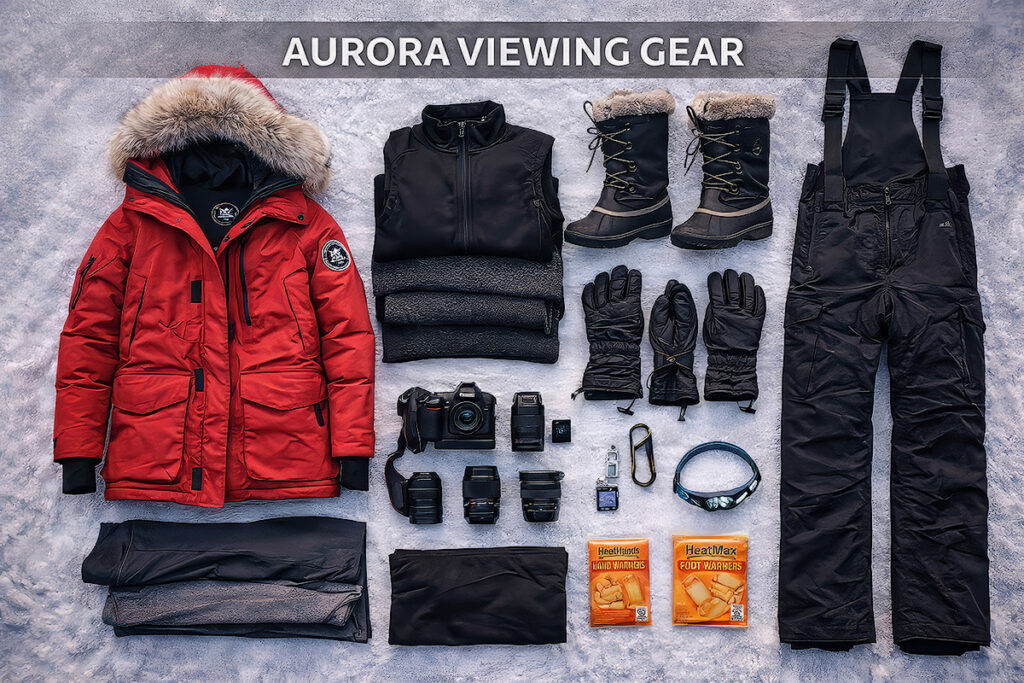
Dress in three layers: a moisture-wicking base layer (merino wool or synthetic — avoid cotton), an insulating mid-layer (fleece or down), and a windproof outer shell. Insulated winter boots rated for extreme cold, a hat covering your ears, and insulated mittens or gloves are non-negotiable. Chemical hand and foot warmers provide hours of extra heat and are worth packing for every night out.
Protecting Your Night Vision
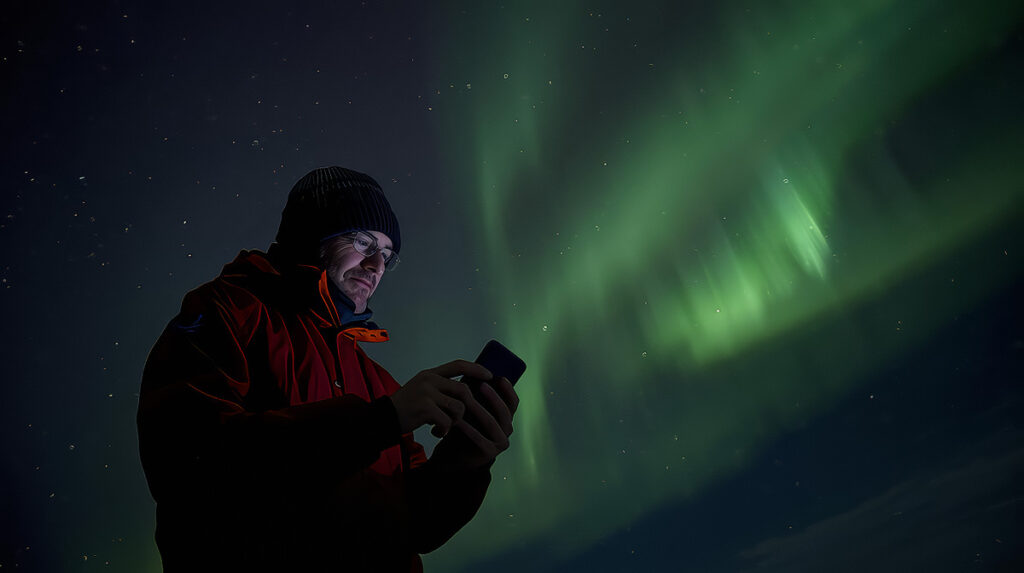
Red-filtered headlamps preserve night vision and let you navigate without killing your ability to see faint aurora arcs developing on the horizon. Avoid phone screens at full brightness. Your eyes need 20 to 30 minutes to fully adjust to darkness, and a single blast of white light resets that process. Common issues when dealing with bigger groups.
What to Bring on Tour Night
A thermos of hot coffee or tea, snacks, extra battery packs for your phone (cold drains batteries fast), and a tripod if you plan to photograph the aurora with a camera. Michael provides hot drinks, snacks, and photography guidance at the lodge, but personal extras make the long night more comfortable.
Enhancing the Aurora Experience
The northern lights—aurora borealis in scientific terms—transcend mere atmospheric display. They become communion. A convergence of solar wind and magnetosphere that manifests as curtains of pale green fire, sometimes deepening to violet, sometimes erupting in sudden pillars of electric blue against the Arctic darkness. The physics fascinates: charged particles colliding with oxygen at different altitudes, creating those distinct color bands. But standing beneath these luminous sheets, watching them pulse and spiral overhead—that’s where technique dissolves into pure experience.
Whether you’re witnessing that first tremor of green light along the northern horizon or watching full-sky displays ripple like celestial silk, preparation sharpens the encounter without diminishing its mystery. The aurora answers to solar cycles, geomagnetic activity, clear skies. Unpredictable still. But arrive prepared—with patience, with eyes adjusted to darkness, with the understanding that this ancient dance of light demands presence, not just observation—and each night becomes distinct. Its own revelation carved against the star-filled sky.
Local Traditions and Storytelling Under the Lights
Across the Arctic Circle’s stark wilderness, the aurora borealis cuts through winter darkness with ribbons of pale green and electric blue—each photon a messenger from solar storms ninety-three million miles away. In Finnish Lapland’s snow-heavy silence, locals speak of the revontulet as fox fire, the spirit-fox’s tail sweeping crystalline powder into the stratosphere, each particle catching starlight in ancient dance. Short. Direct. Visceral. Northern Norway’s weathered fishermen know different stories—they’ve watched those same luminous curtains ripple above the Lofoten peaks for generations, calling them northern lights that pulse when the midnight sun’s energy reflects off compressed arctic ice, a chromatic reminder burning through polar night’s deepest months.
Standing with guides who’ve spent decades reading these skies—photographers and storytellers who understand both the technical marvel of electromagnetic interaction and the raw wonder that stops you mid-breath—you hear voices carrying centuries of observation, not tourism scripts but lived knowledge passed between people who actually watch the sky. Beneath that shimmering aurora, listening to words shaped by countless nights spent outdoors waiting for the lights to move, you realize this isn’t just atmospheric physics made visible; it becomes something immediate and connecting, a living thread binding you to this specific latitude, these particular people, and the genuine mysteries that still flicker above the treeline when conditions align just right.
Creating Lasting Memories Beyond the Photos
Capturing aurora borealis through a lens delivers its own electric satisfaction, but the most profound connections emerge from surrendering to complete presence beneath that chromatic explosion. As you witness those ethereal curtains ripple and transform across the polar sky—sheets of green fire dancing with impossible grace—allow yourself to become fully immersed. Listen. The whisper of Arctic wind threading through black spruce.
The satisfying compression of snow crystals beneath insulated boots. That distant wolf song echoing across the tundra. Feel the sharp kiss of sub-zero air against exposed skin, the down-filled embrace of your parka, the corrugated bark of ancient conifers standing sentinel in the darkness.
Breathe deeply—wood smoke from a distant cabin mingles with the clean, mineral scent of snow and the rich earthiness of boreal forest. This complete sensory engagement creates something no camera sensor can capture: memories of aurora that transcend any single frame, imprinted with such vivid detail that years later, you’ll still feel that Arctic wind and see those impossible greens dancing behind your closed eyes.
Part of why the experience surprises people — in both directions — comes down to how the camera captures northern lights differently than your eye does, which is worth understanding before you arrive.
How a Face The Outdoors Aurora Night Works
Every northern lights tour night follows the same core structure, with flexibility built in at every stage.
The Afternoon Forecast Call
Between 3:00 and 5:00 PM, Michael calls each guest with the evening forecast — Kp index, solar wind data, and the weather conditions. If conditions look poor days in advance, he reaches out about rescheduling to a stronger night.
Pickup and the Drive to the Lodge
Your path toward witnessing aurora borealis unfolds like any meaningful photographic pursuit—preparation shapes everything that follows. Before departure, study not just weather forecasts but cloud cover predictions and geomagnetic activity indices; Alaska’s winter roads demand respect, and a capable 4WD becomes your lifeline through snow-packed highways that stretch between civilization and wilderness.
Layer yourself in wool and down that will hold warmth through hours of sub-zero standing. Pack provisions that actually sustain—thermos coffee that stays scalding, energy that doesn’t freeze solid in your pockets. Many tour operators handle the logistics by collecting guests from hotel lobbies or airport terminals, eliminating the navigation stress that could steal focus from what waits ahead. As your vehicle carries you beyond the amber glow of Fairbanks streetlights into absolute darkness, that familiar pre-shoot anticipation begins its slow build—the same electric feeling that precedes any encounter with something genuinely extraordinary.
When you finally step from heated vehicle onto packed snow at the lodge, draw that crystalline air deep into your lungs and lift your gaze skyward. Here. Now. The aurora may already be beginning its silent performance across the dome of night, transforming your careful journey into the opening movement of an experience that no amount of preparation could have fully readied you for.
Pickup and the Drive to the Lodge
Pickup runs between 8:00 and 9:00 PM from Fairbanks hotels, with exact timing varying by season. The drive to the lodge takes about 90 minutes — deep enough into the interior that city light disappears entirely. The sky gets darker and bigger with every mile.
At the Lodge
Guests settle in, warm up, and Michael monitors conditions in real time. On clear nights, the group watches from the deck or through the panoramic windows as the aurora develops. Michael assists with camera settings on any device and takes professional aurora portraits of each group.
When the Group Goes Mobile
If clouds move in, the van loads and the group chases clear sky using live weather data. Some nights that means driving toward the Alaska Range or along the Parks Highway — wherever the weather models show a clear opening. Michael reads conditions and moves accordingly. The small group size — maximum 10 guests — means the decision to relocate happens in minutes, not the 30 to 45 minutes a large bus or multiple van operation will burn getting organized.
Return to Fairbanks
Northern lights tours run six to eight hours total, with the most active viewing hours typically falling between 10:00 PM and 2:00 AM. Guests return to their Fairbanks hotel with images on their own devices and professional portraits delivered afterward.
About Michael and Face The Outdoors →
Patience Is the Real Strategy for Seeing the Northern Lights
Michael tells every guest the same thing before a northern lights tour: the aurora borealis is a natural phenomenon. It doesn’t follow a schedule, and it doesn’t perform on demand. It has no idea you flew thousands of miles to see it. But that’s not a warning — it’s the reason the experience means something. If the lights showed up every night at 10:00 PM like clockwork, nobody would fly to Fairbanks for it. The uncertainty is part of what makes a great display feel like a gift. Show up prepared, give yourself enough nights, and the odds are very much in your favor.
That’s also what makes it worth seeing. The moments where green light spills across the entire sky and everyone standing on that deck goes silent — those can’t be manufactured or chased down. Intense displays are rare and typically require higher solar activity; most nights, you may see subtle arcs and pillars rather than a full eruption. They happen because someone was patient enough to be in the right place, looking up, when the sky decided to move.
The waiting is part of it. Stars so sharp they look fabricated. The silence of Alaska’s interior at 1:00 AM. Cold air against your face while you scan the horizon. Then — sometimes around midnight, sometimes not until 2:30 AM — the sky shifts. A faint arc. A pulse of green. Then everything accelerates.
That doesn’t happen from the window of a bus doing 60 on the highway.
Before your first night out, understanding what to expect when seeing the northern lights — the Kp scale, the cloud cover reality, and why the display looks different in photos — changes how you experience everything.
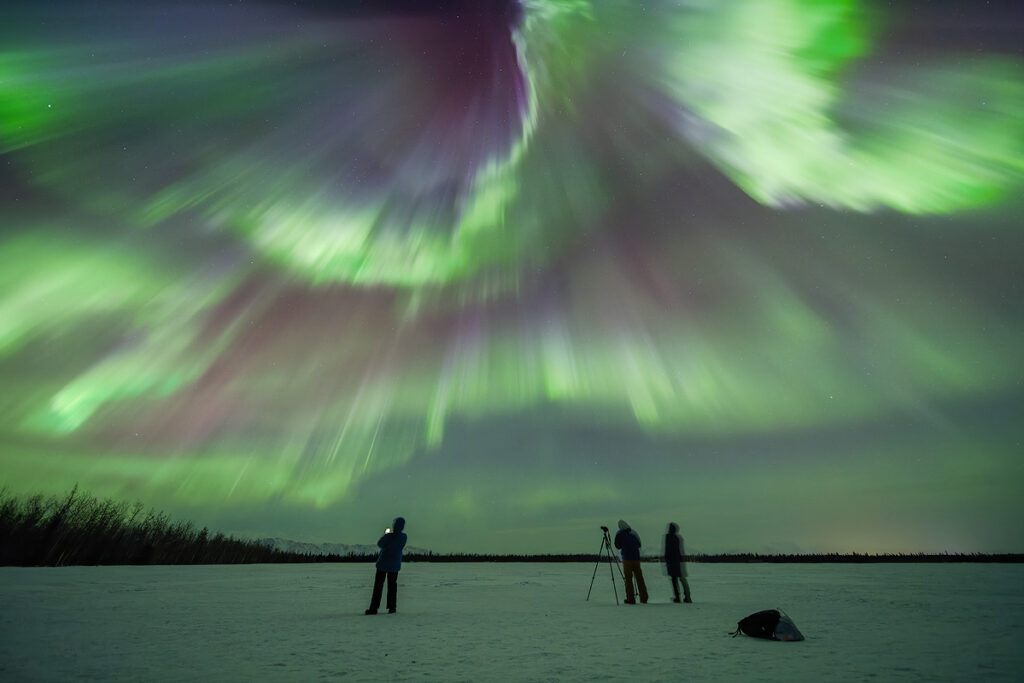
Frequently Asked Questions About Chasing the Northern Lights
Do You Need to Drive Around All Night to See the Northern Lights?
No. The aurora borealis appears across the entire visible sky above the auroral oval during active periods — it’s not hiding in one specific location that you need to find by driving. What you need is dark sky free of light pollution, clear weather, and patience. Strategic relocation to chase clear sky when clouds move in is sometimes necessary, but spending the entire night driving between stops is counterproductive.
What Time Do the Northern Lights Come Out in Alaska?
Aurora can appear anytime after dark, but the most active period in Fairbanks typically falls between 11:00 PM and 2:00 AM Alaska time. During deep winter (November through February), darkness arrives early enough that displays can begin as early as 6:00 or 7:00 PM. Flexibility matters — the aurora doesn’t follow a fixed schedule.
Can You See the Northern Lights with the Naked Eye?
Yes. During moderate to strong displays (Kp 3 and above), the aurora is clearly visible to the naked eye from dark-sky locations. Faint displays at lower Kp levels may appear as a whitish-green glow that cameras pick up more vividly than your eyes. At Kp 5 and above, vivid green, purple, and pink are visible without any camera assistance.
Is It Worth Booking a Northern Lights Tour in Fairbanks?
For first-time visitors, a guided tour with a knowledgeable local guide significantly improves your chances. An experienced guide monitors real-time space weather data, knows dark-sky locations that aren’t on tourist maps, can relocate the group if cloud cover moves in, and helps with aurora photography on any device. The question isn’t whether to book a tour — it’s choosing one that gives the aurora enough time and dark sky to actually appear.
What Happens If It’s Cloudy on My Tour Night?
This depends entirely on the tour you’ve booked. Fixed-location tours and static lodges have no option if clouds roll in. Chase-only bus tours may relocate but burn time getting organized. Face The Outdoors uses a lodge-plus-chase model: the lodge is home base on clear nights, and the group goes mobile to find clear sky when conditions change — something no other lodge-based tour in Fairbanks offers.
Before You Book Your Trip to Fairbanks
We put together a free Aurora Viewing Checklist — 15 things to know before your first night under the northern lights. What to wear for -20°F to -40°F conditions, how to read Kp index and solar wind forecasts, phone and camera settings for aurora photos, and what to look for when comparing tours.
About The Author:
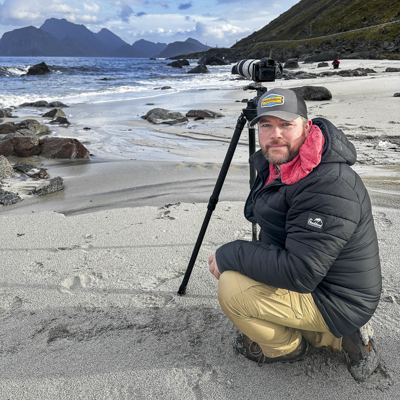
Michael Schultz: runs Face The Outdoors, a family-operated aurora tour company based deep in Alaska’s interior. Born and raised in Alaska, the northern lights have been part of his life for as long as he can remember. Face The Outdoors was recommended by National Geographic as a premier aurora tour option in the Fairbanks area. He lives with his family at the same property where guests experience the aurora — under some of the darkest skies in Interior Alaska.