The Best Places to See the Aurora Borealis
A native Alaskan aurora guide's honest answer to where the best places to see aurora borealis really are — and why Interior Alaska tops every other northern lights destination on Earth for this bucket-list experience.
🌌 The Short Answer
The best places to see the aurora borealis sit in a band roughly between 65 and 70 degrees north — close enough to the magnetic pole that the lights appear directly overhead, far enough south to be reachable. Three things matter once you're in that band: latitude, dark skies, and clear weather. Get all three right and you'll see displays you won't forget.
Interior Alaska — the wide, dry country around Fairbanks — checks every box. It sits at 65°N, just south of the Arctic Circle and directly beneath the aurora oval, where the lights are visible on the majority of clear nights from late August through mid-April. Its continental climate produces more clear-sky nights than coastal aurora regions, and within an hour of Fairbanks the light pollution drops to almost nothing — giving you the darkest skies in North America's most accessible aurora zone.
Iceland, Tromsø, the Lofoten Islands, Finnish Lapland, and the Yukon all earn their reputations as great northern lights destinations. But if you're looking specifically for the best places to see the aurora borealis in Alaska, Interior Alaska is the short answer. It's where I've spent twenty years learning the country, and it's where the lights are most reliable, most accessible, and most likely to appear directly overhead on a typical winter night.
A quick note on the science: aurora happens when charged particles from the solar wind collide with oxygen and nitrogen atoms in Earth's upper atmosphere, guided to the polar regions by Earth's magnetic field. Solar activity runs on roughly an 11-year cycle, and the past few seasons have been exceptionally strong — the kind of conditions that produce more frequent and more intense displays, including coronal mass ejections (CMEs) and geomagnetic storms that push aurora visibility much further south than usual.
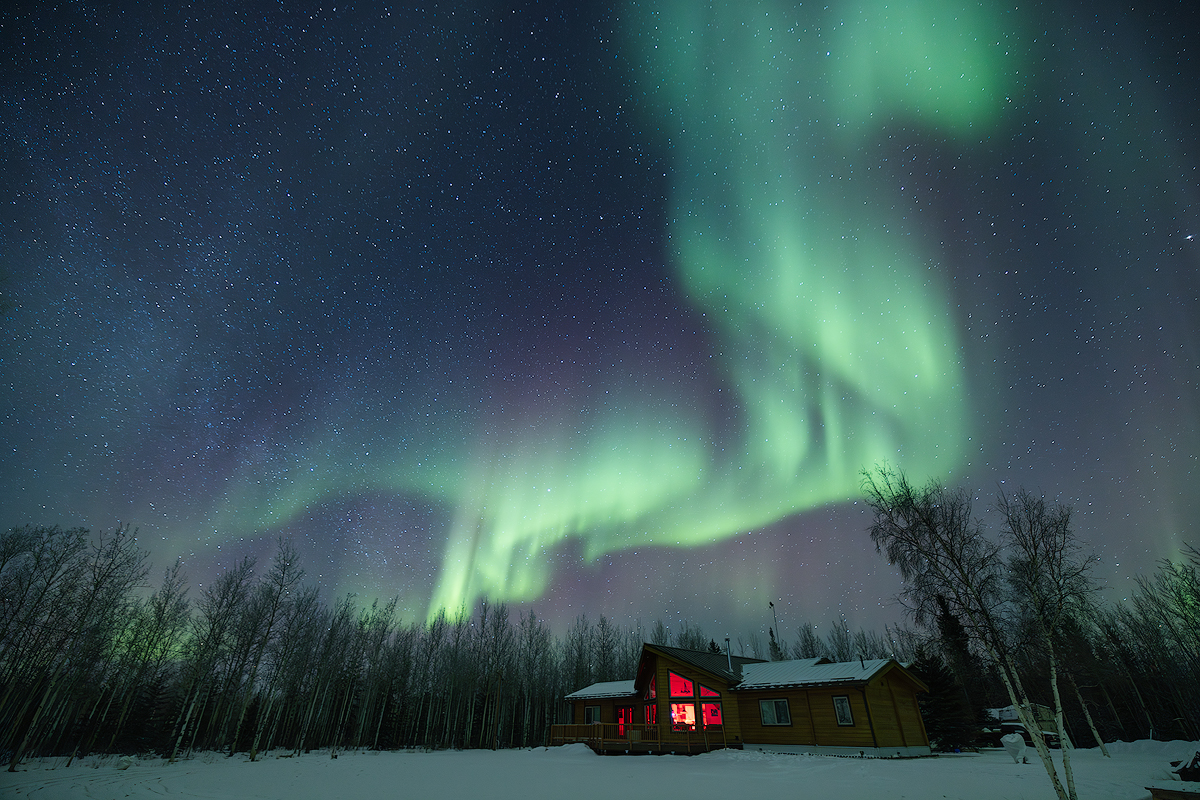
Where We Watch From: A Private Wilderness Lodge
A cedar log home on private land, ninety minutes from Fairbanks, deliberately built where the sky is darkest and the views are widest.
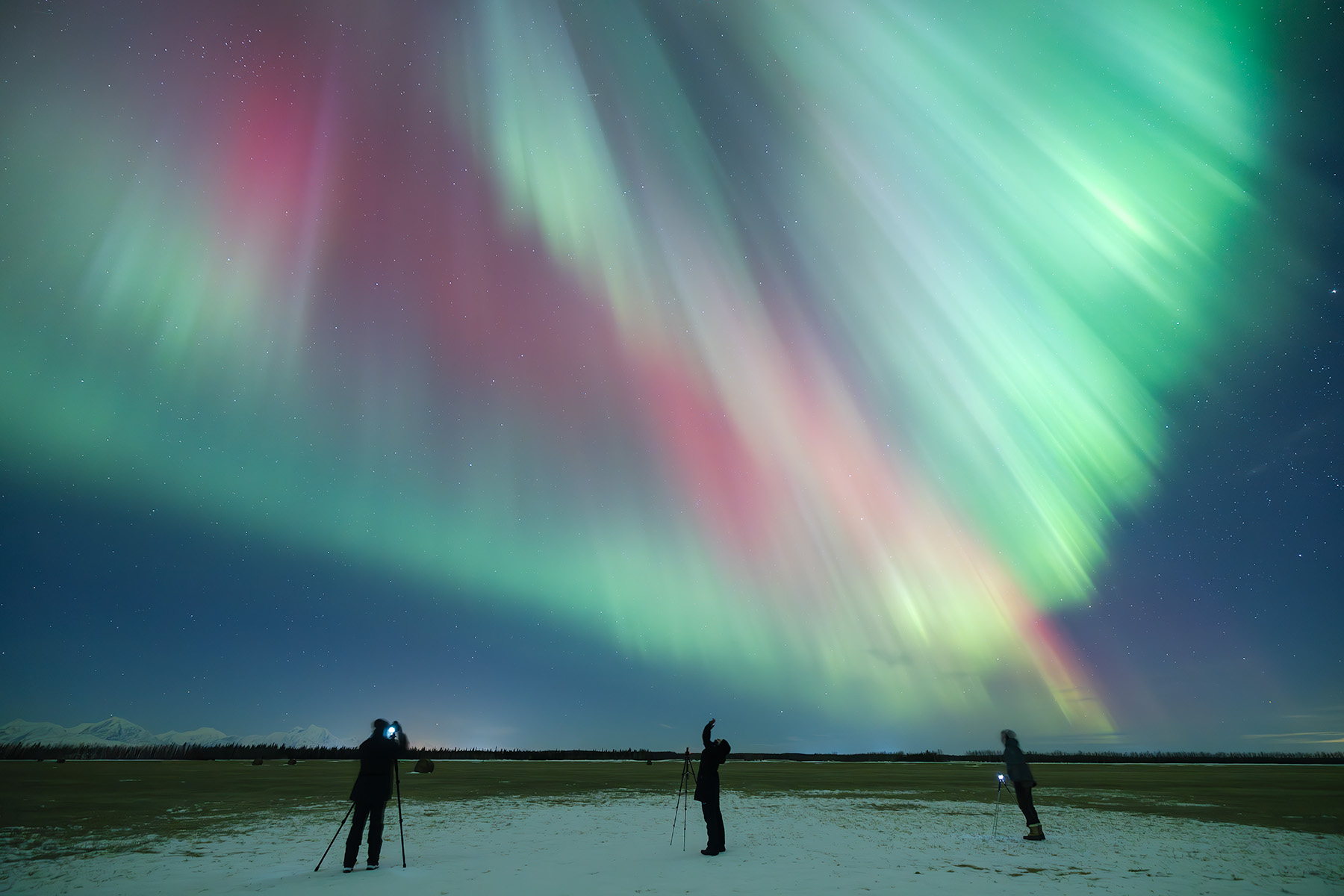
Most aurora tours pull a van full of people into a public roadside parking lot. We built our home in the country instead. Zero light pollution. A 360-degree horizon with no trees blocking the show. Heated indoor viewing through floor-to-ceiling windows, and a deck five steps away when the lights kick off and you want to be under them.
It's quiet, it's private, and on a typical winter night you'll have the place to yourself with your guide — a native Alaskan, leading groups of no more than ten.
What Makes This Spot Work
We didn't pick this location at random. Every feature here was chosen with one job in mind — giving guests the best possible chance of seeing the aurora overhead, in comfort.
Real Darkness
Deep enough into the country that even faint aurora arcs become visible to the naked eye. You'll see stars you didn't know existed, and details that wash out completely under city lights and urban light pollution. Moon phase matters too — a full moon can wash out fainter displays the same way streetlights do, while new moon nights produce the darkest skies.
Right Under the Oval
At 65°N, we sit beneath the aurora oval — the band where the lights are most active. On a clear night you can often see aurora here at a Kp index as low as 1 or 2, without needing a major geomagnetic storm.
A Drier Sky
Interior Alaska's continental climate produces noticeably more clear skies than the coast. Less moisture in the air means less cloud cover, and cloud cover is the single biggest thing that kills a night of aurora viewing.
Watch From Inside
Floor-to-ceiling windows mean you can stay warm with hot coffee in hand and still see the show. Step outside when it picks up, head back in when you're cold. Your call.
Open Horizon All Around
Trees were cleared from the main viewing area so the aurora can be tracked across the entire sky. North, south, east, west — wherever it shows up, you can see it.
Just Your Group
This lodge is for our guests only. No other tour operators, no tour buses pulling in mid-night, nobody leaving headlights on while you're trying to look up.
How Alaska Compares to Other Top Aurora Destinations
If you're researching the best places to see aurora borealis and weighing countries against each other, here's an honest take on the major contenders. Each has real strengths — and real tradeoffs.
Iceland
Stunning landscapes and surprisingly mild winters thanks to the Gulf Stream. The catch: Iceland sits at the southern edge of the aurora oval, so the aurora often appears low on the horizon rather than overhead. Cloud cover from the North Atlantic is also a frequent issue.
Tromsø, Norway and the Lofoten Islands
Tromsø is one of the great aurora cities, with strong infrastructure and easy flights from Europe. The nearby Lyngen Alps offer dramatic mountain backdrops, and during the polar night in midwinter the extended darkness gives long aurora-viewing windows. The Lofoten Islands further south offer dramatic coastal scenery for aurora photography. Same coastal climate problem as Iceland, though — maritime weather brings cloud cover that can shut down a viewing window quickly.
Finnish Lapland
The glass-igloo destination. Excellent for first-timers who want a polished experience, but at lower latitude than Tromsø or Fairbanks. You'll see aurora here, but not as frequently or as overhead.
Yukon, Canada
Whitehorse and the surrounding country offer a similar latitude advantage to Fairbanks with excellent dark-sky access. Smaller infrastructure than Alaska, but a strong choice for travelers already in western Canada.
All of these earn their spots on most short lists of the best places to see aurora borealis. But for travelers coming from the lower 48, Interior Alaska offers the shortest flight, the most reliable aurora, and an established tourism infrastructure built specifically around northern lights viewing.
When We Need to Move: Our Backup Locations
Alaska weather doesn't always cooperate. When clouds settle over the lodge, we don't sit and wait — we drive. Two decades of guiding here means I know the road system intimately, and I know which direction tends to clear when. These are the four corridors we use most.
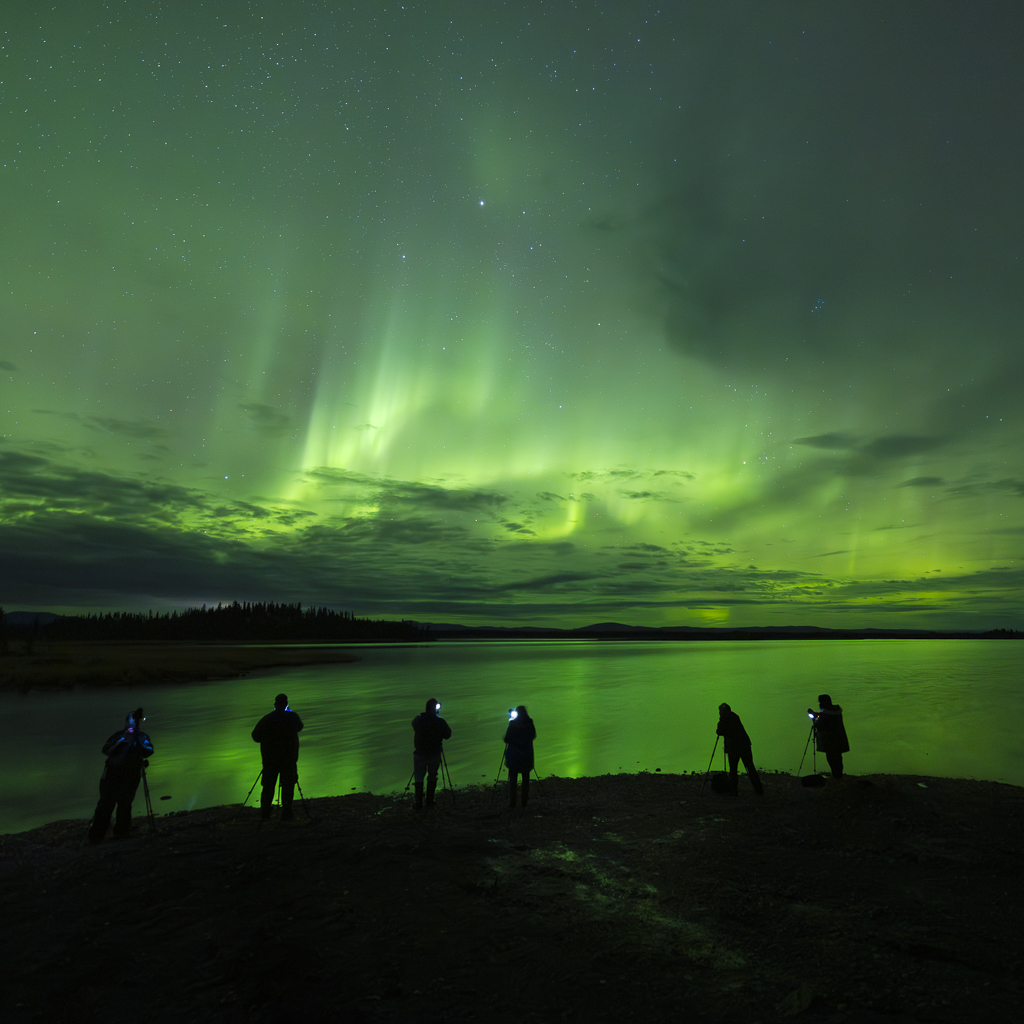
Richardson Highway Corridor
South toward the Alaska Range. Mountain silhouettes in the foreground, plenty of safe pullouts, and the kind of dramatic backdrops that make for memorable photos.
- Mountain foreground for photos
- Multiple safe roadside pullouts
- Clears often when Fairbanks is socked in
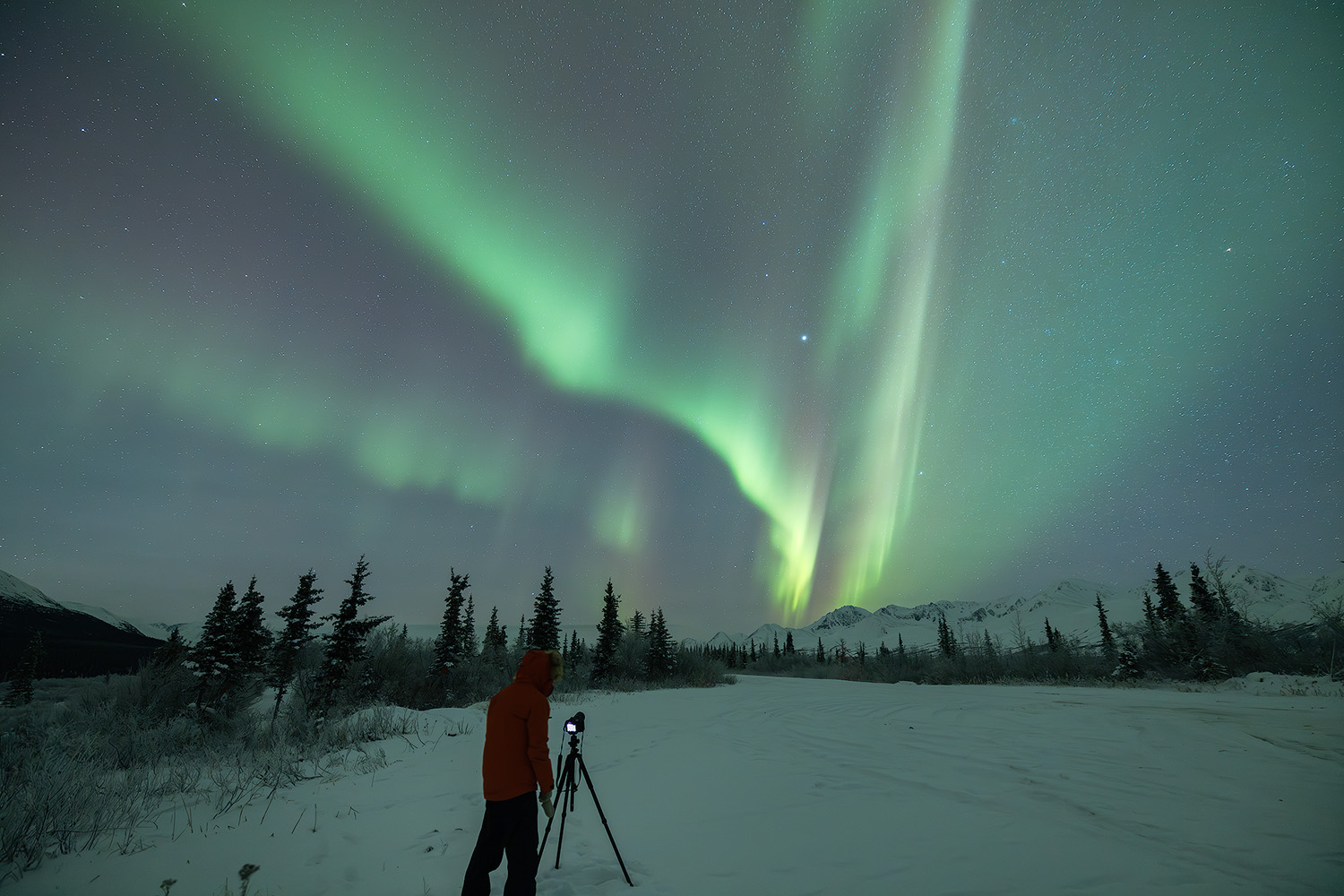
Elliott Highway Corridor
North out of town toward the White Mountains. The road climbs out of the Tanana valley fast, leaves city lights behind within twenty minutes, and opens up into rolling boreal forest country.
- Quickest escape from city light
- Higher elevation often clears earlier
- Far less crowded than tourist spots
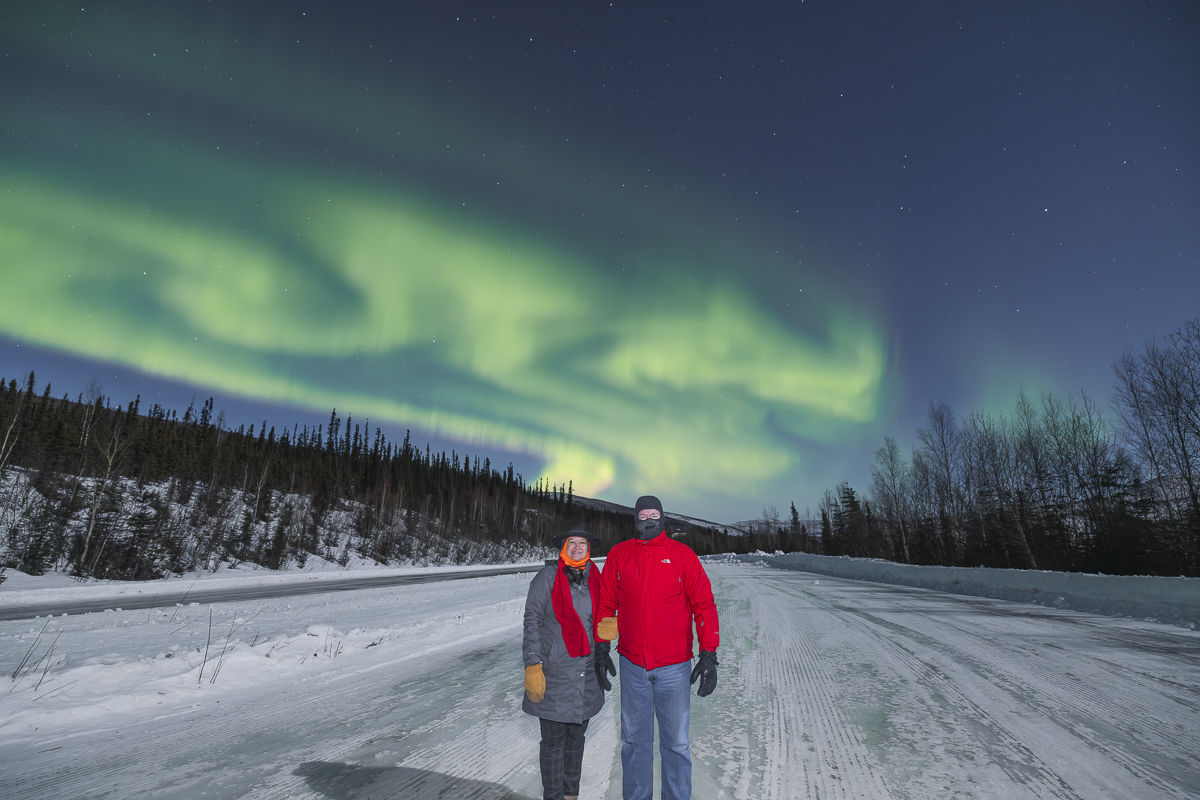
Steese Highway Corridor
Northeast toward Circle, into some of the darkest country on the road system. Almost no traffic at night and excellent pullouts above the tree line for unobstructed sky.
- Some of the darkest skies in the region
- Almost no nighttime traffic
- Above-treeline pullouts for big sky
Parks Highway & Remote Spots
When the weather pattern demands it, we head toward Nenana and beyond on the Parks Highway. There are also a handful of unmarked spots I've found over the years that don't show up on any map.
- Up to four hours of driving if the night calls for it
- Local knowledge no app can match
- We don't quit on you
The Best Places to See the Aurora Borealis in Alaska: Interior vs. Coastal
If you've heard about aurora viewing in Anchorage and you're wondering whether it qualifies among the best places to see aurora borealis in Alaska, here's the honest comparison most travel sites won't give you. Both regions have their place, but for the lights specifically, the gap is real.
Fairbanks & Interior Alaska
Best for Aurora- 65°N latitude — directly under the aurora oval, the lights appear overhead instead of low on the horizon
- Continental climate — drier air, fewer storms, more clear-sky nights through the season
- Visible at low Kp — you don't need a geomagnetic storm; aurora often shows on quiet nights here
- Easy dark-sky access — drive thirty minutes from Fairbanks and you're in true wilderness
- Built for aurora travel — lodges, guides, and tour operators with decades of experience
Anchorage & Coastal Alaska
- 61°N latitude — further south, aurora typically appears lower on the horizon
- Maritime climate — Gulf of Alaska brings cloud cover and precipitation more often
- Needs Kp 3-5+ — usually requires elevated activity for visible displays
- Significant light pollution — large metro area means longer drives to truly dark skies
- Less aurora-focused infrastructure — fewer operators built specifically around the lights
Knowing Where to Go Is Half the Job
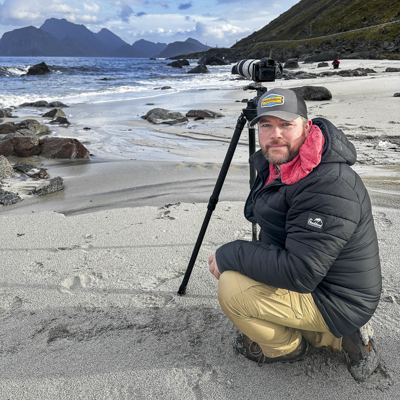
I grew up here. Twenty years of guiding has taught me to read Interior Alaska weather the way most people read the morning news — I can usually tell by mid-afternoon which direction the sky is going to clear. That local knowledge is part of what makes Face The Outdoors a National Geographic-recommended outfitter, and it's the same knowledge I use to find clear skies for every tour.
That's why we don't run a single fixed itinerary. We start at the lodge because it's the best spot when conditions cooperate. When they don't, we move. These are the four areas I rely on most:
-
1
The Lodge (Primary)
Private cedar log home, ninety minutes from town. Zero light pollution, full sky view, heated indoor option.
-
2
Richardson Highway
South toward the Alaska Range. Mountain backdrops, safe pullouts, often clears when Fairbanks doesn't.
-
3
Elliott, Steese & Parks Highways
Three corridors heading north, northeast, and southwest. Whichever direction's clear, we go.
-
4
Remote Spots
Places I've found over the years that don't appear on any map. We'll drive up to four hours if a night calls for it.
What to Look For in Any Aurora Spot
The best places to see aurora borealis all share the same handful of features. Whether you book with us, with someone else, or strike out on your own, these are the factors that actually matter.
Get Away from City Lights
Urban light pollution flattens what you can see. Even a strong display loses its color and detail under streetlight glare, and city lights wash out the fainter curtains and pillars entirely. Distance from town matters more than almost anything else — the darkest skies produce the best viewing, with or without strong aurora activity.
Choose Latitude Over Mileage
Being a few degrees further north makes a huge difference. Fairbanks beats Anchorage for the same reason Tromsø beats Oslo — you're closer to the magnetic pole, and the lights appear more often, more directly overhead.
Find an Open Horizon
Aurora can appear in any direction. Trees, buildings, and ridgelines block half your view. Open lakes, ridge tops, and cleared meadows all work — anywhere you can see the sky from horizon to horizon.
Pick a Guide With Backup Plans
Weather here changes fast. If your guide only knows one viewing spot, a single cloud bank can end your night. Look for operators who'll move when conditions turn — flexibility separates real aurora hunters from operators who just hope for the best.
Don't Underestimate the Cold
Standing still under the northern lights at -30°F is a different kind of cold than walking around town. Heated shelter access, proper layering, and somewhere warm to retreat all matter more than you'd think.
Local Beats App
Forecast apps tell you what's happening at the airport. A guide who's lived here for decades knows that the valley fills with fog by 11 PM but the ridge twenty miles east will be clear all night. That's the kind of knowledge that actually finds you the lights.
Common Questions
Where exactly are the best places to see the aurora borealis?
Anywhere in the band between roughly 65 and 70 degrees north, with dark skies and a dry climate. In practice, the most reliable northern lights destinations are Interior Alaska around Fairbanks, the Yukon around Whitehorse, northern Norway around Tromsø, and Finnish Lapland. Iceland is a popular fifth choice but sits further south than the others.
What are the best places to see the aurora borealis in Alaska specifically?
Interior Alaska, and Fairbanks specifically, is the short answer. The Fairbanks region sits at 65°N — directly beneath the aurora oval — with a continental climate that produces more clear nights than coastal parts of the state. From there, the best viewing is outside city limits: private lodges deeper in the interior, the Richardson Highway corridor south toward the Alaska Range, and the Elliott, Steese, and Parks highways all offer dark-sky access within a short drive. For a guided experience, look for an operator with genuine third-party credentials — Face The Outdoors is recommended by National Geographic as a premier aurora outfitter.
Why is Fairbanks specifically recommended so often?
Fairbanks consistently ranks at the top of any honest list of the best places to see aurora borealis for three reasons. It sits at 65°N, directly under the aurora oval. Its continental climate means more clear nights than coastal aurora destinations. And it has a mature tourism infrastructure built around aurora viewing, with experienced guides — including National Geographic-featured operators — direct flights from much of North America, and lodges designed specifically for winter sky watching.
How far from Fairbanks do I need to drive to see the lights?
You can see strong aurora from inside Fairbanks city limits, but it's washed out by the streetlights. Driving thirty to forty minutes in any direction gets you to true dark sky. Our lodge sits ninety minutes from town in country with effectively zero light pollution — that's where the real show happens.
What do you do when it's cloudy at the lodge?
We move. Twenty years of guiding here means I know which direction tends to clear under different weather patterns, and we have four backup corridors we use regularly. Some nights we drive a hundred miles to find clear sky. The lodge is home base, not a limit.
Is Anchorage a good place to see the aurora?
Honestly, no — at least not compared to Interior Alaska. Anchorage is at 61°N (further from the oval) with a maritime climate (more clouds) and significant light pollution. You'll see aurora there during strong geomagnetic storms, but Fairbanks sees it on most clear nights all winter long.
When is the best time of year to see the aurora borealis?
Aurora season in Alaska runs from late August through mid-April, when the nights are long enough and dark enough for viewing. The very best window is typically December through February, when nights are longest and the cold, dry air produces the cleanest skies. Activity also tends to spike around the autumn and spring equinoxes (late September and late March) when Earth's tilt lines up with the solar wind.
What time of night are the aurora most active?
Most strong displays happen between 10 PM and 2 AM, which is when the sky is fully dark and Earth's magnetic field is oriented for maximum aurora activity. Moon phase matters here too — booking around a new moon gives you the darkest skies and brightest-looking aurora, while a full moon brightens the background sky and can wash out fainter curtains. We start watching around 9 PM and stay out until the early morning if the show keeps going. On active nights we've seen aurora from sunset past sunrise, but the late-night window is where you'll see the biggest curtains and brightest colors.
Does the solar cycle affect how often I'll see the aurora?
Yes, significantly. Aurora activity rises and falls with the 11-year solar cycle. During solar maximum — the peak of the cycle — the sun produces more solar wind, more charged particles, and more frequent solar storms, including coronal mass ejections (CMEs) that drive larger and brighter aurora displays. Solar Cycle 25 peaked in October 2024 and is now in its declining phase, but activity stays strong through 2027 — and Fairbanks, sitting under the aurora oval, sees the lights on most clear nights regardless of cycle phase.
Can you see the aurora from Denali National Park?
Yes, when conditions cooperate. Denali sits at a similar latitude to Fairbanks and offers spectacular mountain backdrops. The catch is winter access — most of the park road is closed, and lodging is limited. For a reliable winter aurora trip, Fairbanks is more practical.
Ready to See It for Yourself?
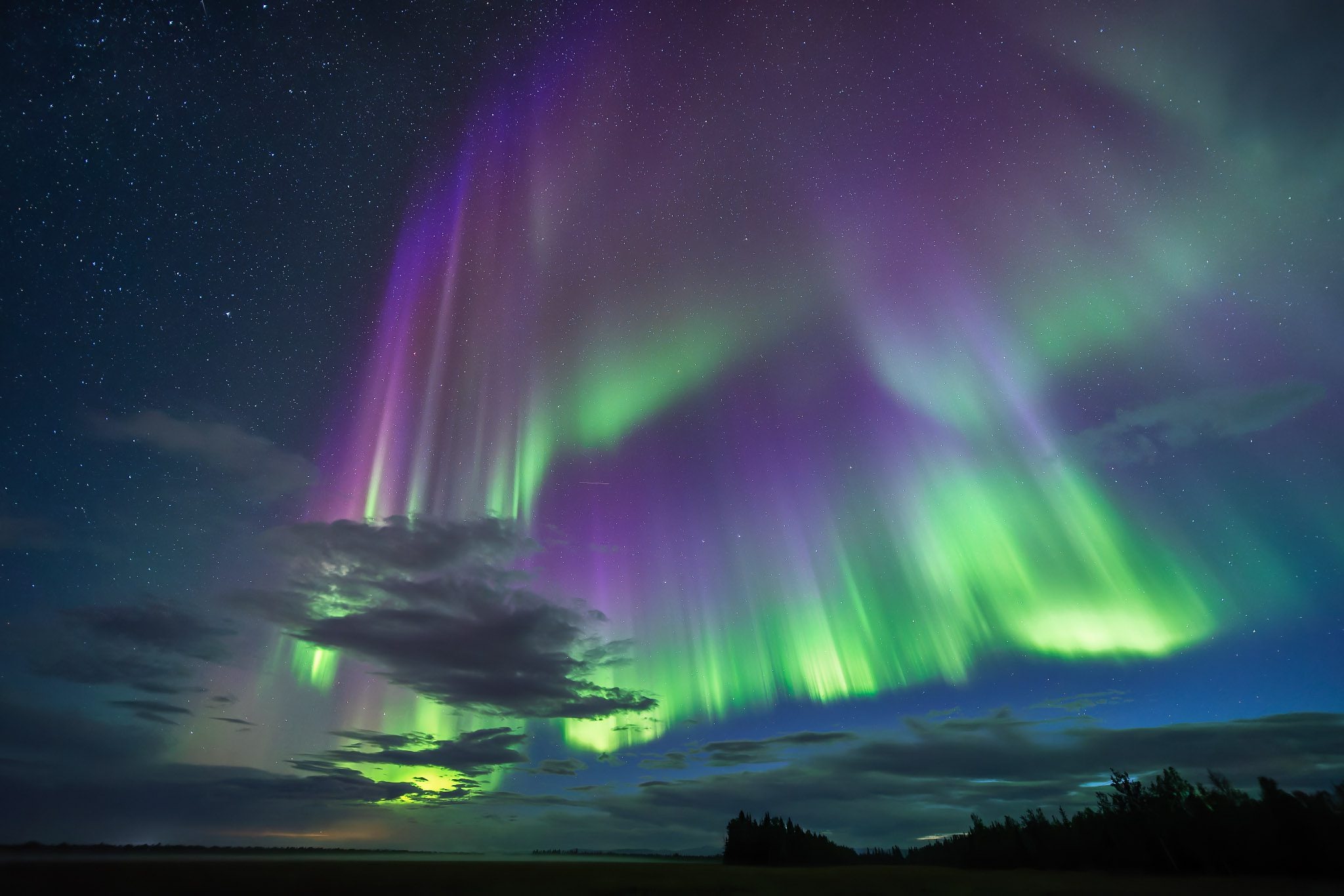
Now you know where to go and why. The aurora is a once-in-a-lifetime, bucket-list experience — and the next step is picking a night.
Call (907) 590-1567 or email michael@facetheoutdoors.com