How to Prepare for Your Northern Lights Adventure in Fairbanks
If you’re planning a trip to Fairbanks to witness the aurora borealis, one question comes before all the others: do you need a tour to see the northern lights in Fairbanks? The honest answer is no — you don’t technically need one. I was born and raised here, I run aurora tours for a living, and I’m still going to tell you that plainly, because it’s true and you’d find out anyway.
Many travelers arrive in Alaska via Anchorage, with Fairbanks Airport serving as the main gateway for aurora seekers. This makes it easy to connect from major cities and start your northern lights adventure right after landing.
The auroral oval sits directly overhead, the winter skies are consistently dark, and there are plenty of accessible locations within driving distance of town where the lights regularly appear. Some tours even include shuttle service from Fairbanks Airport or local hotels, making logistics much easier for visitors. However—and this is an important however—doing at least one night with a guide will make the rest of your trip better, whatever you do with your other nights. That’s the short version of everything below: you can absolutely do this yourself, and you should still do one guided night. Preferably early.
In addition to aurora viewing, many winter tours in Fairbanks offer opportunities to meet reindeer and observe local wildlife, adding unique Alaska experiences and cultural activities to your trip. Many tours and independent adventures also allow visitors to explore the surrounding boreal forest, offering opportunities for dog sledding and other classic Alaskan activities.
TOUR BENEFITS
Here’s where the nuance comes in. While you don’t need a tour to see the aurora, booking at least one guided experience during your stay offers benefits that go far beyond simply getting transportation to a dark location.
Dedicated northern lights viewing tours often provide access to optimal locations and amenities specifically designed for aurora observation, enhancing your chances of a memorable experience. Many tours also allow you to relax in warm, comfortable settings—such as heated yurts or cozy lodges—and some even offer the chance to soak in hot springs after a night of aurora viewing, making your adventure both comfortable and rejuvenating.
Understanding Aurora
Understanding What You’re Actually Looking For
One of the biggest advantages of a quality tour is learning what to actually look for in the night sky. The aurora doesn’t always appear as the vivid green curtains you see in photographs. Sometimes it starts as a faint whitish glow on the northern horizon that could easily be mistaken for light pollution or clouds. Other times it manifests as subtle pillars of light or diffuse patches that gradually intensify.
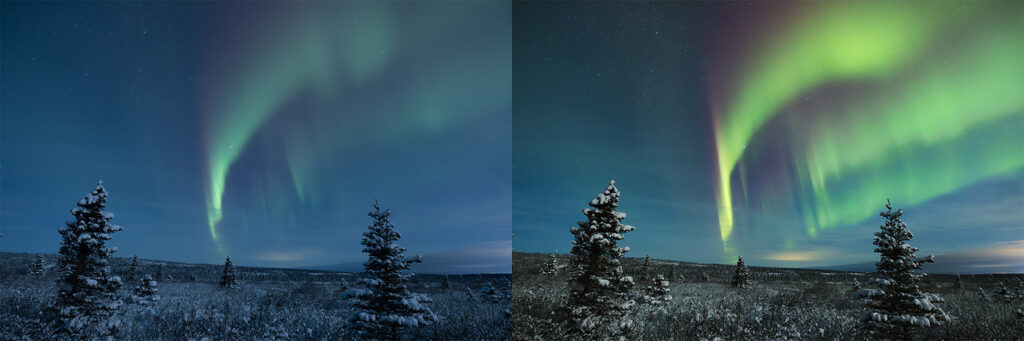
A knowledgeable guide can help you recognize these early signs and understand when something minor might develop into a major display. They can explain why the aurora appears where it does, what different colors indicate, and how solar wind interacts with Earth’s magnetosphere to create the phenomenon you’re witnessing. This education transforms your experience from simply “seeing lights” to truly understanding one of nature’s most magnificent displays.
This is the part that pays for itself on nights two and three. I’ve watched guests stand in front of a faint band on the northern horizon and ask whether it’s a cloud. It isn’t. Once you’ve had someone show you the difference in person, you own that for the rest of your trip, and for the rest of your life.
Aurora Science
The Science Behind the Show
Not every night delivers a “knock your socks off” aurora display. The northern lights are driven by solar activity—specifically, charged particles from the sun colliding with gases in Earth’s atmosphere.
This means aurora intensity varies dramatically based on factors like:
• Solar wind speed and density
• The orientation of the interplanetary magnetic field (IMF)
• Current geomagnetic conditions
• Time elapsed since coronal mass ejections (CMEs)
• Local atmospheric conditions and cloud cover
Understanding these variables—or at least working with someone who does—is crucial for managing expectations and maximizing your chances of success. A professional guide who genuinely understands aurora science (not just someone who’s memorized phrases from Facebook groups) can explain what conditions need to align for you to see the show you’re hoping for.
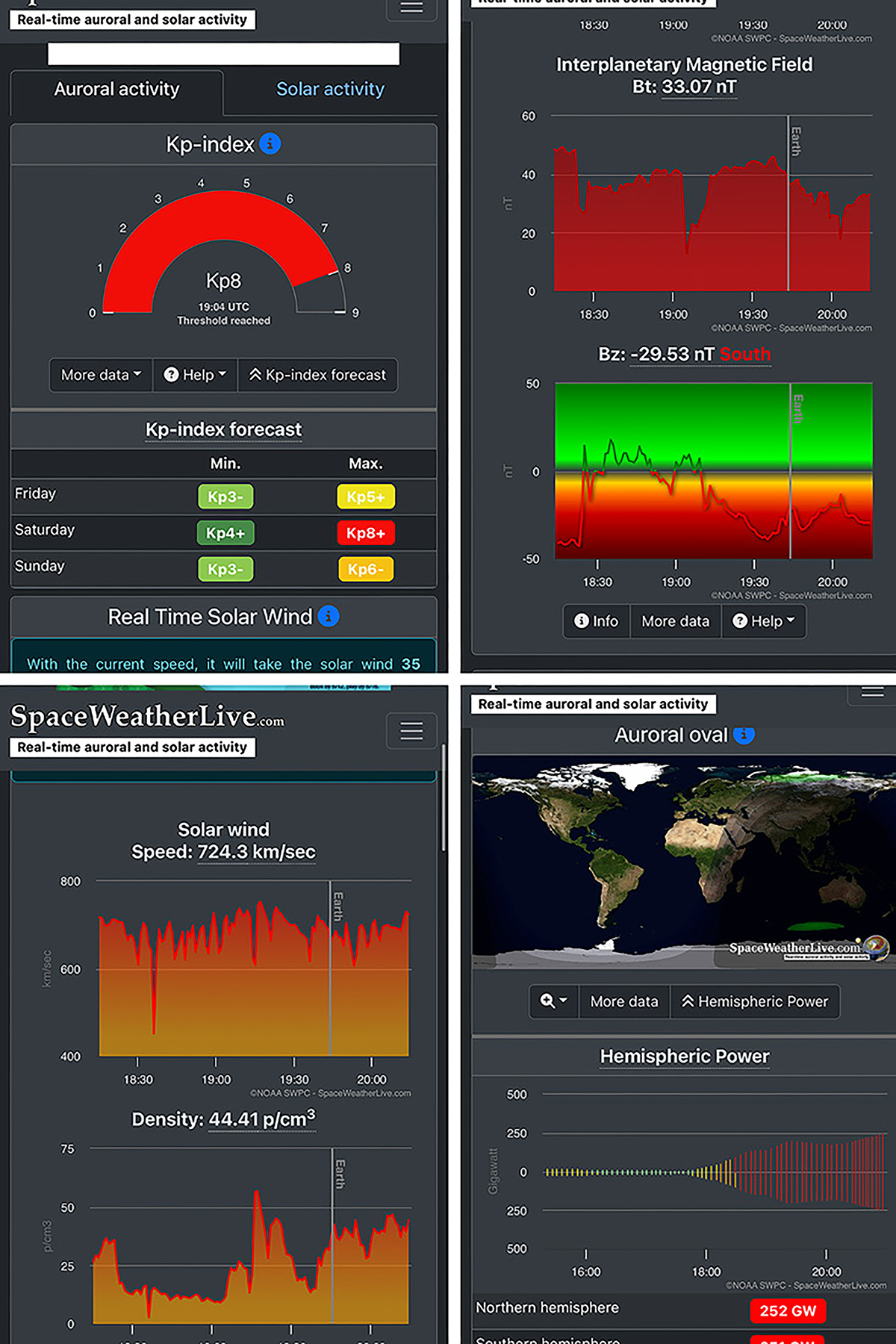
This knowledge also helps you make informed decisions on subsequent nights. If you understand that tonight’s weak display is due to unfavorable IMF orientation despite strong solar wind, you’ll know there’s still hope for tomorrow when conditions might shift. Without this context, you might assume the aurora just isn’t active during your visit and miss opportunities.
A Word About the KP Index
If you spend any time in aurora apps or Facebook groups before your trip, KP is the number everyone fixates on. It’s also the most overrated and least reliable number in aurora chasing, and I’d rather you hear that from me now than learn it the hard way on your second night.
KP is an average of geomagnetic activity over the previous three hours. Two things follow from that. First, it’s backward-looking — it describes what already happened, not what the sky is doing right now and not what it will do at midnight. Second, what it actually indicates is how far south the aurora might potentially be pushed. That matters enormously if you’re in Seattle or Michigan hoping for a rare sighting. In Fairbanks it matters a lot less, because we already sit directly under the aurora oval. The lights are overhead here on low-KP nights all the time.
KP tells you nothing about intensity, color, movement, or whether the display is worth standing outside for. I’ve had guests see the best show of their trip on a night the apps called boring, and I’ve stood under a high KP number that never amounted to much. Clear sky and being under the oval matter more than the number does. The real read on a night doesn’t come together until roughly 30 minutes out, and it can flip in either direction with no warning — which is exactly why nobody can pick your best night in advance, including me.
Whichever way you go — get the free season calendar.
Every viewable week from August 2026 through April 2027 — moon phases, dark hours, and the strongest nights to plan around, plus a 16-page field guide on reading the aurora forecast and what the lights really look like. From a native Alaskan guide. Free.
TOUR COMPANY LANDSCAPE
The COVID Boom: Navigating Fairbanks Tour Company Explosion
Ever since the pandemic, there’s been an explosion of tour companies launching operations in the Fairbanks area. While increased options can be positive, it’s also created an overwhelming and sometimes confusing landscape for visitors trying to determine which tours are worth the investment.
Some of these new operators are excellent—run by passionate individuals who genuinely love the aurora and want to share it with others. Others, frankly, are opportunistic ventures capitalizing on Fairbanks aurora tourism boom without bringing real expertise or quality to the table. The challenge is sorting one from the other. Some companies offer specialized trips to remote locations or unique experiences designed to increase your chances of seeing the aurora. In fact, certain tours venture to remote outposts north of Fairbanks, with some even crossing the Arctic Circle for a truly unique aurora viewing experience.
TOUR SELECTION CRITERIA
What to Look For When Choosing a Tour Company
If you’ve decided to book at least one tour during your visit, here are the critical factors to evaluate: Some tours offer unique experiences, such as the chance to fly to remote lodges or combine aurora viewing with other Alaskan adventures. Many tours also include classic winter activities like ice fishing or guided excursions on snow machines, giving you a full Alaskan winter experience. Certain tours also provide opportunities to interact with reindeer or observe local wildlife, making the experience even more memorable.
Group Size
True Small Group Size vs. Marketing Speak
Nearly every tour company in Fairbanks advertises “small groups,” but this is where marketing tactics and plays on words come into sharp focus. Pay extremely close attention to what “small” actually means.
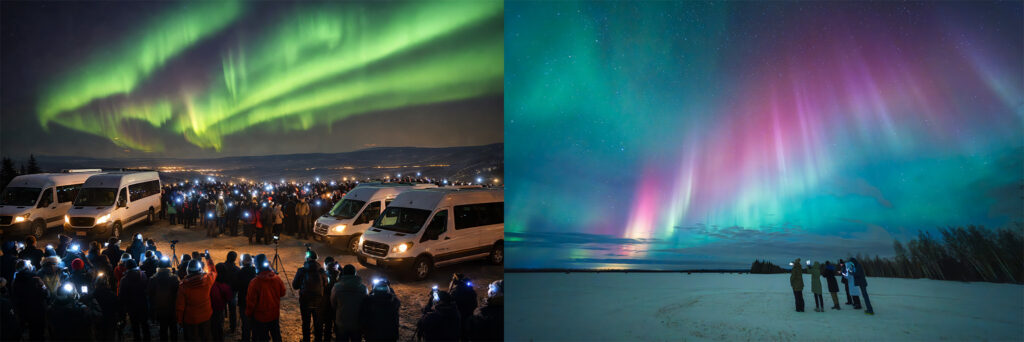
The Caravan of Chaos: Some companies advertise small groups because each individual van holds 10-15 people. What they don’t prominently mention is that they run multiple vans—sometimes four, five, or six of them—all traveling together in a caravan to the same viewing locations. You might think you’re booking an intimate experience, only to arrive at your viewing spot alongside 40-60 other tourists from the same company’s various vans. That’s not a small group experience; that’s a crowd.
The Cramped Car: Other companies truthfully offer small groups—because they only have a small car or van that fits 4-6 people maximum. While this limits crowd size, it can make for an uncomfortable night if you’re spending 6-8 hours cramped in a vehicle without adequate space to move around, stretch, or stay comfortable during the long waits that aurora viewing often requires.
What to Ask:
• “How many people maximum in my specific vehicle?”
• “How many total guests from your company will be at our viewing location?”
• “Do you run multiple vans to the same spots?”
• “What’s your vehicle type and seating configuration?”
Look for companies that genuinely cap their total group size—not just per van, but total guests from their operation at any given location. True small groups typically mean 10 or fewer total people, providing enough space for everyone to set up photography equipment, move freely, and enjoy the experience without constant crowding.
Guide Expertise
Actual Expertise vs. Social Media Hearsay
This is perhaps the most critical—and most difficult to verify—factor. Anyone who follows aurora-related Facebook groups or social media pages can pick up common phrases about what conditions produce northern lights. They adopt this language and present it as expertise, but it’s often shallow, incomplete, or based on misconceptions that get perpetuated in these communities.
Real aurora expertise means understanding:
• How to interpret real-time space weather data from sources like NOAA’s Space Weather Prediction Center
• The difference between aurora forecasts (predictions) and now casts (current conditions)
• Why real-time conditions matter more than the KP number everyone quotes
• How local atmospheric conditions interact with geomagnetic activity
• What different auroral forms indicate about current magnetospheric dynamics
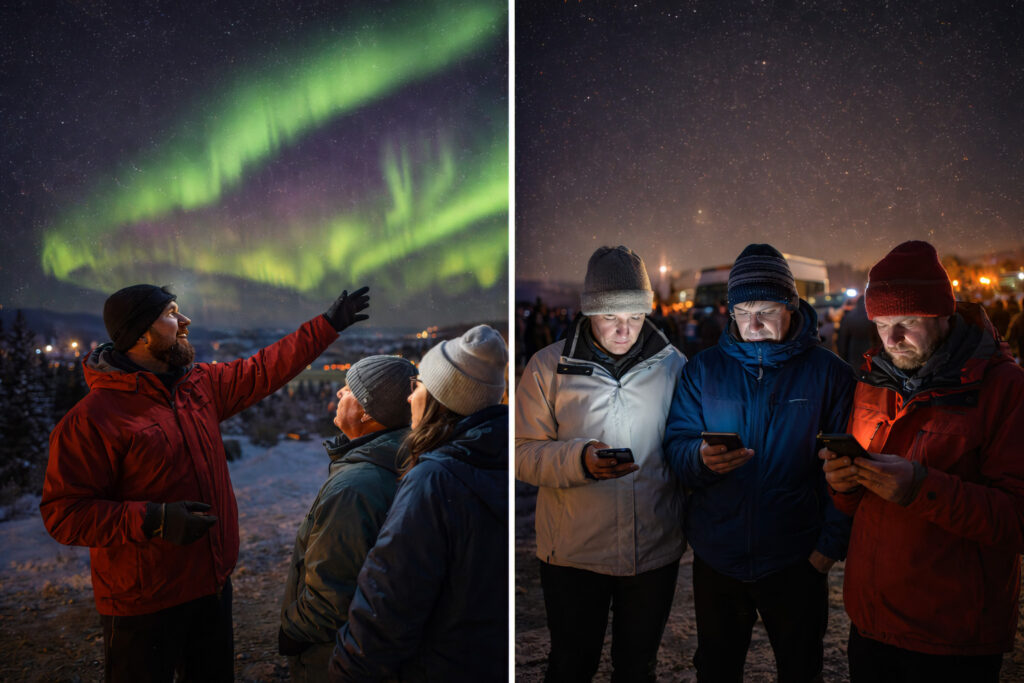
The challenge is that there’s no certification or licensing requirement for aurora tour guides in Alaska. Someone could literally arrive in Fairbanks last month, read a few online articles, and start advertising themselves as an “expert aurora guide” this week. The COVID-era boom has unfortunately brought more than a few of these operators into the market.
How to Evaluate Expertise:
• Look for guides with years (ideally 10+ years) of experience living and working in Alaska
• Native Alaskans or those actually born and raised in Alaska have an enormous advantage—they know the land, weather patterns, road conditions, and viewing locations in ways that transplants simply cannot replicate
• Check if they’re also professional aurora photographers (this requires deep technical knowledge)
• Read detailed reviews that mention the educational component—do people say they learned something substantive?
• Ask specific questions during booking: “How do you interpret Bz values?” or “What happens when solar wind speed is high but density is low?” A truly knowledgeable guide won’t just recite memorized facts; they’ll speak fluently about these concepts and can explain them in accessible ways.
Local Guide Importance
The Local Factor: Why It Matters More Than You Think
Here’s an uncomfortable truth: not all tour guides operating in Fairbanks are actually locals to the area. A huge factor in your success lies in working with someone who was actually born and raised in Alaska—someone who intimately knows the land, understands seasonal weather patterns from a lifetime of experience, can read the sky like second nature, and knows every back road and hidden viewing location from years of exploring.
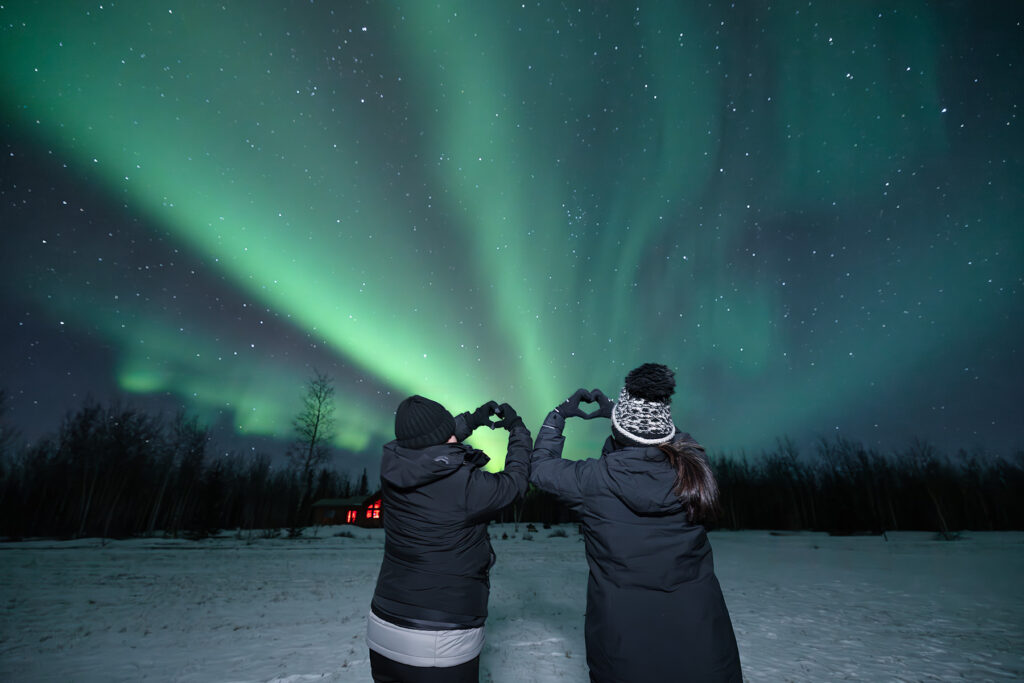
Unfortunately, there aren’t as many of these true local guides out there as you might think. The post-COVID tour boom brought an influx of seasonal operators and transplants who moved to Alaska specifically to capitalize on aurora tourism. Some of these folks are well-intentioned and work hard to learn, but there’s no substitute for someone who’s spent their entire life under these skies, who learned to read weather systems and aurora conditions growing up here, and who knows from decades of experience which roads are passable and which viewing locations work best under specific conditions.
When evaluating tour companies, don’t be afraid to ask: “How long have you lived in Alaska? Were you born here? How many winters have you guided aurora tours?” The answers will tell you a lot about whether you’re working with a true local expert or someone who arrived last year with a van and an idea.
Tour Types
Lodge Setting vs. Road Tours
Tour approaches in Fairbanks generally fall into three categories:
Static Lodges/Resorts: These are fixed locations—cabins, yurts, or viewing facilities positioned in good aurora-viewing areas. The advantage is comfort: indoor facilities, heating, sitting areas, and often amenities like hot drinks and snacks. The disadvantage is inflexibility. If clouds roll in over that specific location, you’re stuck hoping they clear. Some nights, weather systems park directly overhead while just 30 miles away skies are crystal clear. Some tours may also include stops at iconic Alaskan landmarks such as Denali or the Trans Alaska Pipeline, adding to the overall experience.
Road-Based Chasing: These tours operate entirely from vehicles, driving from location to location throughout the night. The benefit is complete flexibility—if one area is clouded over, you can relocate. The downside is that you’re sacrificing comfort. You can’t truly replicate the warmth, proper facilities, and relaxed atmosphere of a lodge setting when you’re operating from the road.
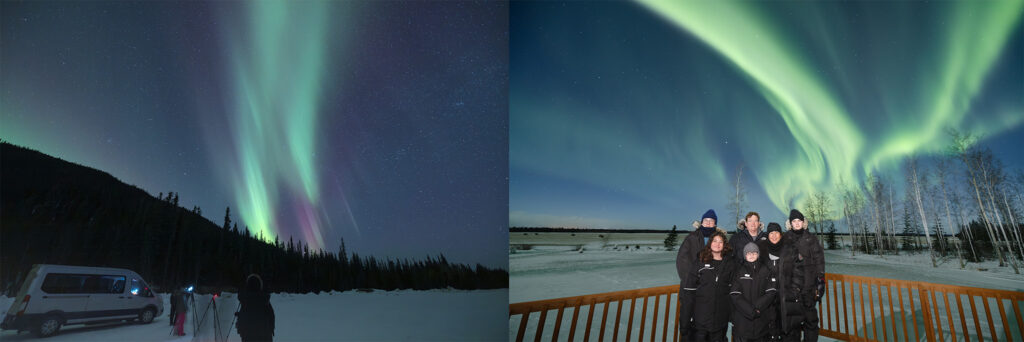
Hybrid Approach: The best of both worlds—and the rarest—is a private lodge that also offers mobile chasing capability. You get the comfort and amenities of a lodge setting as your primary location, but if weather systems move in, your guide has the flexibility and local knowledge to relocate the group to clearer areas. This dramatically increases your odds of success compared to being stuck at a static location or roughing it on the road all night. This is how we run Face The Outdoors: our private lodge is home base on clear nights, and when clouds move in, we go mobile and read real-time weather to find where the cover is breaking. Ask any tour company you’re considering: “What happens if clouds cover our viewing location?” Their answer will tell you a lot about their operational flexibility.
Additionally, certain attractions or facilities, like the Aurora Ice Museum, are open year round, providing options for visitors regardless of the season.
PHOTOGRAPHY CONSIDERATIONS
Photography Packages: Read the Fine Print Many tour companies now offer photography as part of their package, but the quality and delivery vary wildly:
The Carnival Ride Model: Some operations will take photos of you during the tour, but treat them like those pictures at amusement parks—showing you thumbnails afterward and trying to upsell you to actually purchase the images. You might pay extra for your tour thinking photos are included, only to discover that’s just for the opportunity to have photos taken, not actually receive them.
The Cell Phone Special: Other companies advertise “photos included” but capture them on a cell phone rather than a proper camera.
While modern phones have decent cameras, they simply cannot capture the aurora with the same quality as a DSLR or mirrorless camera with proper wide-aperture lenses designed for low-light astrophotography.
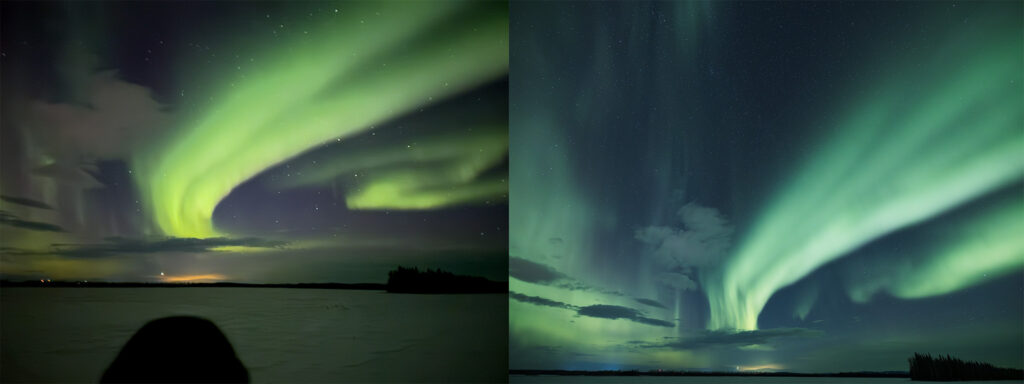
Cell Phone vs Professional Camera
The Resolution Upsell: Perhaps the most frustrating practice is companies that include photos but deliver them with heavy digital noise and no post-processing. The images are grainy, dark, and generally unusable. Then they offer to sell you “the clean version” or “the professionally processed version” as an upsell. You’re essentially paying twice—once for the tour that supposedly included photos, and again for photos that are actually worth having.
What Quality Photos Should Look Like:
• Captured with a real camera (DSLR or mirrorless) with a fast lens (f/2.8 or wider)
• Properly exposed and focused on both you and the aurora • Professionally processed to reduce noise and bring out detail
• Delivered in high resolution without additional fees
• Included as part of your tour price with no surprises
Before booking, look at the company’s actual aurora photography portfolio. If their sample images are grainy, poorly composed, or look like cell phone photos, that’s what you’ll receive—if you receive anything at all without additional charges.
PHOTOGRAPHY EXPERTISE
For Photographers: Equipment and Expertise Matter
If you’re traveling to Fairbanks specifically to photograph the aurora (not just see it), choosing the right tour becomes even more critical. Take a close look at the company’s photo portfolio—not just the aurora shots, but the quality of those images:
• Are they sharp and well-focused, or soft and blurry?
• Do they show proper exposure and minimal noise?
• Are they composed thoughtfully with interesting foregrounds?
• Do they demonstrate technical proficiency with night photography?
If a company is charging premium prices but their portfolio looks like cell phone snapshots with heavy digital noise and poor composition, that’s an instant red flag. They don’t actually know how to photograph the aurora properly, which means they can’t teach you either.
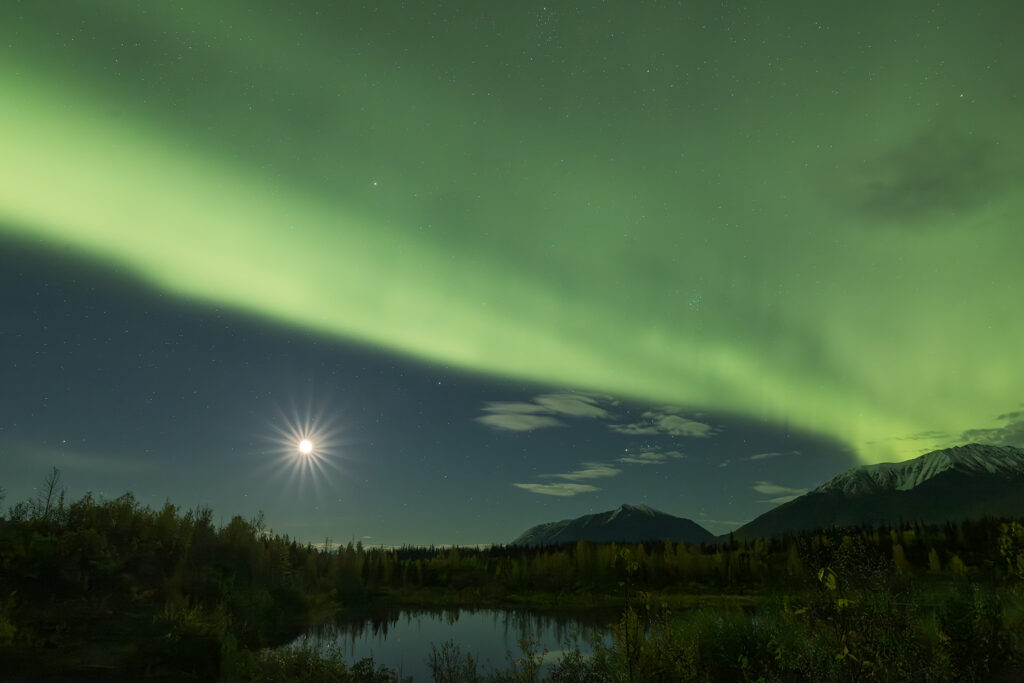
Look for guides who are themselves professional aurora photographers with years of experience. They should be able to help you with:
• Camera settings (ISO, aperture, shutter speed) for different aurora intensities
• Focus techniques in complete darkness
• Composition strategies incorporating foreground elements
• White balance decisions
• Dealing with extreme cold and battery preservation
• Interval shooting for timelapses
If your tour guide is still figuring out their own camera settings, they won’t be much help with yours.
GUARANTEE WARNINGS
Beware of “100% Guarantee” Marketing Tactics
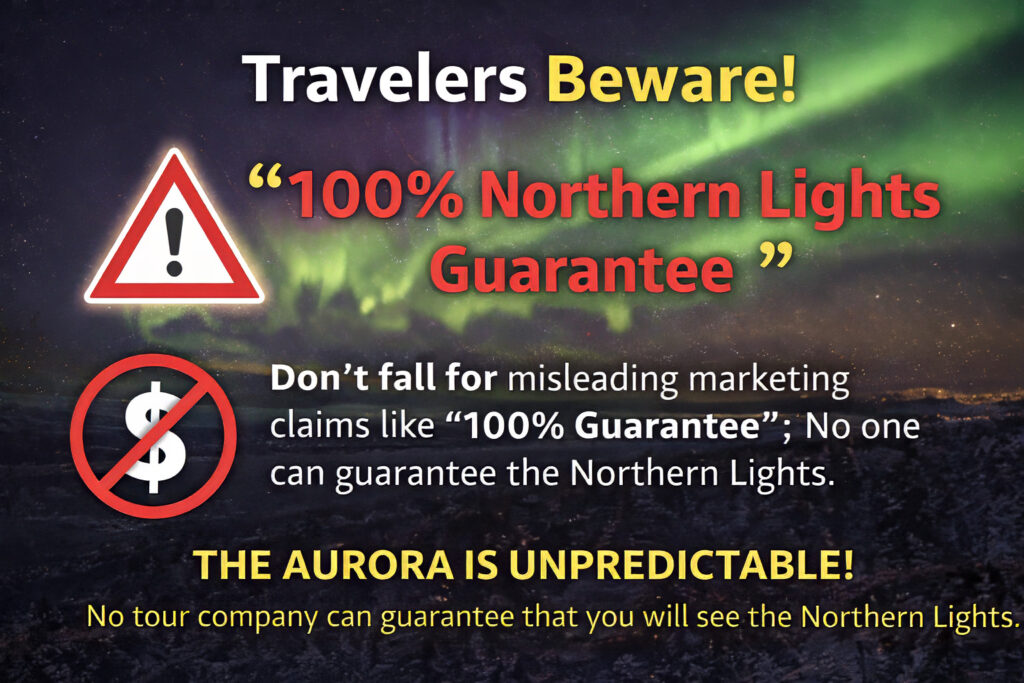
As you research tour options, you’ll inevitably encounter companies advertising “100% guaranteed northern lights sightings” or similar promises. Here’s what you need to understand: no one can genuinely guarantee you’ll see the aurora borealis. The northern lights are a natural phenomenon driven by solar activity and influenced by Earth’s magnetic field, atmospheric conditions, and weather—all factors beyond human control.
Companies making absolute guarantees are either being misleading or have built loopholes into their terms (like offering you another tour on a different night, which doesn’t help if you’re only in Fairbanks for three days and have already scheduled your other nights). This kind of marketing language preys on the vulnerability of travelers who’ve invested significant money in flights, accommodations, and tours specifically to witness the aurora.
What reputable companies can offer is something far more valuable than false guarantees: proactive rescheduling and flexibility. Quality operators who genuinely have your best interests in mind will:
• Monitor weather forecasts and aurora activity predictions in the days leading up to your scheduled tour
• Contact you proactively if conditions look particularly poor for your booked night but better on another available night
• Offer to reschedule you without penalty to position you for higher success
• Work with you to maximize your chances within your available dates in Alaska
• Be honest about what conditions to expect rather than making impossible promises
This approach doesn’t guarantee aurora sightings—because again, no one can—but it does show a company that prioritizes your experience and success over simply collecting your money and hoping for the best. Look for tour operators who explicitly discuss their rescheduling policies and demonstrate flexibility in working with guests to optimize viewing conditions.
MARKETING TACTICS WARNING
Reading Between the Marketing Lines
The overwhelming popularity of aurora tourism in Fairbanks has attracted operators with varying motivations. Some are genuinely passionate about sharing the aurora and providing exceptional experiences. Others saw an opportunity to make quick money from the vulnerability and dreams of travelers who’ve saved for years to witness the northern lights.
Be on the lookout for companies that demonstrate they have your best interests and experience in mind versus those simply capitalizing on the boom. Red flags include:
• Absolute guarantees about aurora sightings
• Vague or evasive answers about group sizes or multiple van operations
• Reluctance to discuss their rescheduling and flexibility policies
• Poor quality photography in their portfolio despite charging premium prices
• Limited information about the guide’s actual background and experience
• Emphasis on “once in a lifetime” language designed to pressure immediate booking
• Hidden fees or surprise upsells after you’ve already paid
• Taking you only to the same crowded public spots you could access independently
Companies with genuine integrity will:
• Be transparent about what they can and cannot control
• Clearly explain their group size policies (total people, not just per vehicle)
• Discuss their flexibility and rescheduling approach proactively
• Showcase high-quality photography demonstrating real expertise
• Provide detailed information about their guides backgrounds
• Set realistic expectations while maintaining optimism
• Have clear, straightforward pricing with no surprises
• Offer access to private or less-crowded locations
Your dream of seeing the northern lights is valuable and important. Fairbanks is considered one of the best places in the world to witness the aurora borealis. Don’t let marketing tactics or opportunistic operators turn it into a disappointing experience.
Do your research, ask hard questions, and choose companies that demonstrate through their policies and transparency that they genuinely care about delivering the best possible aurora experience.
BOOKING POLICIES
Booking Minimums and Solo Traveler Concerns
Here’s a frustrating scenario that happens more often than it should: You book a tour weeks or months in advance. The date arrives, but you’re the only person who booked that specific night. The company cancels on you because they didn’t meet their minimum group size, leaving you scrambling to figure out what to do now.
This is particularly problematic for solo travelers visiting Fairbanks. Not all tour companies operate every night, and those that do often have booking minimums (typically 2-4 people) before they’ll actually run the tour. If you’re traveling alone during shoulder season or midweek dates, you might find yourself canceled on multiple nights.

Questions to Ask:
• “Do you have a booking minimum to run tours?”
• “What happens if I’m the only one booked for my date?”
• “How much advance notice will I receive if my tour is canceled?”
• “Do you guarantee tours for all booked dates, or only when minimums are met?”
Some companies guarantee they’ll run tours regardless of group size, while others will cancel or try to move you to a different night. Know this before booking, especially if you’re traveling solo or have a limited window in Fairbanks.
BUDGET VS PREMIUM
You Get What You Pay For
If all you want is to see the northern lights and don’t particularly care about crowded vans, basic viewing locations, or the overall quality of the experience, there are plenty of budget options available in Fairbanks. Some of these are perfectly adequate for travelers who simply want to check “saw the aurora” off their bucket list and move on.
However, budget tours typically mean:
• Larger groups (often 30+ people)
• Less knowledgeable guides or seasonal workers
• More crowded, well-known viewing locations
• Basic or no photography assistance
• Lower quality (or no) included photos
• Less flexibility if conditions change
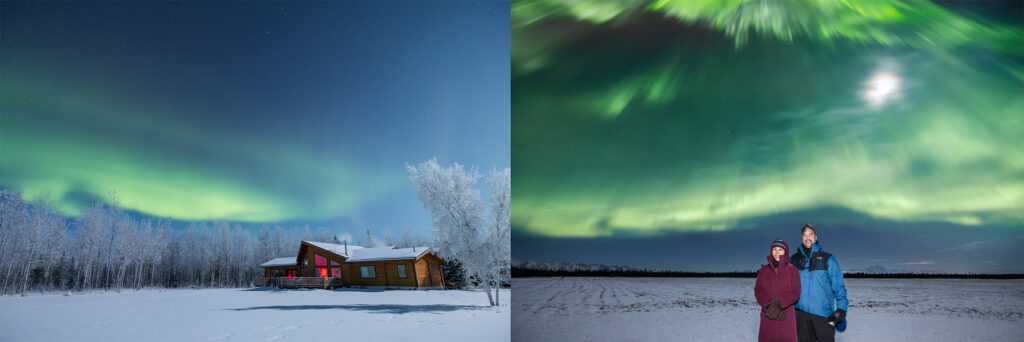
There’s nothing inherently wrong with choosing a budget option if that fits your priorities and constraints. Just understand that aurora touring, like most specialized experiences, follows the general rule that you get what you pay for.
Premium tours cost more because they:
• Limit group sizes genuinely (and therefore book fewer people per night)
• Employ experienced, knowledgeable guides (often the business owners themselves)
• Maintain higher-quality vehicles and equipment
• Include better photography packages with professional results
• Offer more flexibility and personalized attention
• Operate from private locations or lodges rather than public pullouts
Best Time to Visit
Our season runs August 20 through April 20. That’s not a marketing window — it’s simply when there’s enough darkness to see anything. In summer the aurora is still up there doing what it does; you just can’t see it, because the sky never gets dark.
Within that window, September through March is the strong stretch. December through February gives you the longest, darkest nights and the coldest, driest air — which is also the clearest air. September and March buy you milder temperatures, and around the equinoxes there’s a real bump in the odds: the Earth’s tilt lines up with the solar wind in a way that raises the potential for stronger activity. Potential, not a promise. The UAF Geophysical Institute explains the mechanism better than I can.
Most nights, the lights show up between roughly 10 p.m. and 3 a.m. That’s why tours run late. The good stuff rarely happens at 9 p.m. while you’re finishing dinner.
Here’s the part most planning guides won’t tell you, and it matters more than the month you pick: the biggest lever you control is how many nights you’re here. Three nights is the number the Fairbanks market throws around. My honest recommendation is five to seven. Weather is what shuts a night down — not solar activity — and every extra night is another roll of the dice on clear sky. Nobody, including me, can look at a calendar months out and tell you which night will be the good one. More nights stacks the odds. That’s the whole trick, and it’s the single best piece of advice on this page.
Solar activity matters less than most people think, at least for Fairbanks specifically. Solar Cycle 25 peaked in October 2024 and is now on its downslope, but the years right after a peak still deliver frequent, strong displays — 2026 and 2027 are still a strong stretch before things taper toward solar minimum around 2030. And because Fairbanks sits directly under the aurora oval, the lights are visible here on clear nights regardless of where we are in the cycle. What the cycle really changes is how far south the aurora pushes during big events. That’s a Seattle problem, not a Fairbanks one.
If you’re planning far ahead, NOAA’s 27-Day Space Weather Outlook updates every Monday at noon UTC. It’s worth a look for a rough sense of things, but treat it as directional. Even a three-day forecast only points a direction; the true read on any given night doesn’t exist until about half an hour before it happens.
That’s the tour side of it. Now the other nights — the ones you’re doing on your own, without me or anybody else. This is the part I’d want a friend to read before they rented a car and drove into the dark at midnight.
DIY VIEWING
Why You Don’t Technically Need a Tour — and What Doing It Yourself Actually Takes
Let me be straight with you, because this is the whole reason this page exists: you can do this yourself. Nobody has to drive you. The aurora is free and the roads are public. What nobody tells you is how much you’re picking up when you decide to do it alone.
Doing it yourself means you are the one who has to:
• Read the forecast — and know which parts of it are worth anything and which parts aren’t
• Pick tonight’s spot, in the dark, from a list of places you’ve never been
• Drive there on winter roads at midnight, and drive home at 3 a.m. more tired than you planned on
• Know what faint aurora looks like before it does anything, so you don’t drive home twenty minutes early
• Protect your dark adaptation in a pullout full of people who aren’t protecting theirs
• Get a camera to record what’s actually there, in gloves, at -25°F, focused on infinity in the dark
• Decide when it’s worth waiting another hour and when the night is done
• Then get up and do all of it again tomorrow, on four hours of sleep
None of that is beyond you. People manage it every winter and go home thrilled. But that’s the job, and it’s the whole job — every night, on vacation, in the cold, in a place you don’t know. That’s where a guide earns their keep: not because you can’t do it, but because somebody else already knows all of it and you get to just stand there and watch the sky. Here’s the honest version of both sides.
Fairbanks sits in one of the best locations on Earth for viewing the northern lights. The city is positioned directly beneath the auroral oval, experiences over 240 clear nights annually, and benefits from Interior Alaska’s unique microclimate that produces some of the most transparent winter skies you’ll find anywhere. On a good night with strong geomagnetic activity, you can literally step outside your hotel and see the aurora dancing overhead. However, it’s important to note that the aurora cannot be seen during daylight hours—darkness is essential for viewing, which is why winter skies are consistently dark and ideal for aurora hunters.
Many visitors attempt to see the northern lights on their own by driving to popular viewing locations like Cleary Summit, Murphy Dome, or Chena Lakes. Those are real spots and they work. Here’s what most people don’t realize until they’re standing in one at 1 a.m.: these well-known places are often crowded with dozens of other aurora chasers, tour vans, and independent travelers. The best chances to see the aurora are typically during the late evening and early morning hours, usually between 10 PM and 3 AM, so expect these locations to be busiest during exactly the hours you want them quiet.
The constant coming and going of vehicles means a steady stream of headlights and taillights that play absolute havoc with your viewing experience and dark adaptation. Murphy Dome presents additional challenges—the road isn’t maintained during winter months, making travel hazardous at times, and cell service is spotty at best.
If you encounter trouble up there, you’re largely on your own. Chena Lakes and Cleary Summit, while more accessible, become parking lots on active aurora nights, with the light pollution from dozens of headlamps, phone screens, and vehicle lights significantly diminishing the experience you traveled all this way to have. In addition, city lights from Fairbanks can interfere with aurora viewing, so escaping the urban glow and seeking out darker locations is crucial for the best experience.
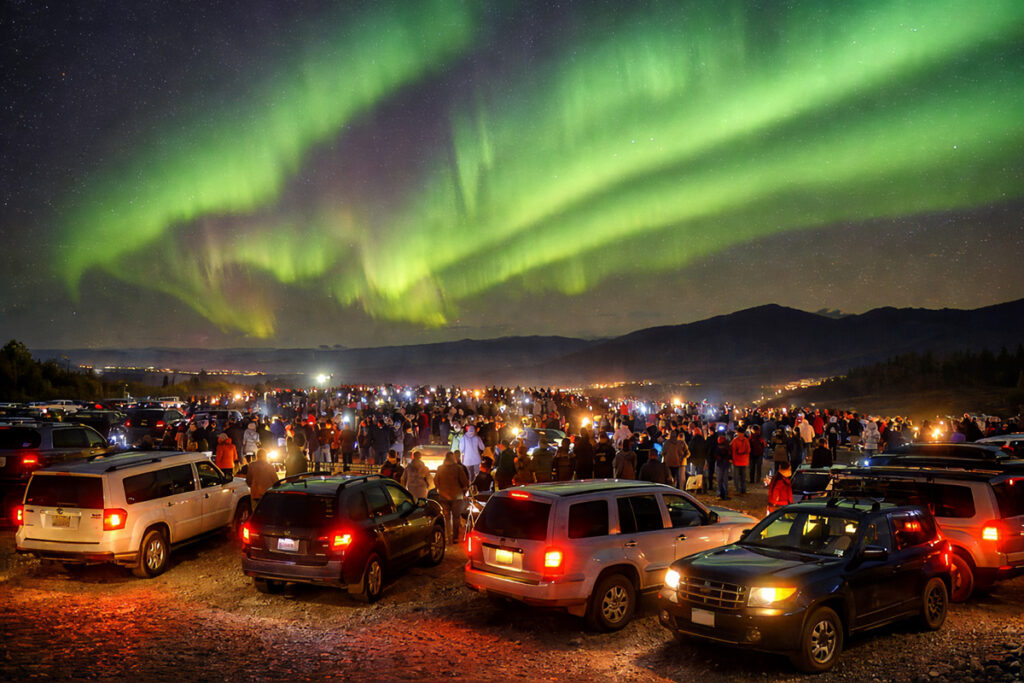
Here’s something worth knowing: some tour companies will actually take you to these exact same crowded public locations you could’ve easily driven to yourself. If you don’t mind dealing with large crowds at these popular viewing spots and the significant light pollution they bring, then you might find success there. In contrast, private aurora lodges often provide amenities like a large deck for unobstructed northern lights viewing away from the crowds.
But understand that you’re not getting access to anything special—you’re paying to be driven to the same overcrowded pullouts that independent travelers use for free. If you’re comfortable driving on winter roads, have done your research on where to go beyond these tourist-packed locations, understand basic aurora forecasting, and don’t mind the possibility of striking out on a given night or dealing with crowds, then yes—you can attempt to see the northern lights in Fairbanks without hiring a guide. Just be prepared for what “popular viewing locations” actually means in practice. Some dedicated aurora chasers even set alarms for the early morning to maximize their chances of seeing a display.
Best Places for Viewing
When it comes to chasing the aurora borealis, Fairbanks, Alaska stands out as one of the best places on the planet to witness this elusive phenomenon. Thanks to its prime location directly beneath the auroral oval, Fairbanks offers some of the most reliable and vibrant aurora viewing opportunities in the northern hemisphere. The city’s relatively low light pollution, especially once you leave the city lights behind, means the night sky here is often a perfect canvas for the northern lights to paint their magic.
The aurora season in Fairbanks runs from August 20 through April 20, with the best chances of seeing the lights typically falling between 10 pm and 3 am—those early morning hours when the sky is darkest. During this window, the combination of clear skies, auroral activity overhead, and minimal interference from artificial light can create truly unforgettable displays.
For those who want to combine science with their aurora adventure, the University of Alaska Fairbanks Geophysical Institute is a must-visit. The institute publishes a live aurora forecast and real-time space weather data — including the KP index, which, as covered above, is a three-hour average indicating how far south the aurora may be seen rather than how good the show will be. Its hilltop location also offers sweeping, unobstructed views of the sky, and it’s a good spot for both casual viewers and serious photographers.
If you’re seeking a more secluded experience, head northwest to Ester Dome. This area, about 20 miles from downtown Fairbanks, is renowned for its minimal light pollution and panoramic vistas. There are several pull-outs and parking areas along the road, making it easy to find your own quiet corner to watch the sky. A new moon or thin crescent will give you the darkest skies — though the moon matters less than people expect, since only weak aurora gets washed out by moonlight.
Beyond these hotspots, Fairbanks offers a variety of other excellent locations for aurora viewing. The University of Alaska Fairbanks campus, local parks, and the Chena River State Recreation Area all provide open spaces with clear sightlines to the northern sky. For the most up-to-date information on when and where to watch, consult NOAA’s Space Weather Prediction Center and the University of Alaska Fairbanks Geophysical Institute’s aurora forecast—these resources help you track expected auroral activity and plan your night accordingly.
Ultimately, Fairbanks, Alaska is a world-class destination for anyone hoping to witness the magic of the northern lights. Whether you’re soaking in the warmth of Chena Hot Springs, scanning the sky from a hilltop, or venturing out to a remote pull-off with your camera in hand, the combination of auroral activity overhead, clear skies, and minimal light pollution gives you the best possible chance to experience this breathtaking spectacle. With a bit of planning, a dash of luck, and a willingness to chase the forecast, you’ll find yourself under a sky alive with color—an experience that will stay with you long after the aurora fades.
That’s the honest case for going out on your own, and plenty of people do it and go home happy. Before you commit to doing every night that way, though, there are two things I’d want you to think about that don’t show up in most trip reports, and they’re the two that most often turn a DIY night into a wasted one. The first is the drive.
SAFETY CONSIDERATIONS
The Real Question: Can You Handle Alaska Winter Roads?
Be completely honest with yourself: Are you comfortable and experienced driving on icy, potentially unplowed roads in complete darkness, possibly in sub-zero temperatures, in an unfamiliar place?
Alaska’s winter roads are not like winter roads in most other places. When temperatures drop to -20°F or -30°F, ice behaves differently. Roads can be glare ice, snow-packed, covered in black ice, or any combination. GPS doesn’t always work reliably in remote areas. Cell phone service becomes spotty or nonexistent once you leave town, especially as you travel farther north toward some of the best aurora viewing locations, which are often deep in the northern wilderness.
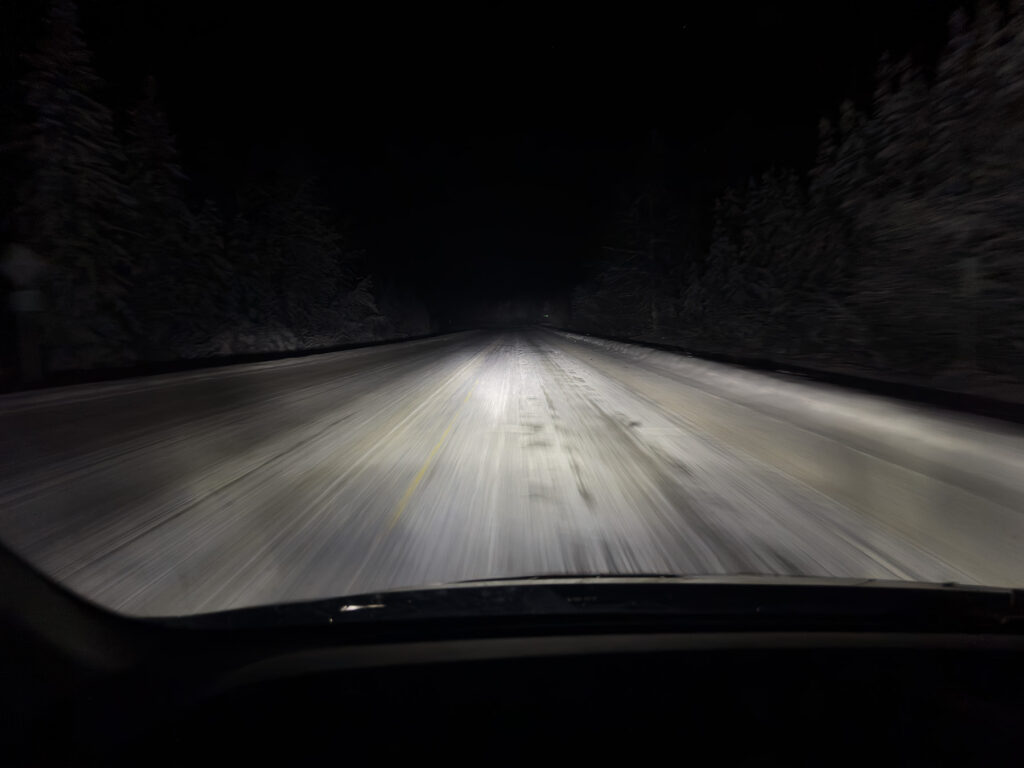
If you have a flat tire, slide off the road, or have mechanical issues 30 miles from town at 2 a.m. in -25°F weather, do you know what to do? Are you prepared with emergency supplies, proper clothing, communication devices, and the skills to handle these situations? For visitors from warmer climates or those without winter driving experience, this is where hiring a guide becomes less about convenience and more about safety.
I’m not trying to scare you off the roads. Locals drive them all winter. But locals also grew up on them, carry the gear, and know which pullout has a shoulder underneath the snow and which one drops off. If your winter driving experience is a few inches of slush in a city that plows, a January night on the Steese at 2 a.m. is a different animal, and the aurora is a bad reason to find that out.
A professional guide:
• Knows the roads and conditions intimately
• Has emergency equipment and supplies
• Understands where and when it’s safe to travel
• Has communication systems that work in remote areas
• Is prepared for mechanical issues or weather changes
They’re also insured, licensed, and professionally equipped for exactly this type of winter operation.
The second thing is the crowd.
LIGHT POLLUTION AND CROWDS
Group Size and Light Pollution from Other Guests
Here’s something most people don’t consider until they’re standing in the dark: when you’re trying to witness a natural phenomenon that’s best seen in complete darkness, why would you want to be in a large group where headlamps, flashlights, cell phone screens, and the general crowded viewing location constantly interfere with your experience?
Light pollution doesn’t just come from cities. It comes from your fellow aurora viewers. Every time someone turns on a headlamp to check their camera settings, every time a phone screen lights up, every time someone walks behind your long-exposure photograph with a flashlight, you’re experiencing light pollution that diminishes both your dark adaptation and your ability to see subtle auroral features.
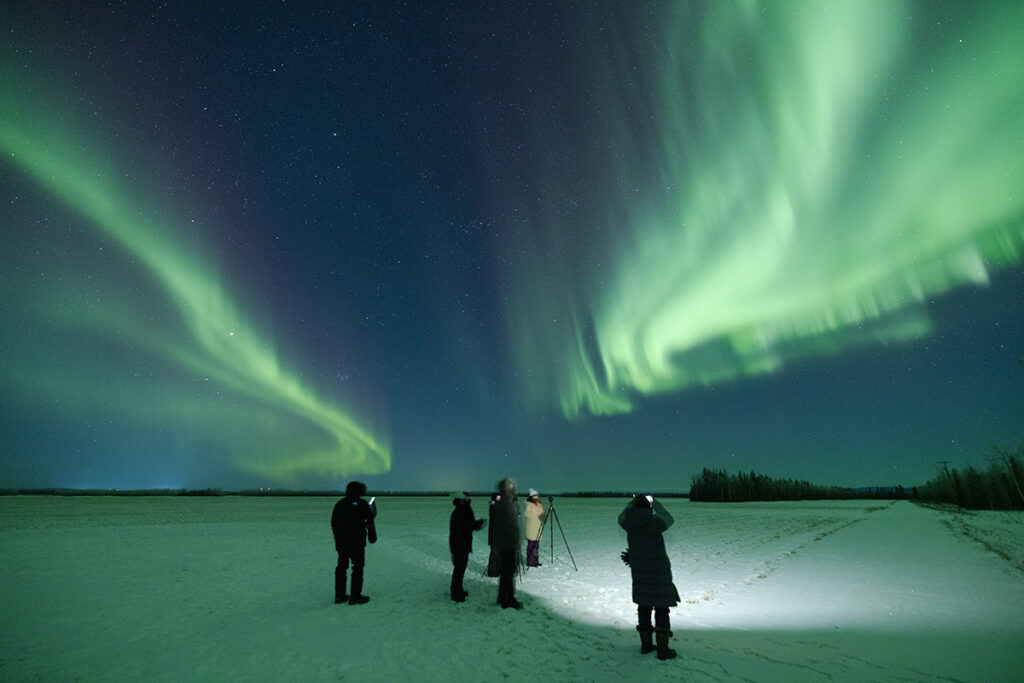
Your eyes need roughly 20 to 30 minutes in the dark to see faint aurora properly. One truck pulling into the pullout with its headlights on resets that for everybody. At a busy spot on an active night, that happens every few minutes, all night. It’s why the aurora people saw at Cleary Summit and the aurora people saw somewhere dark on the same night can be two different reports of the same show.
This is another strong argument for genuinely small groups. With 10 or fewer people, you can establish protocols (like using red-filtered lights, coordinating photo timing, spacing out across the viewing area) that simply aren’t possible with 40+ people at a location.
MAKING YOUR CHOICE
Making Your Final Decision
So, do you need a tour to see the northern lights in Fairbanks? No. Can you successfully see them on your own? Yes—especially if you’re comfortable with winter driving, have done your research, and are willing to accept some trial and error and share the pullout with a crowd. If you’re planning a DIY aurora hunt, keep your days light: sightsee in the afternoon, then rest in the evening, because you’re going to be up until 3 a.m.
Should you still book at least one tour? Yes. That’s my honest answer, and it’s the same answer I’d give you if you booked that night with somebody else.
Do it early in your trip, not on your last night. That’s the part people get backwards. Everything a good guide shows you on night one — what a faint band looks like before it does anything, which way to face, how long to wait before you call it, how to get your camera to actually record what’s there — you carry to Murphy Dome on nights two and three. Save the tour for your last night and you learn all of it just in time to fly home.
Even if you plan to do DIY aurora hunting on every other night, one night with a knowledgeable guide will:
• Educate you about what to look for and what conditions mean
• Show you better viewing locations than you’d find on your own
• Explain the science in ways that enhance subsequent viewings
• Provide photography guidance that improves your skills
• Increase your overall success rate during your limited time in Alaska
• Deliver professional photos you couldn’t capture yourself
• Keep you away from the crowded, light-polluted popular spots
If you do decide to book a tour, do your research. Don’t just grab the first listing that pops up or choose based solely on price. Look for:
• Genuinely small groups (ask about total people, not just per-van)
• Real expertise (years of experience, preferably born and raised in Alaska)
• Quality photography (review their portfolio carefully)
• Transparent policies (no hidden fees or upsells)
• Operational flexibility (mobile chasing capability when needed)
• Solo-traveler friendly (no surprise cancellations due to minimums)
• Honest communication (no “100% guarantees”)
• Proactive rescheduling for optimal conditions
• Access to private or less-crowded locations
To make that easier, we put together a breakdown that lays out exactly these factors — group size, photos, policies, and price — so you can compare the major Fairbanks aurora tour companies side by side.
The northern lights above Fairbanks are genuinely magnificent, and whether you see them independently or with a guide, you’re in for one of nature’s most incredible shows. Just remember that aurora viewing is not possible during the summer months due to the extended daylight hours.
Make sure your choice—tour or DIY—aligns with your skills, comfort level, and the type of experience you’re hoping to have. Our season opens August 20, when the nights are finally long and dark enough to see anything, and closes April 20. And if you choose the popular public locations, be prepared for crowds and light pollution that can significantly diminish your experience.
FREQUENTLY ASKED QUESTIONS
Do you need a tour to see the northern lights in Fairbanks?
No, you don’t technically need a tour to see the northern lights in Fairbanks. The auroral oval sits directly overhead, and there are accessible locations within driving distance. However, doing at least one tour dramatically improves your overall experience and success rate through expert guidance, access to private locations, and education about what you’re seeing.
What should I look for when choosing an aurora tour company?
Look for genuinely small groups (ask total people, not just per-van), real expertise (10+ years experience, preferably born and raised in Alaska), quality photography portfolios, transparent policies with no hidden fees, operational flexibility with mobile chasing capability, solo-traveler friendly policies, honest communication without ‘100% guarantees’, and access to private or less-crowded locations.
Why are popular aurora viewing spots in Fairbanks crowded?
Popular spots like Cleary Summit, Murphy Dome, and Chena Lakes become crowded with dozens of aurora chasers, tour vans, and independent travelers. The constant headlights and taillights ruin dark adaptation, while headlamps, phone screens, and flashlights create light pollution that diminishes the viewing experience and ruins long-exposure photographs.
What does ‘small group’ actually mean for aurora tours?
Be cautious—some companies advertise ‘small groups’ per van (10-15 people) but run multiple vans in caravans to the same location, resulting in 40-60 tourists. True small groups mean 10 or fewer total people at your viewing location. Ask: ‘How many total guests from your company will be at our viewing location?’
Should I be concerned about ‘100% aurora guarantee’ claims?
Yes, be skeptical. No one can genuinely guarantee aurora sightings—they’re a natural phenomenon driven by solar activity and weather beyond human control. Companies making absolute guarantees are misleading or have loopholes in their terms. Look instead for companies offering proactive rescheduling and flexibility.
What’s the difference between lodge tours and road-based aurora chasing?
Static lodges offer comfort but can’t relocate if clouds roll in. Road-based chasing offers flexibility but sacrifices comfort. The best option is a hybrid approach: a private lodge as your primary location with mobile chasing capability if weather moves in.
Why does it matter if an aurora guide is a native Alaskan?
Native Alaskans born and raised in the state intimately know the land, seasonal weather patterns, road conditions, and hidden viewing locations from a lifetime of experience. There’s no substitute for someone who’s spent decades under these skies.
What photography red flags should I watch for in aurora tours?
Watch for: tours that show photos but charge extra to purchase them, photos captured on cell phones instead of proper cameras, low-resolution images with heavy noise that require paying for ‘clean versions’, and portfolios with grainy, poorly composed shots. Quality tours include high-resolution professional photos with no surprise upsells.
Is it safe to drive to aurora viewing spots in Fairbanks winter?
Alaska winter roads can be glare ice, snow-packed, or black ice in -20°F to -30°F temperatures. GPS and cell service are unreliable in remote areas. If you lack winter driving experience, hiring a guide becomes about safety, not just convenience.
When is the best time to see northern lights in Fairbanks?
Aurora season in Fairbanks runs August 20 through April 20. Peak viewing is September through March, when the nights are longest and darkest. Most displays appear between 10 PM and 3 AM.
CONCLUSION
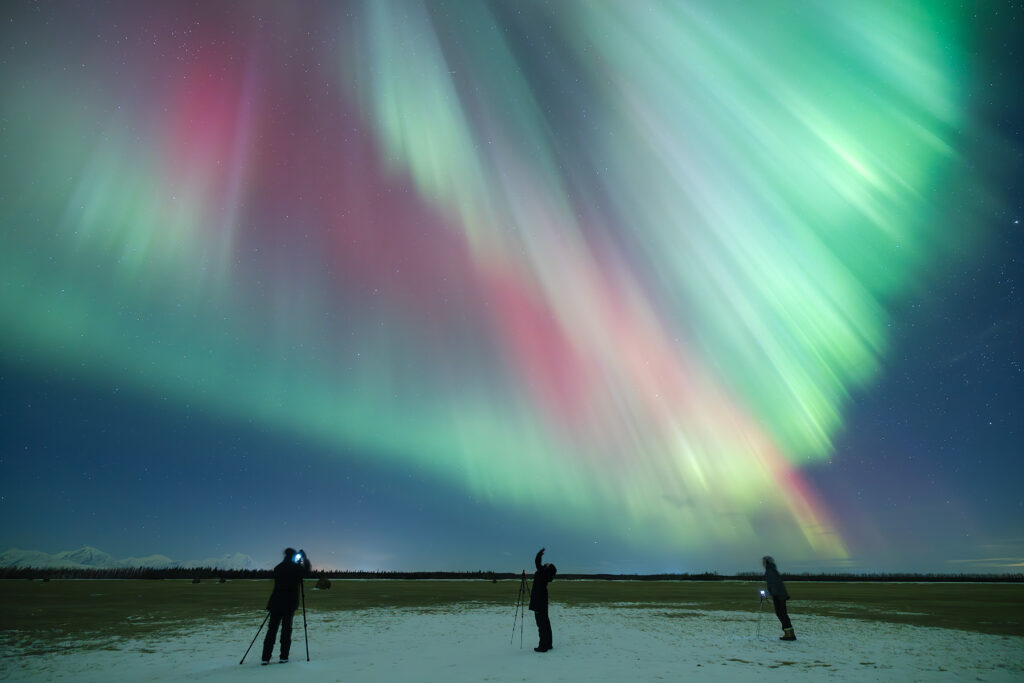
The aurora borealis is a bucket list experience for good reason. Standing beneath curtains of green and magenta light as they ripple and dance across Alaska’s winter sky is something that photographs can’t fully capture and words can’t adequately describe.
You have to be there, in the moment, feeling the cold bite your cheeks while your breath fogs in the darkness and your eyes watch light move in ways that seem physically impossible. You don’t technically need a tour to witness this phenomenon in Fairbanks. I’ve said that several times on this page and I meant it every time.
But choosing to work with the right guide—someone who truly understands both the science and the logistics, who can explain what you’re seeing while ensuring you’re safe and comfortable, and who can take you to locations far from the crowded tourist spots—can transform your experience from merely seeing the lights to truly understanding and appreciating one of Earth’s most spectacular natural displays. That’s why my answer isn’t “skip the tour.” It’s “do one night, do it early, and spend the rest of your trip however you want.”
That night is what we built Face The Outdoors around: a private lodge deep in Alaska’s interior, directly under the aurora oval, ten guests maximum, and the ability to pack up and chase clear sky when the weather doesn’t cooperate. If that sounds like the night you’re after, our small-group northern lights tours are right here. If it doesn’t, take the questions on this page and use them on whoever you book with — a good operator will answer every one of them straight.
Either way, the aurora will be there, dancing overhead, writing its ancient stories in colored light across the Arctic sky.