
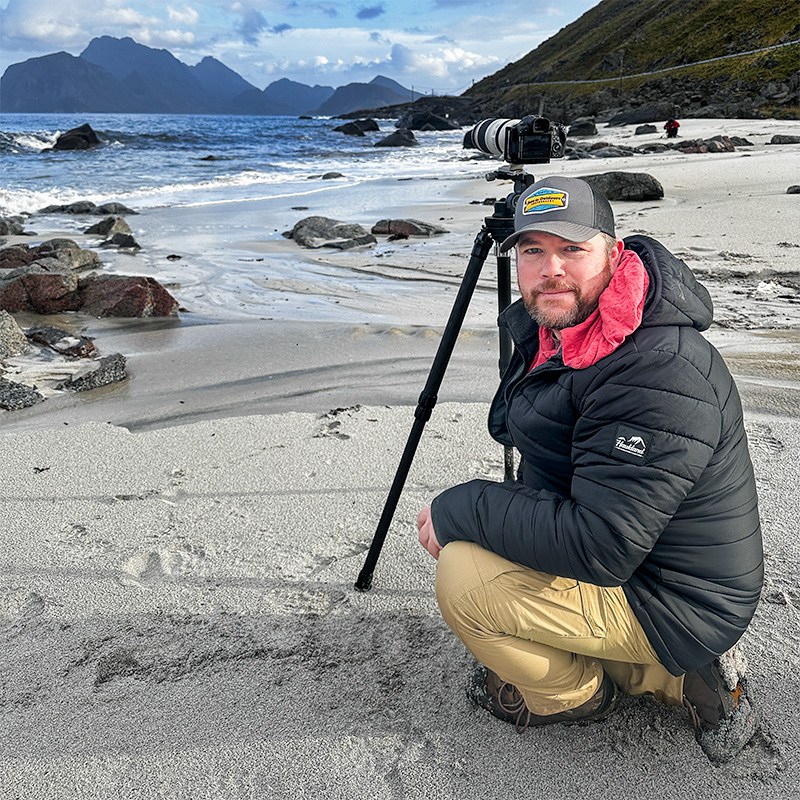
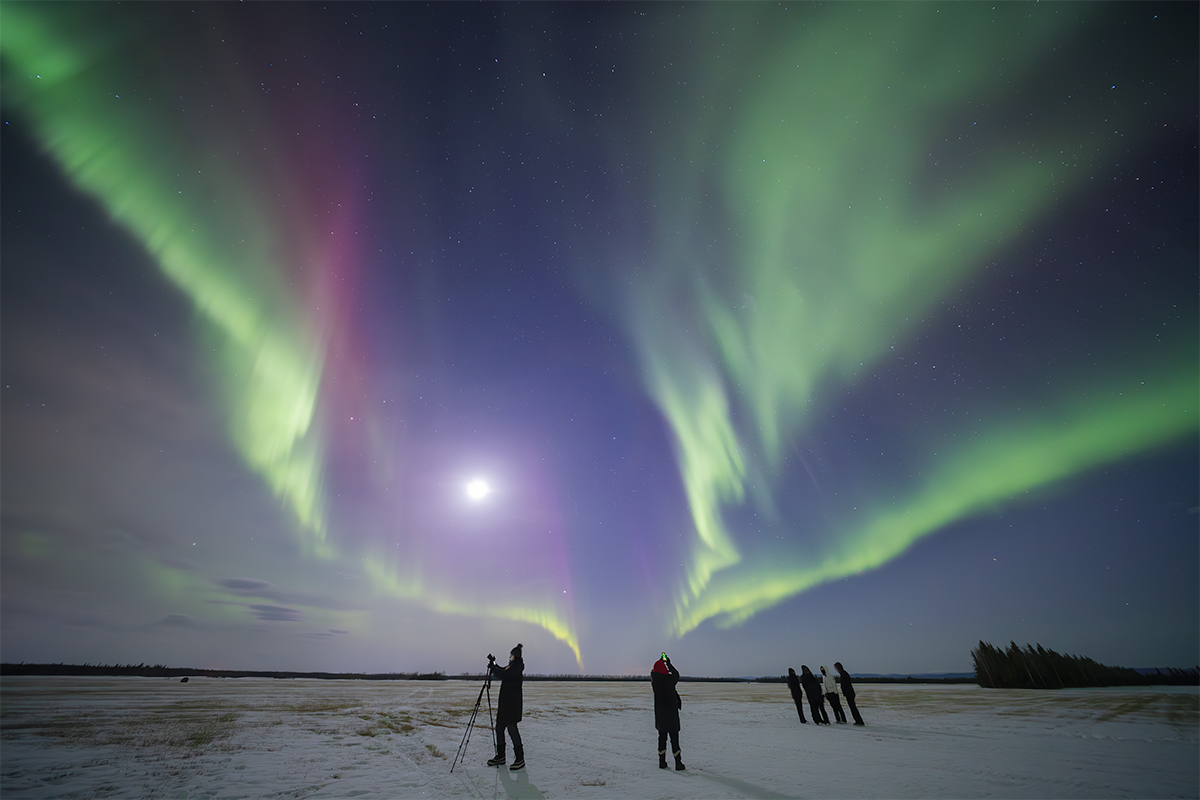
Short answer: yes. A full moon doesn’t stop the northern lights, and it rarely ruins a good show. I’ve watched the aurora cut right through a bright full moon plenty of nights. The lights come from activity on the sun, not from the phase of the moon — so a bright moon only changes northern lights visibility for the faint displays, not whether the aurora shows up at all.
Whether you’re planning your first trip to Fairbanks, worried a full moon lands in the middle of your visit, or wondering how to photograph the aurora with the moon up, I’ll walk you through what the moon actually does, what it doesn’t, and how to plan around it — so by the end you’ll know exactly what a full moon means for your aurora nights.
Does the moon affect the aurora borealis?
No. The aurora borealis comes from charged particles streaming off the sun, striking gases high in Earth’s atmosphere and getting funneled down by the planet’s magnetic field. It’s space weather, and the moon has nothing to do with it. The University of Alaska Fairbanks Geophysical Institute — the folks who run the aurora forecast I check every day — tie activity to the solar wind and geomagnetic conditions across the northern hemisphere, not to moon phase. Solar storms and solar activity drive the show. The moon is just another light in the night sky.
What the moon changes is contrast — how much the aurora stands out against the rest of the sky — and only on weaker nights. When the display is moderate or strong, the difference is small.
Can you see the northern lights during a full moon?
Yes, and some of my favorite nights have come under a full moon. When the display is strong, the northern lights are easy to see with a full moon up — the moonlight is no match for a sky filling with green and pink. Aurora strength gets measured on the Kp index, and once you’re at Kp 5 or higher, you’ve got a strong display that stays plenty visible even with a bright moon.
A full moon really only knocks down northern lights visibility in one narrow case: a weak aurora, with the moon positioned directly or almost directly behind it. Outside of that, full moon northern lights viewing is no problem. The faint, low-activity aurora a bright moon washes out tends to look like a pale gray smudge even on a dark night — those nights are underwhelming with or without the moon. So a full moon doesn’t take a great aurora away from you. It just softens the marginal nights that weren’t going to be memorable anyway.
What a full moon changes for naked-eye aurora viewing
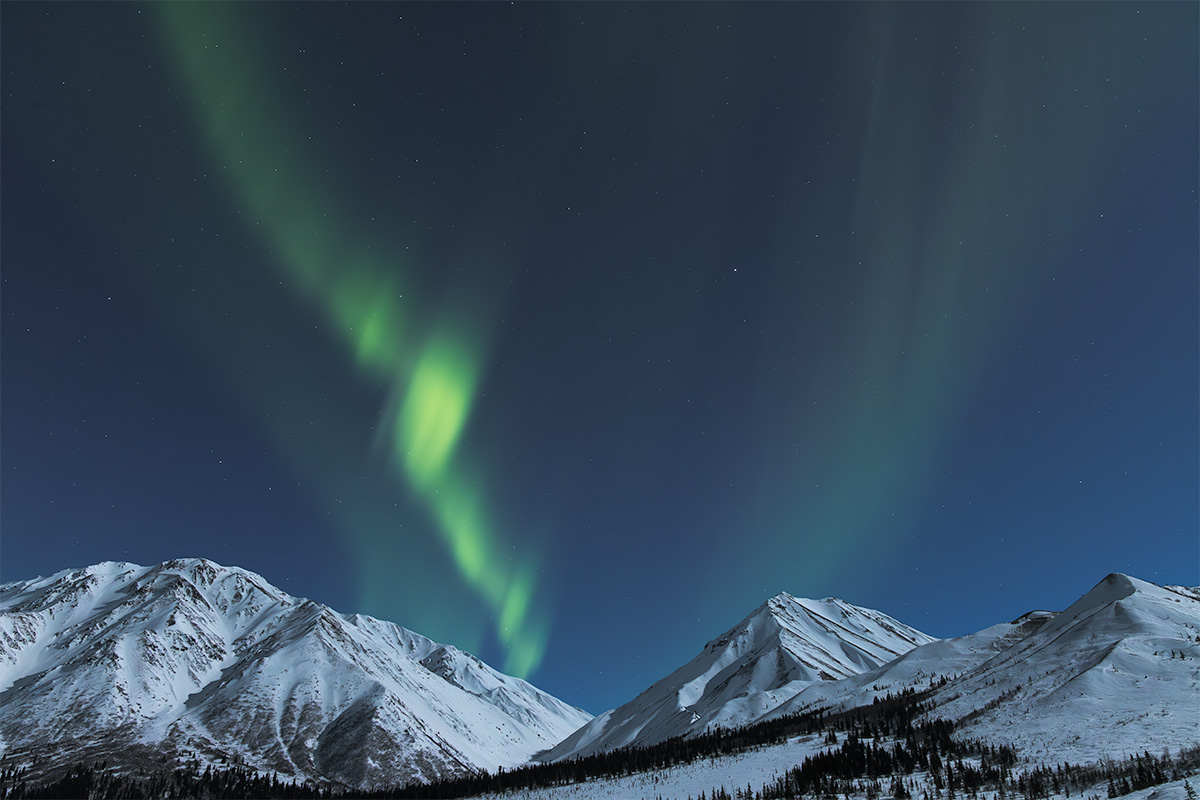
Here’s the part most guides skip. The aurora almost always looks different to your eyes than it does in a photo, and the moon plays into that.
Your eye is bad at seeing color in low light. On a typical night only about 5 to 8 percent of people pick up vivid color with the naked eye — most folks see the aurora as bright white, gray, or pale green, with real color showing up mainly in intense displays. On a dark, new moon night the aurora often reads grayish or white-green to the eye. Under moonlight, the arctic sky takes on a deeper blue, and a lot of people actually see more cyan and green, because the extra light helps the eye’s color receptors kick in.
So a little moonlight can help you see more color, not less. I’ve had guests on bright-moon nights walk away saying they saw more green than they expected. If you want the full explanation of why your eyes and a camera see such different things, I broke that down in why the northern lights look different in photos.
The full moon and your camera
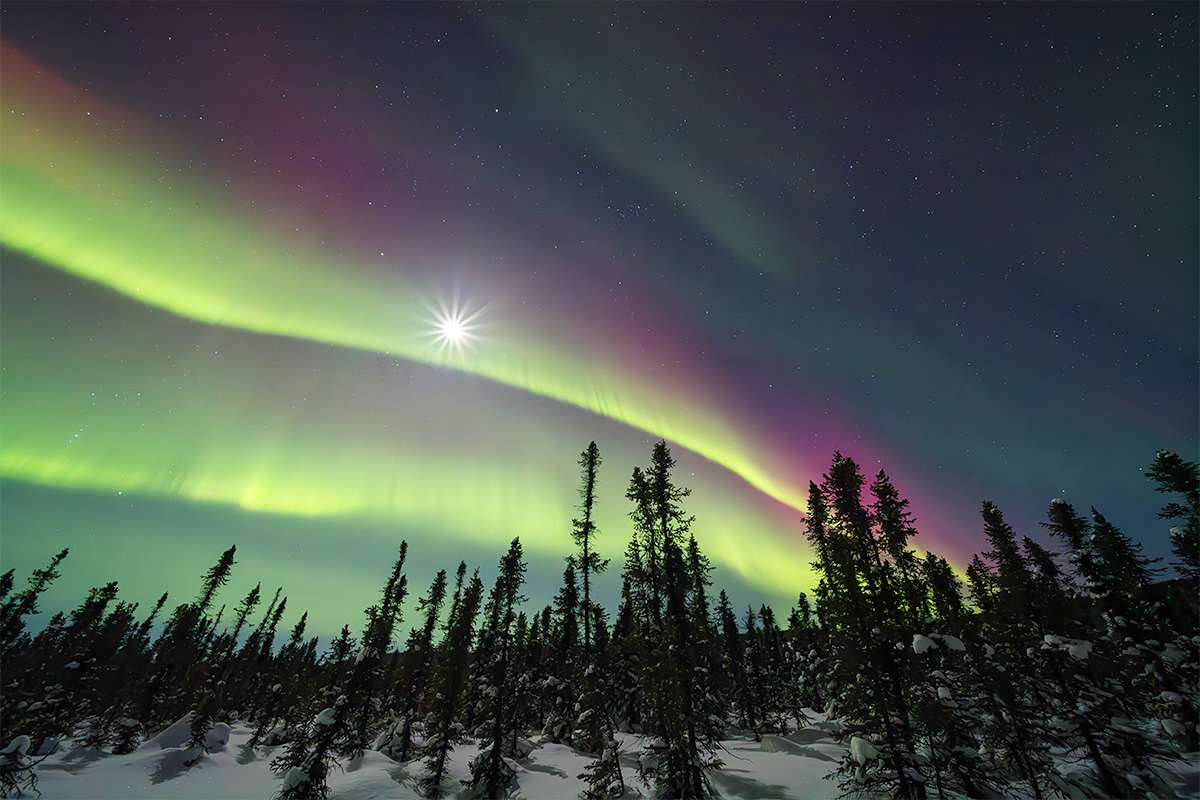
If you’re bringing a camera or even just your phone, moonlight is usually working in your favor. A camera pulls in far more color and detail than your eye can in the dark — moon or no moon — so the aurora in your shots will look more vivid than what you saw live.
Moonlight also lights up the foreground: snow, spruce, mountains, a cabin. That turns a flat black frame into a real scene with depth, and that’s what makes an aurora photo feel like a place instead of a smear of light. A lot of the strongest images photographers bring home are shot under partial moonlight for exactly that reason — the moonlit landscape becomes the backdrop the aurora moves over, and it lifts the whole aurora viewing experience.
Camera settings for shooting the aurora under moonlight
If you want a starting point: shoot in manual mode so you’re in control, set your ISO somewhere between 800 and 3200, and run a shutter speed around 5 to 30 seconds depending on how fast the aurora is moving — shorter when it’s dancing, longer when it’s calm. Under a bright moon you can usually pull ISO and shutter time down a little, since the moonlight does some of the work for you. A tripod isn’t optional at those shutter speeds. On my tours I help everybody dial this in on the spot, from phone shooters to folks running a full mirrorless rig — and if you want to go deeper before you arrive, here’s how to photograph the northern lights. For a full multi-day photography curriculum, that’s what the workshops over at Face The Outdoors Photography are built for.
Should you plan your trip around the moon phase?
No — and this is the big one. Don’t give up good nights, good timing, or trip length chasing a new moon. The moon is a minor factor. What actually decides whether you see the aurora is clear skies, real geomagnetic activity, and enough nights to land on a good one.
The aurora is unpredictable night to night, so the single biggest thing in your favor is how many nights you give yourself. I tell people to plan 5 to 7 nights in Fairbanks. Booking around a new moon but only staying two nights is solving the wrong problem — I get into the real math on how many nights you need for the northern lights in Fairbanks.
What matters more than the moon for aurora viewing
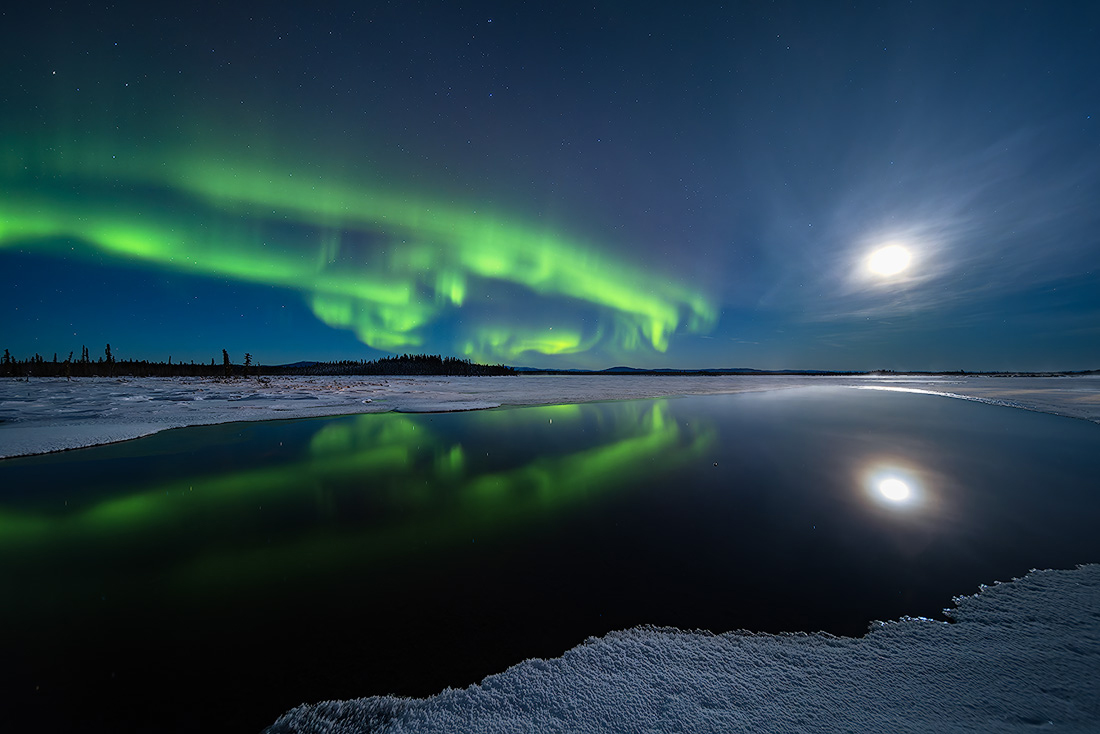
If you’re deciding where to put your attention, here’s the order that actually matters.
Clear skies and weather
Clouds, not moonlight, are what hide the aurora. You can’t see the lights through an overcast sky, which is why cloud cover and weather are what I’m watching — and why a dry, clear interior climate matters so much. Fairbanks gets far clearer winter skies than the coastal aurora spots.
Light pollution and viewing locations
After clouds, city light is the next thing that washes the aurora out. The northern lights show best away from light pollution, out in rural areas with a dark, open horizon. A good viewing location well outside town does more for a faint display than any moon phase ever will.
Being under the aurora oval
Fairbanks sits right under the auroral oval — the ring of near-constant activity — which is why it’s one of the best places on Earth to catch the lights on any clear night. That’s a big part of why I’ve stayed here.
Number of nights and geomagnetic activity
More nights means more chances to hit a clear, active one. That’s the lever you control. How strong any given night gets comes down to the sun, and a strong aurora is only really forecastable about three days out — so staying flexible beats trying to time it from home.
The moon doesn’t crack this list, because next to these it barely moves the needle.
How the moon, the season, and timing fit together
Aurora season in Fairbanks runs August 20 through April 20, and the best stretch is September through March, when the nights are longest and darkest. The aurora can show up anytime from about 10 PM to 4 AM, with the most action usually between midnight and 3 AM. If you’re still sorting out when to come, here’s my full breakdown of the best time to see the aurora borealis.
The moon runs through its cycle about every 29.5 days, new to full and back. Any trip of several nights is going to cover a range of moon conditions on its own — you’ll likely get darker and brighter nights in the same visit, which is one more reason it’s not worth reshaping your plans around one phase. Plan for the season and the number of nights, dress warm for the long hours outside, and let the moon land where it lands.
See it for yourself in Fairbanks
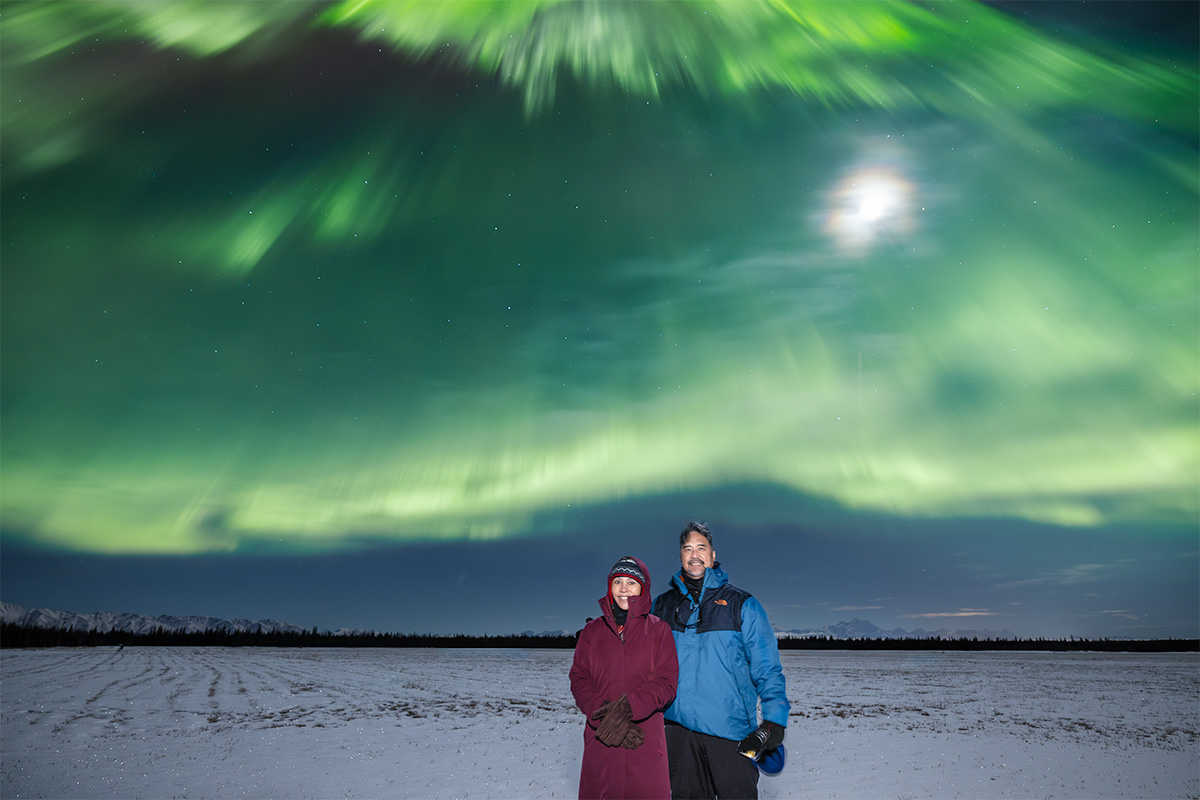
The best way to see the aurora — full moon or new — is to be under a dark, open sky with someone who knows how to read the night. I run small-group northern lights tours, 10 guests max, from a private lodge deep in Alaska’s interior, right under the aurora oval, and when clouds roll in I’ll take the group mobile and chase clear sky for up to four hours. Face The Outdoors is recommended by National Geographic and rated 5.0 across 274 reviews. If you’d rather not leave your night to chance, take a look at our Fairbanks northern lights tours.
Frequently asked questions about the full moon and northern lights
Does the moon affect the northern lights?
Not the aurora itself — it’s driven by solar activity, not moon phase. A bright moon can slightly wash out a very faint display, and only when it sits almost directly behind it. Strong aurora stays clearly visible under a full moon, and moonlight can even help the eye pick up more color.
Can you see the aurora during a full moon?
Yes. Strong and moderate displays show clearly under a full moon. Only weak, low-activity aurora gets dimmed by moonlight — and those nights are faint regardless of the moon.
Is a new moon better for the northern lights?
A new moon gives the darkest sky, which helps a faint aurora stand out, but it doesn’t make the aurora stronger or more likely. Clear skies, geomagnetic activity, and the number of nights you stay matter far more than moon phase.
Why does the aurora look different in photos than in person?
Cameras capture more color and light than the human eye can in the dark. Most people see the aurora as white or pale green with the naked eye, while a camera reveals the vivid greens and pinks. Moonlight adds foreground light that makes photos look even better.
When is the best time to see the northern lights in Fairbanks?
Aurora season runs August 20 through April 20, with peak viewing September through March when nights are darkest. Plan 5 to 7 nights for the best odds, and watch for clear skies rather than a particular moon phase.