
A Local Guide’s Honest Answer Based on 20+ Years and Thousands of Guests
How many nights for northern lights in Fairbanks is the question I hear more than any other. And the answer matters more than most travelers realize.
The tourism industry will tell you three nights. The airlines would love you to believe a long weekend is plenty. And the internet is full of travelers who got lucky on night one and declared three nights more than enough.
After guiding thousands of aurora viewers from our lodge 100 miles from Fairbanks for over two decades, I’ll give you the honest answer most guides won’t: three nights is the bare minimum, and it’s not enough if you want to see a show worth traveling for. As a Fairbanks aurora guide with over 20 years of experience, I can tell you the real sweet spot is five to seven nights—and here’s exactly why, backed by actual numbers.
Understanding the Aurora Borealis in Fairbanks
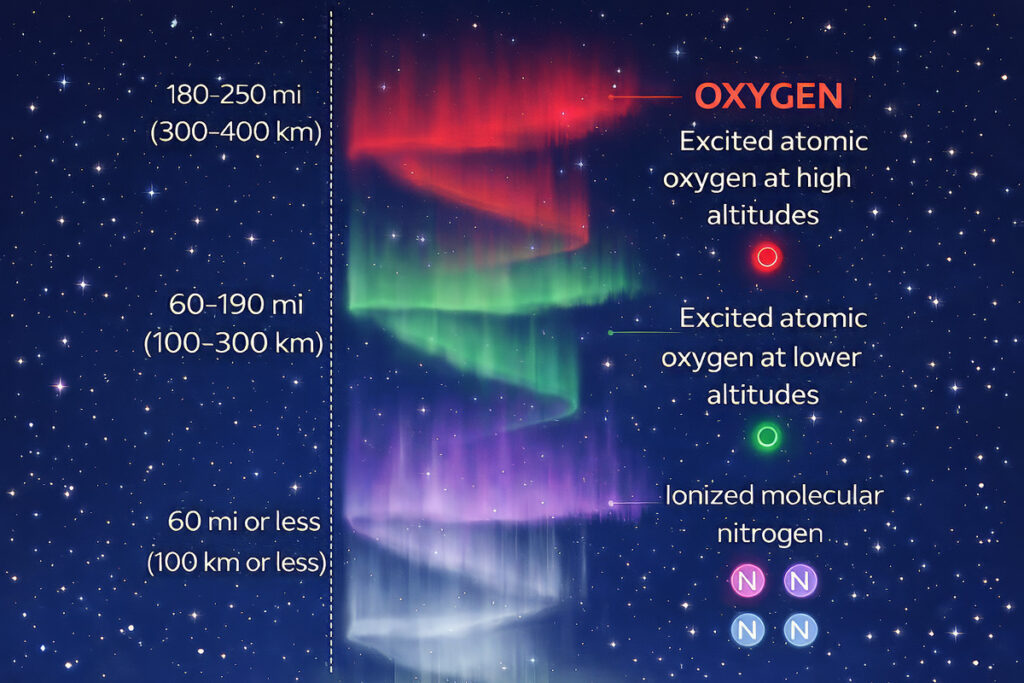
The aurora borealis—commonly called the northern lights—occurs when charged particles from the sun collide with gases in Earth’s atmosphere. Solar wind carries these particles across 93 million miles of space until they interact with Earth’s magnetic field, which funnels them toward the magnetic poles. When those charged particles strike oxygen and nitrogen molecules at altitudes between 60 and 200 miles, the gases emit light: oxygen produces green and red wavelengths, while nitrogen adds violet and blue. The result is the colorful auroral display that draws visitors from around the world.
Fairbanks sits directly beneath the auroral oval—the ring-shaped zone of peak aurora activity that circles the magnetic north pole. This geographic advantage means that even during modest solar activity, Fairbanks consistently delivers visible aurora on clear nights throughout the season. Other popular aurora destinations like Tromsø, Reykjavik, and Yellowknife share similar latitudes, but Fairbanks benefits from Interior Alaska’s drier continental climate, which produces more clear nights than coastal or island locations.
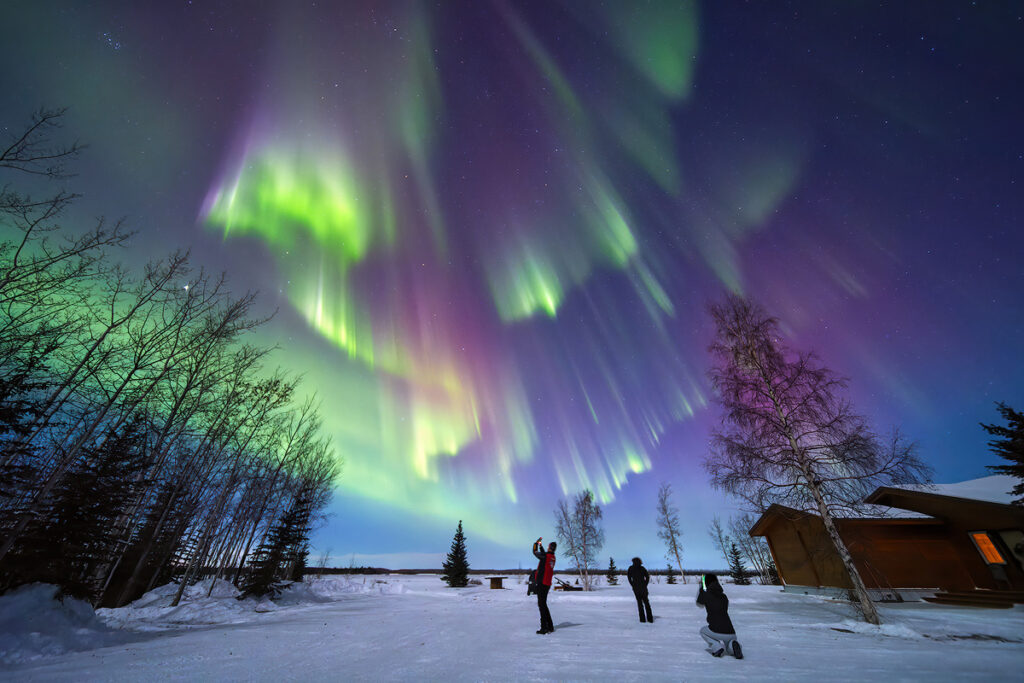
The aurora season in Fairbanks runs from late August through mid-April, roughly matching the period when nights are dark enough for the aurora borealis to be visible. During peak winter months, Fairbanks offers 18 to 21 hours of darkness per day, creating extended viewing windows. Even September and late March—with shorter dark periods—provide reliable opportunities because the equinox months historically produce stronger geomagnetic storms. Understanding this context is important when deciding how many nights for northern lights in Fairbanks you actually need.
The Quick Answer: Book 5–7 Nights for Northern Lights in Fairbanks
If you’re short on time and just need the number: book five to seven nights in the Fairbanks area during aurora season (August 21 through April 21). This gives you the highest probability of seeing not just a faint glow on the horizon, but a genuinely memorable, photograph-worthy display.
Here’s a realistic breakdown of your aurora viewing chances based on how many nights you stay:
| Nights | Chance of Seeing Aurora For those interested in the best locations, check out our guide to the best places to see aurora borealis in Alaska. | Chance of a Strong Display |
| 1 | ~40–50% | ~15–25% |
| 2 | ~60–70% | ~30–40% |
| 3 | ~80–90% | ~45–55% |
| 4 | ~88–93% | ~55–65% |
| 5–7 | ~93–98% | ~70–85% |
| 7+ | ~98%+ | ~85–95% |
Note: These estimates are based on clear-sky nights during aurora season in Interior Alaska. “Strong display” means visible, dynamic aurora with color and movement—not just a faint green arc on the horizon.
That widely cited 90% statistic from Explore Fairbanks? It’s accurate for seeing some aurora over three nights—but “some aurora” includes a barely-visible pale green band that your camera might register but your eye struggles to capture. Five to seven nights dramatically increases your aurora viewing chances of witnessing the kind of display that stops you in your tracks.
Why Three Nights Often Isn’t Enough for Northern Lights in Fairbanks
The three-night recommendation works great for tourism marketing. It’s a manageable trip length, fits into a long weekend, and the 90% probability sounds nearly guaranteed. But here’s what that number doesn’t tell you:
The Cloud Cover Factor
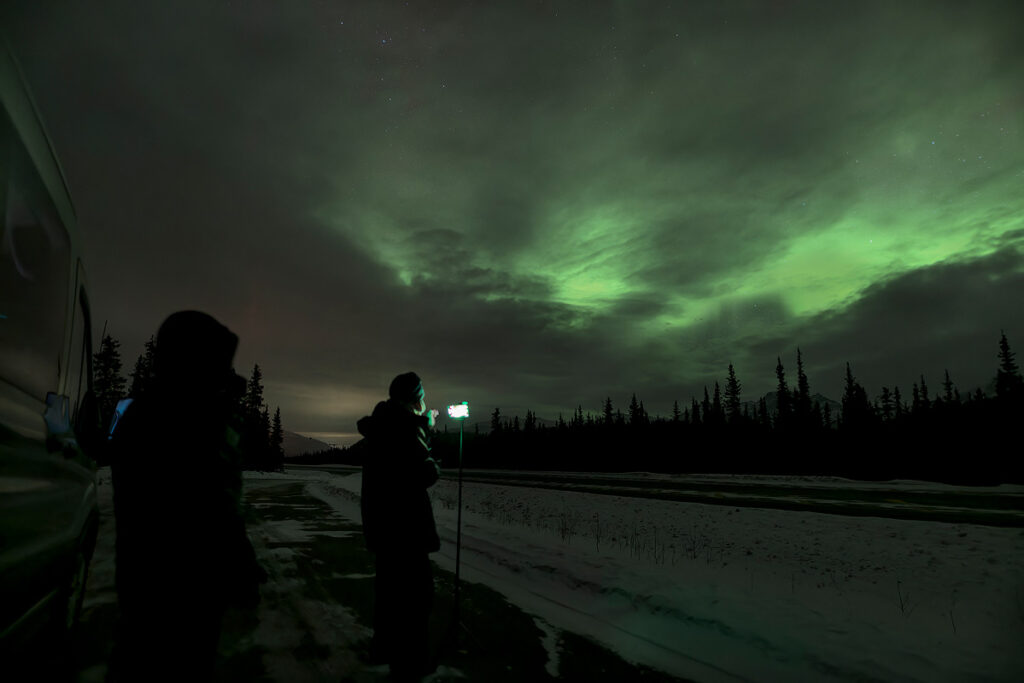
Even in Fairbanks’s relatively dry Interior Alaska climate, cloudy nights are a reality. According to Western Regional Climate Center data (wrcc.dri.edu), Fairbanks averages 14 to 22 cloudy days per month during aurora season, with the fewest cloudy days falling in February and March (14 each). Winter brings partly cloudy conditions 56–63% of the time. A three-night trip means one cloudy night can eliminate a third of your viewing opportunities instantly—which is why northern lights trip planning should account for weather buffer nights.
The “Seeing” vs. “Experiencing” Gap
There’s a meaningful difference between technically seeing aurora and experiencing a display that justifies the trip. On a quiet Kp 1–2 night, Fairbanks regularly shows a faint green arc on the northern horizon. Is that “seeing the northern lights”? Technically, yes. Is it the dancing, multi-colored curtains sweeping overhead that you’ve seen in photographs? Not even close.
Strong displays—Kp 4 and above, where aurora fills the sky with movement, structure, and color—don’t happen every night, even during solar maximum. Booking five to seven nights gives you multiple shots at catching one of these memorable shows rather than settling for a faint glow and going home wondering if that was really it.
The Solar Cycle Reality: 2026–2027
We’re currently in the declining phase of Solar Cycle 25. Solar maximum occurred around October 2024, and while activity has been decreasing since, it remains well above average. Solar Cycle 25 has significantly exceeded initial predictions—sunspot activity has been roughly 31% higher than Solar Cycle 24 at the same stage. Scientists expect elevated aurora activity to continue through at least 2027, and researchers note that the strongest solar events historically occur during the declining phase—sometimes years after solar maximum.
Solar activity including coronal mass ejections (CMEs) plays a crucial role in aurora displays. CMEs release massive bursts of charged particles that can trigger intense, prolonged auroras when they reach Earth’s magnetic field, especially during geomagnetic storms. The Kp index—which measures geomagnetic disturbance on a scale from 0 to 9—is the primary tool for forecasting aurora visibility. Higher Kp values indicate stronger geomagnetic storms and a greater likelihood of vivid, overhead northern lights.
What this means for 2026–2027: aurora displays will still be frequent and strong by historical standards, but not every single night the way they sometimes were during peak activity in late 2024. This season is still exceptional—and it’s a prime window for northern lights trip planning—you just need enough nights to catch the active periods.
How Many Nights for Northern Lights in Fairbanks: A Night-by-Night Breakdown
One Night: The Gamble
Booking a single night of aurora viewing is essentially flipping a weighted coin. Aurora is visible roughly four out of five clear nights during the season, but your chances of clear skies and active aurora aligning on that one specific night hover around 40–50%. Choosing a dark location away from light pollution with a clear northern horizon can slightly improve your odds, but the fundamental risk remains. Many cruise-ship passengers stopping for one night learn this the hard way. Don’t plan an entire Alaska trip around a single night of viewing.
Two Nights: Better, But Tight
Two nights pushes aurora viewing chances to roughly 60–70% of seeing something. You have a backup if night one is cloudy. But if both nights fall during a quiet geomagnetic period or persistent cloud cover, you’re going home without a sighting. Practicing basic aurora hunting strategies—monitoring weather forecasts, checking the Kp index, and positioning yourself at dark-sky locations—can help maximize limited time. Acceptable only as a side trip within a larger itinerary—not if aurora is the primary purpose of your trip.
Three Nights: The Industry Minimum
Three nights is where most tourism boards recommend, and with good reason—your odds climb to approximately 80–90%. But here’s the reality I see play out regularly: one night gets clouded out, one shows a faint arc, and the third delivers a decent but not spectacular show. You leave satisfied that you “saw the aurora” but possibly without the jaw-dropping display you traveled for. Three nights works if you have flexible expectations and understand you’re optimizing for “saw something” rather than “witnessed something incredible.”
Four to Five Nights: The Smart Booking
This is where math starts working strongly in your favor. Four to five nights gives you genuine weather insurance, multiple shots at catching an active geomagnetic night, and—critically—the ability to relax rather than feeling desperate pressure on your one remaining night. At five nights, you’re looking at approximately 93–98% aurora viewing chances and roughly 70–85% odds of a strong display.
Five to Seven Nights: The Sweet Spot (This Fairbanks Aurora Guide’s Recommendation)
This is what I recommend to everyone, and have for 20 years. Five to seven nights gives you:
• Weather insurance. Even if two or three nights are cloudy, you still have multiple clear-sky opportunities.
• Multiple viewing opportunities. You’re likely to see aurora three to five times, with at least one strong display.
• Time to improve your aurora photography. If photographing aurora, your first night is figuring out settings. By night three or four, you’re capturing images you’re proud of—a key reason aurora photography Fairbanks enthusiasts book longer trips.
• Flexibility to monitor the aurora forecast. A longer stay lets you track Kp predictions and NOAA solar wind data, adjusting your nightly plans for the best chances to see the northern lights at their peak.
• Less pressure, more enjoyment. Nothing ruins an aurora experience faster than desperation. With enough nights, you enjoy each evening without anxiety.
• Daytime experiences. Fairbanks offers dog mushing, Chena Hot Springs, the World Ice Art Championships (Feb–March), ice fishing, snowmobiling, and more.
Seven-Plus Nights: The Enthusiast’s Trip
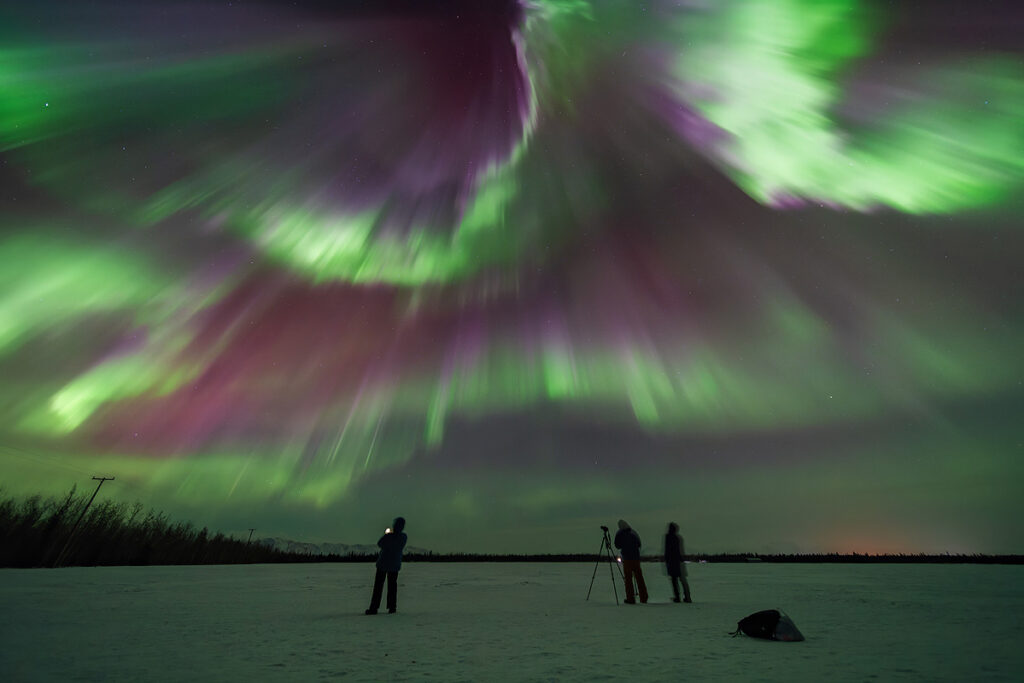
If aurora viewing is your primary reason for visiting Alaska—or you’re a photographer planning portfolio-quality images—a week or more is worth it. You’re virtually guaranteed multiple strong displays and will witness the full range of aurora behavior: quiet arcs building to active curtains, overhead coronas, and the occasional substorm that lights up the entire sky. Some of my most dedicated repeat guests book 10 to 14 nights. For aurora photography Fairbanks sessions, this extended timeframe is ideal. Using aurora prediction models like the OVATION model can help you identify which nights are most likely to produce strong auroral activity, maximizing your photographic opportunities.
Best Time to See Northern Lights in Fairbanks: Your Aurora Viewing Chances by Month
Not all aurora season months are equal. The month you choose affects darkness hours, cloud cover frequency, temperature, and geomagnetic activity. The aurora season runs from late August through mid-April, with September and late summer marking the start as darkness returns and mid-April signaling the end as daylight takes over. Understanding the best time to see northern lights in Fairbanks can make or break your trip:
| Month | Dark Hours | Cloudy Days | Temps (°F) | Rating |
| Late Aug–Sep | 6–12 hrs | 20–21 | 25° to 55° | Good |
| October | 14–17 hrs | 22 | 5° to 30° | Good |
| November | 18–20 hrs | 18 | -10° to 10° | Very Good |
| December | 20–21 hrs | 18 | -20° to 0° | Very Good |
| January | 18–20 hrs | 16 | -30° to -5° | Very Good |
| February | 15–18 hrs | 14 | -20° to 10° | Excellent |
| March | 12–15 hrs | 14 | -10° to 20° | Excellent |
| April | Northern Lights tours in Fairbanks, Alaska typically last 8–12 hrs | 16 | 10° to 35° | Good |
Source: WRCC cloudy day data for Fairbanks; Weather Spark temperature averages; dark hours calculated from astronomical twilight data for 64.8°N latitude.
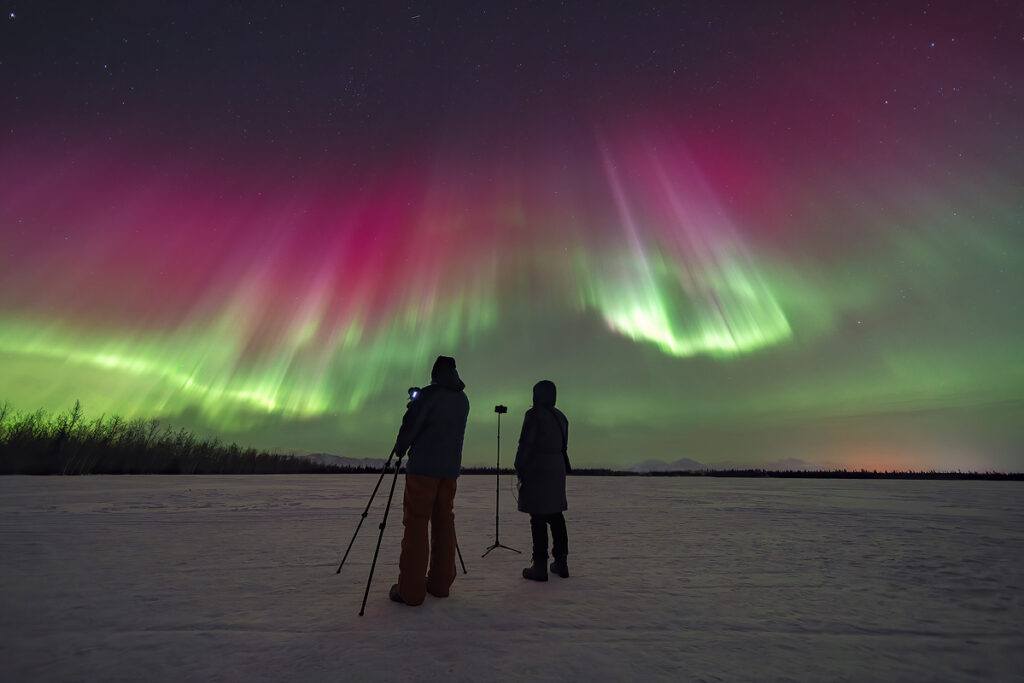
February and March stand out as the best time to see northern lights in Fairbanks. They combine the fewest cloudy days of the aurora season (14 each) with long dark nights, moderating temperatures, and the spring equinox effect. The equinox creates favorable orientations between Earth’s magnetic field and the solar wind, historically producing some of the strongest geomagnetic storms of the year. If you can only pick one window, late February through mid-March is the sweet spot for maximizing aurora viewing chanceswithin a five-to-seven night trip.
Mid-September is also a particularly favorable time, offering mild weather, increasing darkness, and equinox-boosted geomagnetic activity—a strong option for travelers who prefer to avoid deep winter cold. Keep in mind that aurora viewing is not possible during the summer months due to the midnight sun; you need darkness between sunset and sunrise for optimal observation.
Multi-Night Aurora Tour vs. DIY: How Your Approach Affects Your Odds
How you spend your nights matters almost as much as how many nights you book for northern lights in Fairbanks.
Guided Multi-Night Aurora Tours
Professional aurora tour operators—including our team at Face The Outdoors—use real-time satellite weather data, magnetometer readings, NOAA solar wind data, and years of local experience to maximize each night’s potential. On cloudy nights, a multi-night aurora tour includes driving 100+ miles to find clear sky gaps. On clear nights, your Fairbanks aurora guide positions you at optimal viewing locations based on aurora direction and activity level.
At Face The Outdoors, our Aurora Commitment means if no aurora is visible during your tour (visually or by camera), you can join another night free of charge during your Fairbanks visit. We offer this because our success rate makes it sustainable. Multi-night guided packages—typically three to five nights of touring—are the most effective way to stack your odds.
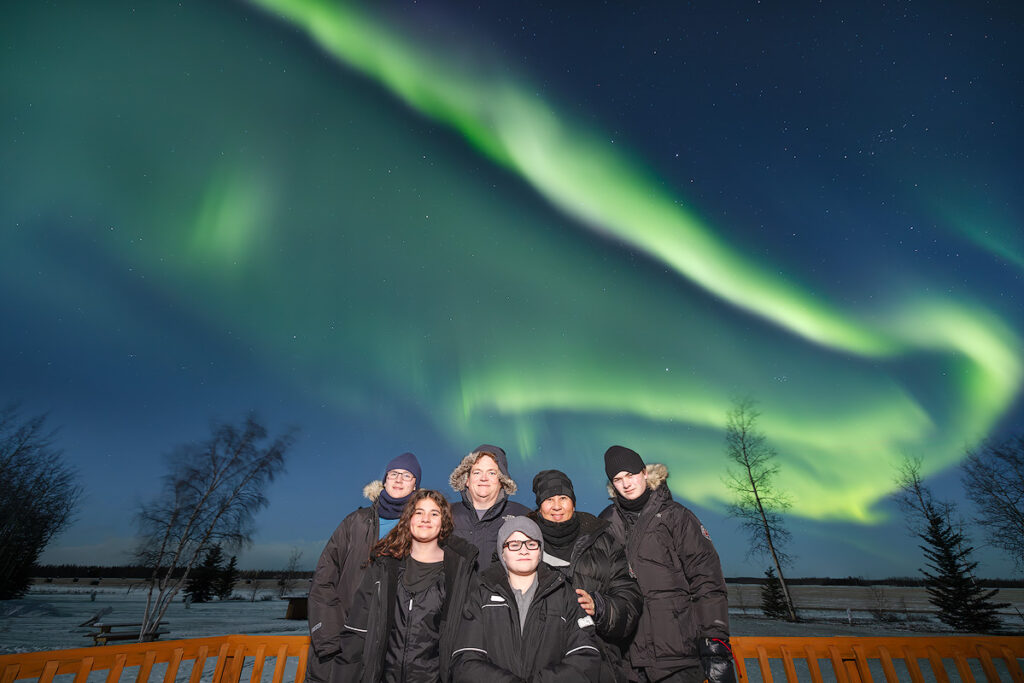
Booking a northern lights tour from Fairbanks gives you access to expert knowledge of local geomagnetic conditions, real-time magnetometer interpretation, and comfort amenities like heated viewing shelters and warm drinks. Many tours also include photography tips and camera setup assistance—a major advantage for visitors new to aurora photography Fairbanks conditions.
DIY Aurora Viewing
Self-guided viewing is possible with a rental car and cold-weather driving experience. But real limitations exist:
• You’re limited to your area. A guided tour might drive two hours to find clear skies—you’re likely staying within 30 minutes of Fairbanks.
• Without real-time magnetometer and solar wind data interpretation, you rely on general Kp forecasts that scientists note are only reliably accurate about an hour into the future. Local geomagnetic conditions can change rapidly, and expert interpretation of these measurements makes a significant difference in catching active displays.
• Winter driving in Interior Alaska at night is genuinely hazardous. Icy roads, moose in headlights, and breakdowns at -30°F create serious safety concerns.
Bottom line: If going DIY, add a night or two beyond what you’d book for a guided multi-night aurora tour. Where five guided nights might give 93%+ odds, you may need six or seven self-guided nights for similar probability.
What to Do in Fairbanks Between Aurora Viewing Nights
One advantage of booking five to seven nights is having time to explore what makes Fairbanks worth visiting beyond the northern lights. Daytime activities break up the rhythm of late-night aurora chasing (you’ll be staying up until 2–3 AM most nights) and give your body the rest it needs to stay sharp for evening viewing.
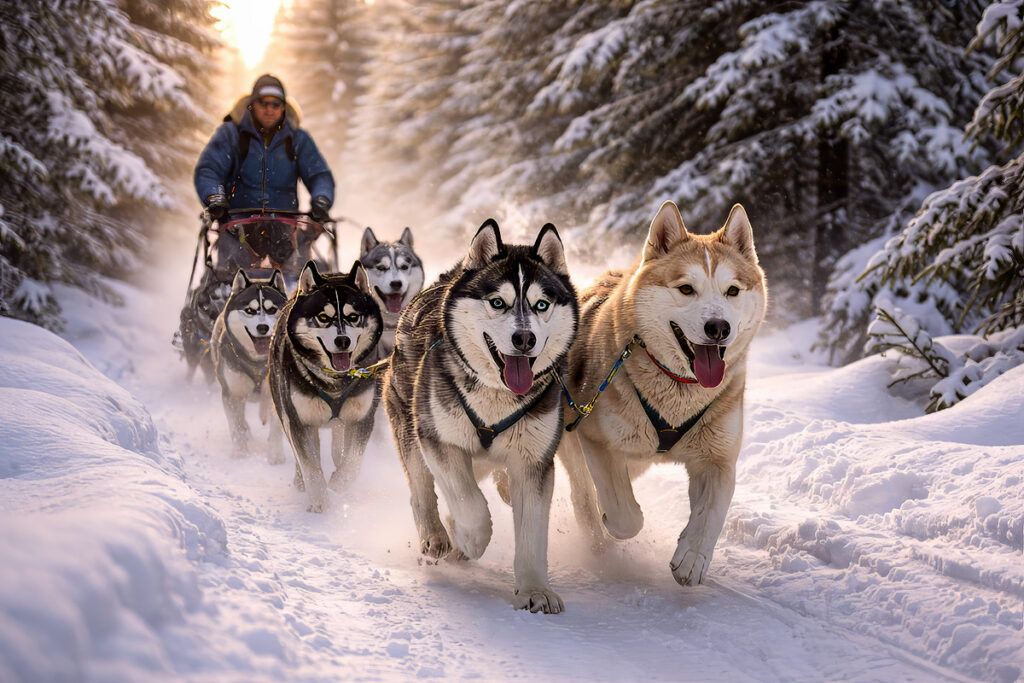
Dog mushing is one of the defining Interior Alaska experiences. Several kennels near Fairbanks offer rides ranging from short introductory runs to half-day backcountry tours. The silence of running through boreal forest on a dog sled—broken only by the sound of paws on packed snow—is unlike anything else.
Chena Hot Springs Resort, about 60 miles east of Fairbanks, sits on natural geothermal springs where mineral-rich water stays around 106°F year-round. Soaking in outdoor rock pools while surrounded by snow-covered spruce forest at -20°F is a genuinely surreal experience. The resort also operates an aurora viewing program and an ice museum open year-round.
The Morris Thompson Cultural & Visitors Center in downtown Fairbanks houses exhibits on Alaska Native cultures, Interior Alaska wildlife, and the science behind the aurora borealis—including how Earth’s magnetic field and solar wind interact to produce the northern lights. The University of Alaska Museum of the North offers additional exhibits on arctic wildlife, geology, and the history of aurora research at Fairbanks’s latitude.
During February and March, the World Ice Art Championships transform blocks of clear Fairbanks ice into enormous sculptures. Ice fishing on the frozen Tanana River, snowmobiling through boreal forest, and snowshoeing are all readily accessible. For travelers planning longer stays, a drive up the Dalton Highway toward the Arctic Circle or the scenic Richardson Highway to Delta Junction adds genuine wilderness perspective. While in the region, don’t miss the chance to see the northern lights near Fairbanks.
These experiences also serve a practical purpose for northern lights trip planning: they fill daylight hours productively while you rest before the next night of aurora viewing, making a five-to-seven night stay feel full rather than stretched.
The Cost of Extra Nights vs. the Cost of Disappointment
More nights means more money. But consider what you’ve already invested in your northern lights trip planning:
• Flights to Fairbanks: $400–$800 round trip from most US cities
• Lodging per night: $100–$250 depending on accommodation. For information on whether you need a tour to see the Northern Lights in Fairbanks, check out this guide.
• Aurora tour per night: $100–$300 depending on operator
• Cold weather gear rental: $25–$75 (one-time cost regardless of trip length)
Adding two extra nights costs roughly $400–$1,100 more. Compare that against the $1,500–$3,000+ already invested in flights and your first three nights. Those two additional nights—which could make the difference between disappointment and something unforgettable—represent roughly 15–25% of your total trip investment.
I’ve watched guests leave after three nights having seen only a faint glow, knowing that the next evening delivered the strongest display of the month. That’s the kind of regret that’s entirely preventable by booking a couple more nights.
Sample Northern Lights Trip Planning: Itineraries by Night Count
The Five-Night Trip (Best Value)
1. Night 1 (arrival): Settle in, rest, casual sky scan. Bonus viewing if aurora is active.
2. Night 2: First guided tour. Learn the ropes, dial in camera settings, experience professional sky-chasing.
3. Night 3: Daytime activity (dog mushing, hot springs). Second guided tour or self-guided viewing.
4. Night 4: Third guided tour—by now you can focus on experience and aurora photography Fairbanks-style rather than logistics.
5. Night 5: Final night/insurance night. If you’ve already seen great aurora, enjoy a relaxed evening. Depart next day.
The Seven-Night Trip (First-Timer’s Ideal)
A seven-night trip adds a rest night mid-trip (chasing aurora until 2–3 AM is exhausting) and additional viewing opportunities that dramatically increase odds of catching a Kp 5+ geomagnetic storm. Plan four to five active viewing nights, one to two daytime-focused days, and built-in flexibility to respond to forecasts.
Extra days also allow you to explore Interior Alaska properly—drive the Richardson Highway, visit the World Ice Art Championships (February–March), spend a night at Chena Hot Springs, or venture toward the Arctic Circle.
Smart Booking Strategy: How to Maximize Your Northern Lights in Fairbanks
Time Your Trip Around the Moon
A new or crescent moon means darker skies and better aurora visibility. A full moon washes out subtle displays but illuminates snowy foregrounds for photography. For pure viewing, plan around a new moon. Moon phase calendars are available years in advance—any Fairbanks aurora guide will tell you this is one of the most overlooked elements of northern lights trip planning.
That said, don’t base your trip solely around the moon phase. I’ve witnessed just as many incredible shows during half to full moons. The moon doesn’t affect how the aurora behaves—it only influences how easily we see the lights against the night sky. In fact, added moonlight during winter months can actually help your eyes adjust to the dark and make it easier to perceive aurora colors during quieter stages of a display. The real advantage of a new moon is during explosive Kp 5+ events, where total darkness lets you see the full range of violet, blue, and red wavelengths.
Watch the 27-Day Solar Rotation
The sun rotates approximately every 27 days. If a coronal hole produced strong aurora, that feature may rotate back into Earth-facing position about a month later. Check NOAA’s Space Weather Prediction Center (spaceweather.gov) recent activity reports before booking.
Build Flexibility Into Your Schedule
Avoid rigid daily plans. The best aurora sometimes comes with only hours notice. Guests who can shift a daytime activity because tonight’s forecast looks incredible have a significant advantage.
Arrive Before Your First Tour Night
Don’t book a tour the same night you fly in. Flights get delayed, luggage gets lost, jet lag is real. Arrive a day early, settle in, and start viewing fresh the next evening.
Essential Gear and Preparation for Aurora Viewing in Fairbanks
Fairbanks winter temperatures regularly drop below -20°F, and you’ll be standing outside for hours at a time. Proper preparation is the difference between enjoying the experience and cutting your viewing short because of cold.
Layering is essential: Start with moisture-wicking base layers (merino wool is the standard), add insulating mid-layers (down or synthetic fill), and finish with a windproof outer shell. Insulated winter boots rated to -40°F or colder—like Baffin or Kamik brands—are not optional. Hand warmers, a balaclava or neck gaiter, and insulated mittens (warmer than gloves) round out the basics. Most aurora tour operators don’t provide cold-weather gear, so plan to bring your own or rent from local outfitters in Fairbanks before your tour.
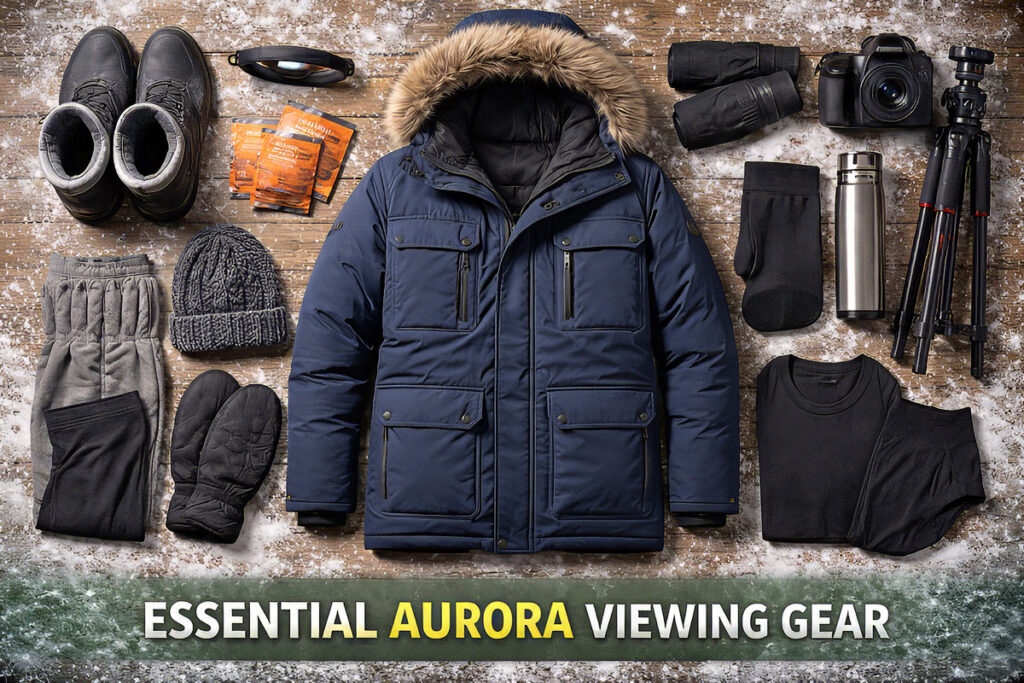
For aurora photography Fairbanks conditions demand specific equipment. Bring a sturdy tripod (carbon fiber handles cold better than aluminum), a camera with manual exposure controls, and a wide-angle lens with a fast aperture (f/2.8 or wider). Extra batteries are critical—cold drains them rapidly. Keep spares inside your jacket, close to body heat. Set your camera to manual focus, ISO 1600–6400, and experiment with exposures between 5 and 15 seconds depending on aurora brightness and movement speed.
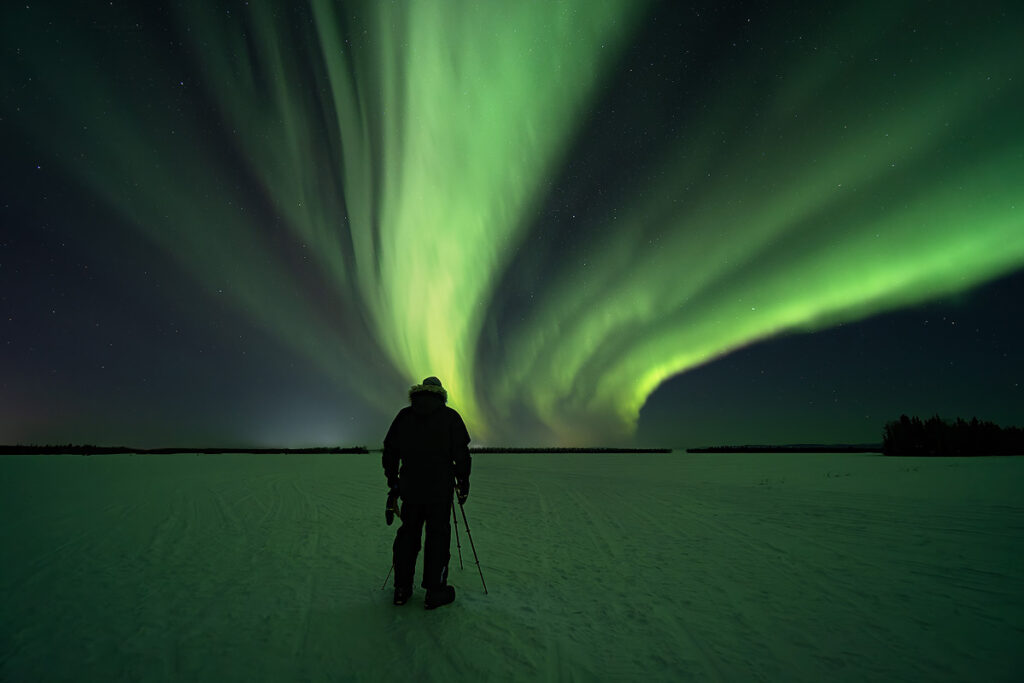
Monitor the aurora forecast and weather conditions using the NOAA Space Weather Prediction Center (spaceweather.gov) for Kp index predictions, and local weather apps for cloud cover. Many experienced aurora chasers also follow real-time magnetometer data from the Geophysical Institute at UAF, which shows local geomagnetic activity as it happens. Your Fairbanks aurora guide will handle this interpretation if you’re on a guided tour, but it’s useful knowledge for any DIY viewing nights.
The Truth About the “90% in Three Nights” Northern Lights Statistic
You’ll see this number everywhere—Explore Fairbanks, Alaska.org, travel blogs, tourism brochures. The Geophysical Institute at UAF (gi.alaska.edu) confirms that three nights with active viewing gives better than 90% odds. But important caveats exist:
• It assumes clear skies. The 90% is based on aurora being present, not on seeing it through clouds.
• It counts any aurora. A barely perceptible green glow counts. If your standard is the dancing curtains from photographs, probability for three nights drops significantly.
• It’s a season-wide average. Actual odds vary by month. October’s cloudier skies reduce probability compared to the best time to see northern lights in Fairbanks—February and March.
• “Actively out during late evening hours” matters. This means 10 PM to 2 AM, every night. Guests who check at midnight and go to bed miss the 1:30 AM substorm.
The statistic is genuinely useful as a baseline. It simply means that to shift from “probably saw something” to “definitely had an incredible experience,” more nights is the most reliable lever you can pull.
Frequently Asked Questions About Northern Lights in Fairbanks
Can I see the northern lights in Fairbanks in just one night?
Yes, it’s possible. Aurora is visible roughly four out of five clear nights. But building a trip around a single night is risky. Cloud cover, low activity, or being indoors at the wrong hour means missing it entirely. If one night is all you have, book a guided tour with active sky-chasing.
Is it better to book consecutive nights or spread them out?
Consecutive nights. Weather systems in Interior Alaska typically last two to three days. Consecutive nights let you respond to real-time conditions and let tour operators adjust strategy based on evolving solar wind and weather patterns.
What if I can only afford three nights?
Choose February or March—the best time to see northern lights in Fairbanks. Book guided tours for at least two nights. Stay somewhere with aurora wake-up calls. Manage expectations—come prepared to appreciate whatever the sky offers, knowing that even a quiet night in Interior Alaska is something most people never experience.
Does the solar cycle affect how many nights I should book?
Somewhat. During solar maximum (2024–2025 peak), strong aurora occurred more frequently. As we move into the declining phase through 2026–2027, displays remain above average but are less frequent. The declining phase actually makes a case for booking an extra night or two. The strongest individual events often occur during decline, but they’re less predictable.
How many nights for aurora photography in Fairbanks specifically?
Minimum five nights, ideally seven. Your first one to two nights are learning curve—camera settings, understanding aurora movement, compositions in darkness. Real aurora photography Fairbanks opportunities come nights three through seven. A photography workshop accelerates the learning curve significantly.
What about Face The Outdoors’s Aurora Commitment?
If no aurora is visible during your tour—visually or by camera—you can join another night at no cost, subject to availability. This is designed for multi-night aurora tour guests and essentially gives you a free backup night. One more reason booking three or more tour nights gives you the strongest possible odds.
Can I see the northern lights from Anchorage?
Anchorage occasionally sees aurora during strong geomagnetic storms (Kp 5+), but it’s not a reliable viewing location due to light pollution and its position south of the auroral oval. Most travelers fly into Anchorage and connect to Fairbanks for dedicated aurora viewing. Some tour operators run northern lights tours from Anchorage as day trips, but the success rate is significantly lower than Fairbanks-based tours. If aurora is your priority, Fairbanks is where you want to be.
Ready to Book Your Northern Lights Trip to Fairbanks?
After twenty years guiding aurora tours from our family property 100 miles from Fairbanks, my recommendation hasn’t changed: book five to seven nights with at least three guided tour nights. This gives you the statistical comfort, weather insurance, and breathing room to enjoy one of the most spectacular natural phenomena on Earth.
Face The Outdoors offers small-group tours (max 10 guests) with active sky-chasing, photography instruction, warm lodge access, and our Aurora Commitment for multi-night aurora tour bookings. We run from a private property 100 miles outside Fairbanks with virtually zero light pollution.
Related Reading (Internal Links)
• Northern Lights Forecast in Alaska →
• Planning Your Northern Lights Vacation Alaska: Complete 2026–2027 Guide →
• Best Place to See Northern Lights Fairbanks: Do You Need a Tour? →
• Learn How to Photograph the Northern Lights →
About the Author
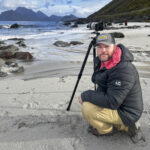
Michael Schultz: runs Face The Outdoors, a family-operated aurora tour company based deep in Alaska’s interior. Born and raised in Alaska, the northern lights have been part of his life for as long as he can remember. Face The Outdoors was recommended by National Geographic as a premier aurora tour option in the Fairbanks area. He lives with his family at the same property where guests experience the aurora — under some of the darkest skies in Interior Alaska. Face The Outdoors also leads international workshops in Norway, Iceland, and Portugal.