
Essential Tips and Insights for Experiencing the Aurora in Alaska Tonight
The allure of the Northern Lights, a celestial ballet of vibrant colors dancing across the night sky, draws adventurers from around the globe to the vast landscapes of Alaska. But catching this ephemeral spectacle requires more than just luck; it demands knowledge, timing, and a keen understanding of the alaska aurora forecast and the forces at play.
If you’re gazing north tonight, eager to witness the aurora borealis, this guide is your essential companion. We’ll cut through the complexities, providing you with the actionable insights needed to maximize your chances of a successful viewing, right here, right now. Fairbanks, a city renowned for its frequent aurora activity, experiences the Northern Lights on over 200 nights annually, with clear sky viewing success rates reaching up to 90% during peak season.
Auroras are a phenomenon experienced around the world, particularly in the Northern Hemisphere, where Alaska stands out as one of the best places to witness them. This guide is meticulously crafted to demystify the aurora forecast, explain the critical factors influencing visibility, highlight prime viewing locations across Alaska, and provide a practical, step-by-step plan to enhance your chances of witnessing the aurora borealis tonight.
The Allure of Alaska’s Aurora Borealis
Alaska, a land of unparalleled natural beauty and immense wilderness, is synonymous with aurora viewing. Situated beneath the auroral oval, a band of intense auroral activity, the Last Frontier offers some of the most reliable opportunities on Earth to witness the aurora borealis. Interior Alaska, including Fairbanks, is especially renowned for its optimal aurora viewing conditions, making it a top destination for those seeking the northern lights.
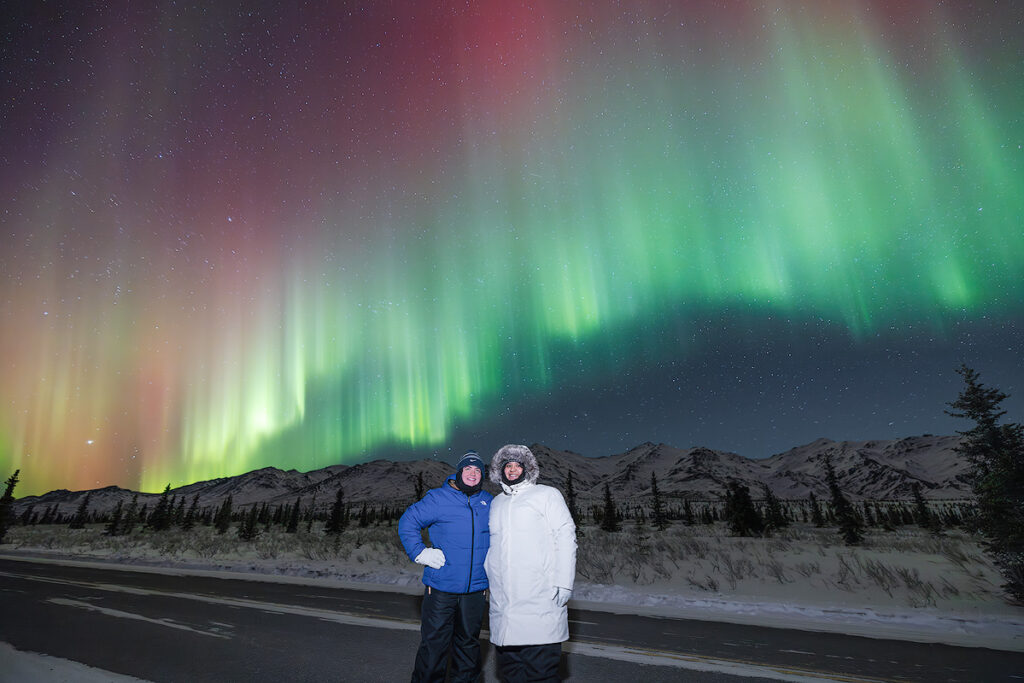
The sheer spectacle of the lights – ranging from faint green glows to vibrant reds and purples that shimmer and surge – is a profound experience, connecting us to the raw power of space weather and the captivating beauty of our planet. This natural phenomenon, a product of geophysical particles interacting with Earth’s atmosphere, creates a mesmerizing display that words often fail to capture fully. For many, seeing the aurora borealis is a bucket-list item, a testament to the wonders of the cosmos observable from high latitudes.
What month is best to see the northern lights in Alaska?
The optimal aurora viewing season in Alaska runs from late August to mid-April, with the longest and darkest nights occurring from November to February.
The best time for aurora viewing in Alaska is during the long, dark nights from late August to mid-April, when the summer’s midnight sun doesn’t obscure the sky. While the aurora borealis can technically be seen year-round in Alaska, the optimal viewing season typically runs from late August through mid-April. This period offers the necessary darkness for the lights to be visible.
During the Alaskan summer months, the extended daylight hours, including the midnight sun in some regions, obscure even the most powerful auroral displays. The darkest months, from November to February, often provide the longest viewing windows for these polar night displays.
Despite a slight dip in winter travel in the 2024-2025 season, with fewer than 400,000 visitors, a decline of 21,700 from the previous year Alaska Travel Industry Association, 2025, the aurora season remains a prime draw for dedicated sky-gazers.
What This Guide Will Do For You Tonight
This guide is designed to equip you with the knowledge to make an informed decision about aurora viewing tonight. We will demystify aurora forecasts, explain the critical factors influencing visibility, highlight prime viewing locations across Alaska, and provide a practical, step-by-step plan to enhance your chances of witnessing the aurora borealis.
From understanding the Kp index to navigating weather patterns, you’ll find everything you need to turn tonight’s quest into a memorable viewing experience.
Tonight’s Aurora Forecast at a Glance: Your Starting Point
Successfully viewing the Northern Lights hinges on understanding the forecast. This involves not just predicting auroral activity but also accounting for environmental conditions. Tonight’s aurora forecast provides a snapshot of current and predicted space weather and its potential impact on the aurora’s visibility.
Scientific models, such as the OVATION model, are used to predict auroral activity and help generate these forecasts. A quick scan of tonight’s aurora activity is essential. Look for a Kp index predicted to be at least 2 or 3 for a decent chance of visible aurora, especially in regions like Fairbanks.
If the forecast indicates geomagnetic activity is active rather than quiet, your chances improve significantly. Always cross-reference this with the cloud cover forecast for your specific location in Alaska; clear skies are non-negotiable for viewing the Northern Lights tonight.
Where to Get the Most Current Forecast
You need reliable and up-to-date information to check the Northern Lights forecast in Alaska. Several trusted sources give aurora forecasts. For space weather data, the U.S. Space Weather Prediction Center (SWPC) is a primary authority.
Local Alaskan aurora forecast sites, often run by research institutions or tourism operators, frequently synthesize this data with local conditions. Websites and apps dedicated to aurora forecasting will offer the most immediate data relevant to your viewing plans tonight.
For example, the University of Alaska Fairbanks Geophysical Institute is a leading institution for aurora research and often provides valuable forecast information.
How can I check the northern lights forecast in Alaska?
Checking the northern lights forecast in Alaska involves looking at two primary components: the aurora forecast itself and the weather forecast. For the aurora, you’ll want to consult resources that provide a geomagnetic activity forecast, often indicated by the Kp index.
Use standard weather forecasts for cloud cover and precipitation. Many aurora-specific apps and websites integrate both these elements, offering a consolidated view for your chosen location in Alaska tonight.
The Space Weather Prediction Center is a key source for the geomagnetic activity forecast, while local weather services provide crucial details on cloud cover, which is paramount for aurora viewing.
Understanding the Kp Index for Tonight
The Kp index is a crucial metric for aurora forecasting. It measures the global geomagnetic activity on a scale of 0 to 9. A Kp of 0 signifies very quiet geomagnetic conditions, while a Kp of 9 represents a major geomagnetic storm.
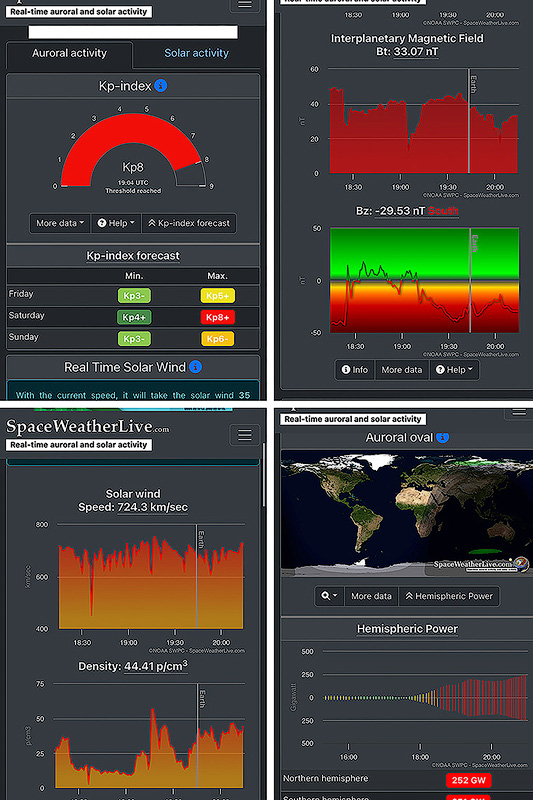
Higher Kp values generally correlate with a stronger, more widespread aurora, increasing your chances of seeing the Northern Lights further south from the typical auroral oval. Understanding tonight’s Kp index is your first step in assessing potential viewing conditions.
A Kp of 0 might cause a faint glow, noticeable to dedicated observers near Fairbanks. A Kp of 6 or 7 can make the aurora brighter and potentially visible farther south, with people in Anchorage possibly seeing it on the northern horizon.
Quick Check: Is Tonight Promising?
A quick scan of tonight’s aurora forecast is essential. Look for a Kp index predicted to be at least 1 or 2 for a decent chance of visible aurora, especially in regions like Fairbanks.
If the forecast indicates geomagnetic activity is active rather than quiet, your chances improve significantly. Always cross-reference this with the cloud cover forecast for your specific location in Alaska; clear skies are non-negotiable for viewing the Northern Lights tonight.
If instruments show strong magnetic activity or visible aurora, your chances to see the lights are high, even if general forecasts are only somewhat promising.
Decoding the Forecast: What It Means for Your Viewing Tonight
A raw forecast is only useful if you can interpret it. Understanding the nuances of the Kp index, the auroral oval, and the underlying space weather will empower you to make informed decisions about where and when to chase the aurora borealis tonight.
Geomagnetic activity, space weather, and auroral forecasting are closely related—each influences the likelihood and intensity of auroral displays, as solar wind and geomagnetic storms drive the phenomena you see in the sky.
If you understand the forecast, you increase your chances to see the aurora. Learn about the Kp index, the auroral oval’s movement, and space weather caused by solar wind.
The Kp Index: A Deeper Dive for Tonight’s Predictions
The Kp index quantifies magnetic field disturbances. While a Kp of 4 might produce a faint glow visible to dedicated observers near Fairbanks, a Kp of 6 or 7 could mean the aurora will be brighter and potentially visible further south, perhaps even on the horizon for those in Anchorage.
For optimal viewing tonight, especially if you are south of the primary auroral zone, a higher Kp index is generally more favorable. The National Oceanic and Atmospheric Administration (NOAA) categorizes geomagnetic storms on the NOAA Space Weather Scales, with Kp numbers serving as a primary input.
What is the northern lights forecast for Alaska?
The northern lights forecast for Alaska is a dynamic prediction of geomagnetic activity and its resulting auroral display. It typically includes an estimated Kp index for the night, often with hourly predictions.
It will also indicate the expected intensity and geographic reach of the aurora, helping you determine if the lights are likely to be visible from your chosen location tonight.
Factors like solar wind speed and the density of charged particles reaching Earth are fundamental to these predictions, all stemming from space weather originating from the Sun. This Northern Lights forecast is crucial for planning your viewing experience.
Understanding the forecast is essential for anyone hoping to view aurora in Alaska, as it helps you choose the best locations, times, and conditions for witnessing this spectacular phenomenon.
How do I interpret the KP index in northern lights forecasts for Alaska?
Interpreting the Kp index involves correlating its value with expected aurora visibility in Alaska:
- Kp 0-2 (Quiet): Minimal to no aurora visible at most locations, but in Fairbanks and other areas located directly under the auroral oval due to their latitude, faint auroras can often still be seen.
- Kp 3-4 (Active): Aurora becomes clearly visible in Fairbanks and may start to appear on the northern horizon in more southern locations of Alaska. This is a good starting point for widespread viewing.
- Kp 5-6 (Minor Storm): Brighter, more active auroras are expected, visible higher in the sky in Fairbanks and often visible on the horizon near Anchorage and other southern areas.
- Kp 7-9 (Major Storm): Intense, widespread auroras are likely, potentially visible across much of Alaska and even far to the south.
These Kp numbers directly inform the potential aurora activity for your viewing experience.
The Auroral Oval: Predicting Where the Lights Will Dance
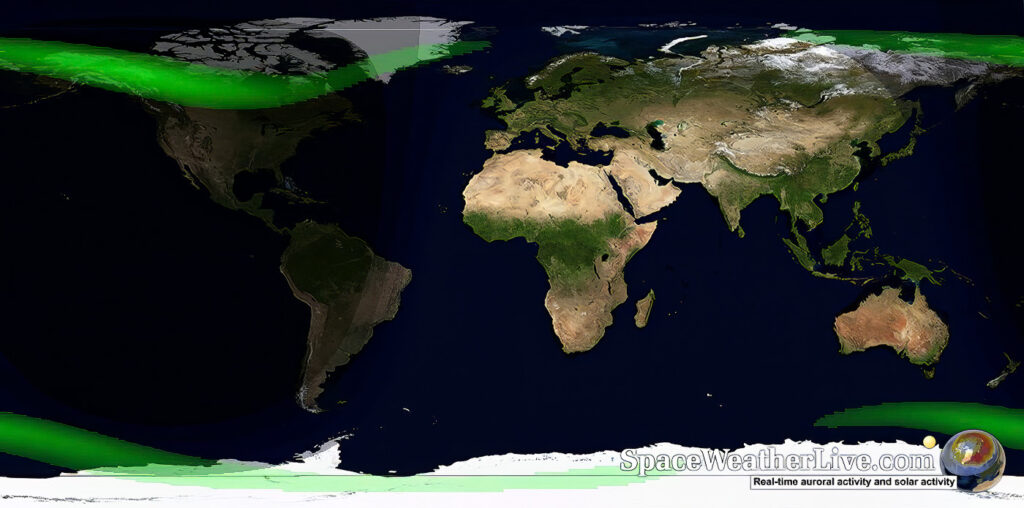
The auroral oval is a doughnut-shaped region centered on the Earth’s magnetic poles, where charged particles from space collide with atmospheric gases to produce the aurora.
Auroras are visible in both the northern and southern hemispheres, with the aurora borealis occurring near the magnetic poles of the northern hemisphere and aurora australis near the magnetic poles of the southern hemisphere.
Alaska, particularly cities like Fairbanks, often sits directly beneath this oval, offering prime viewing chances. When geomagnetic activity increases, the oval expands southward.
Understanding its expected position tonight is key to selecting the best viewing location. The geographic latitude and the magnetic latitude (or geomagnetic latitude) are critical when considering the auroral oval’s position relative to your observation point.
Space Weather Fundamentals for Tonight’s Show
The aurora borealis is a direct result of space weather. The Sun continuously emits a stream of electrically charged particles, primarily electrons and protons, called the solar wind.
These electrically charged particles streaming from the sun are guided by Earth’s magnetic field toward the polar regions, where they enter Earth’s atmosphere above Earth’s surface.
As these particles from the sun collide with atmospheric gases—primarily oxygen and nitrogen—at various altitudes, they gain energy. The collisions determine the colors and intensity of the aurora, as the particles release this energy as brilliant light.
The Most Common Colors
The most common and striking green color of the aurora is produced by primarily oxygen at about 60 miles altitude, resulting in the familiar green yellow color seen in most auroral displays.
At higher altitudes, primarily oxygen can produce all red auroras, which are sometimes visible in photographs. The aurora forms produces different forms, such as arcs, bands, and curtains, depending on geomagnetic activity and the viewer’s perspective.
Occasionally, other colors can appear, depending on the type of gas and altitude.
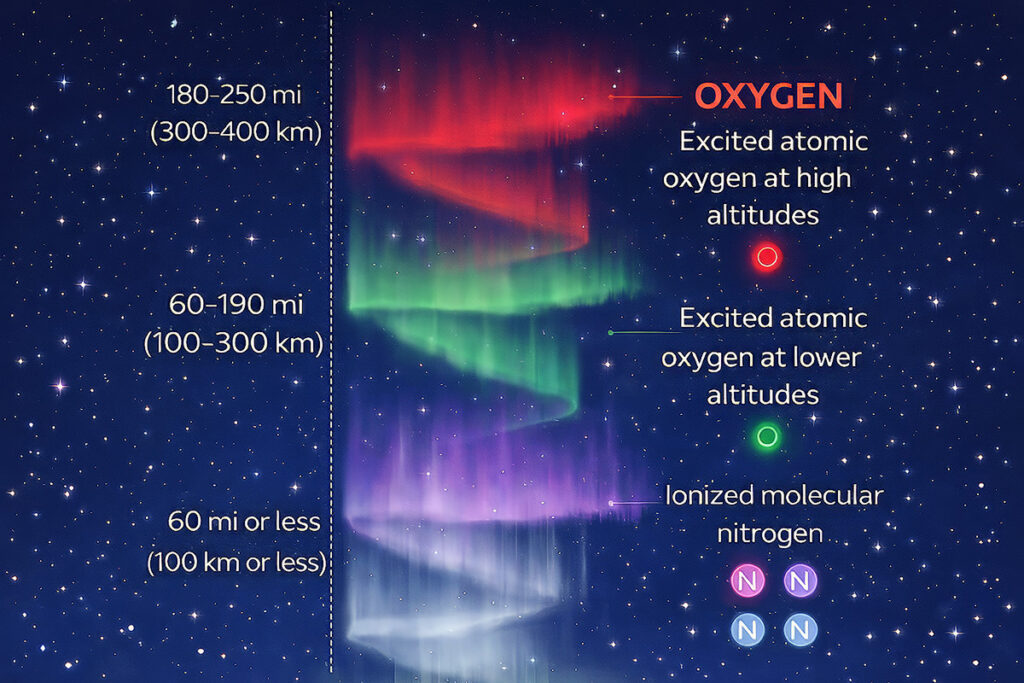
The process of aurora formation is similar to how electricity runs through a light fixture, energizing the neon gas inside a neon light. When the neon gas inside the fixture is energized, it emits a glow as it returns to its normal state.
Likewise, the aurora’s glow is the result of atmospheric gases in Earth’s atmosphere being excited by solar particles and then emitting light as they return to their normal state.
Tonight’s space weather conditions, including the speed and density of the solar wind and the occurrence of coronal mass ejections (CMEs) or high-speed solar wind streams from coronal holes, directly influence the intensity and visibility of the aurora.
The Space Weather Prediction Center monitors these solar events, which are crucial for any aurora forecast. Geomagnetic activity is the direct driver of the aurora borealis.
Utilizing Real-Time Data (Magnetometer & All-Sky Camera)
For the most accurate picture tonight, look beyond general forecasts. Real-time data from magnetometers, which measure fluctuations in Earth’s magnetic field, and all-sky cameras, which provide a panoramic view of the sky, offer immediate insights.
If these instruments show strong magnetic activity or visible aurora, your chances to see the lights are high, even if general forecasts are only somewhat promising. These tools provide crucial ground truth for tonight’s aurora viewing experience.
This data complements the broader aurora forecast.
Beyond the Forecast: Critical Factors for Tonight’s Success
A favorable aurora forecast is only one piece of the puzzle. Several other environmental factors play a critical role in whether you’ll actually see the Northern Lights tonight.
Avoiding city lights is crucial for maximizing your chances of seeing the aurora, as urban light pollution can obscure the natural display. Successfully viewing the aurora borealis requires careful consideration of these elements, ensuring your viewing experience is as rewarding as possible.
The Weather Factor: Your Aurora Ally or Adversary Tonight
Even the most powerful aurora display is invisible behind thick clouds. Tonight’s success hinges significantly on clear skies.
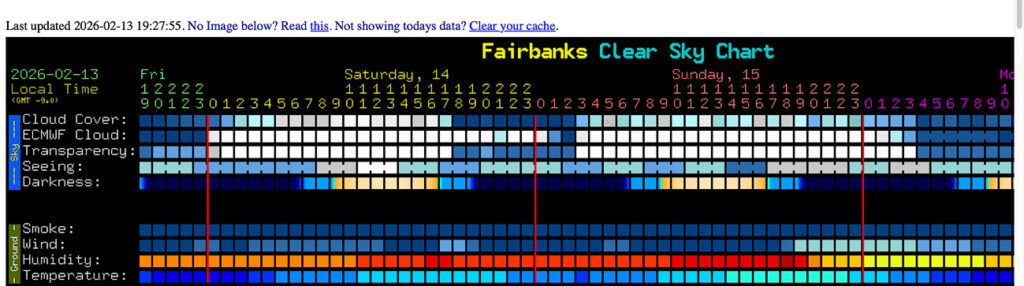
Clouds, fog, and heavy precipitation will completely obstruct your view. Therefore, checking the detailed weather forecast for your intended viewing location is as important as checking the aurora forecast itself. You need clear skies to witness the aurora.
What weather conditions impact the visibility of the northern lights in Alaska?
Beyond clouds, other weather conditions can impact visibility. Snowfall can obscure the lights, especially if it’s heavy.
Wind can sometimes make viewing uncomfortable, but it doesn’t directly hinder the aurora’s visibility unless it contributes to fog formation.
Extreme cold, while not preventing the aurora, requires careful preparation for a comfortable viewing experience tonight. Ensuring you have thermal and windproof clothing is essential for any extended outdoor viewing.
Moonlight: Friend or Foe?
The phase of the moon significantly impacts aurora viewing. A full moon, while beautiful, can cast enough light to wash out fainter auroral displays, making them appear less vibrant or even invisible.
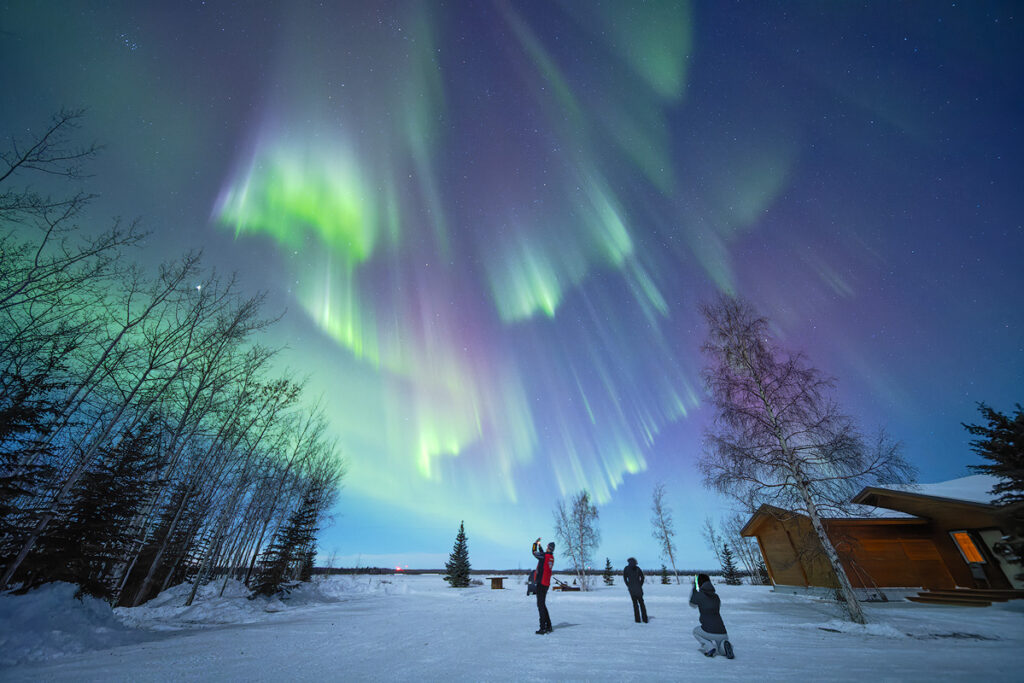
For the best chances of seeing subtle or moderate auroras tonight, a new moon or a crescent moon is ideal, allowing the faint light of the aurora to stand out more dramatically.
However, during a particularly strong aurora display, the Northern Lights can shine brightly enough to outshine the moonlight. In such cases, the moon phase becomes less critical, and a dazzling aurora can be visible even under a bright full moon.
Darkness is Key: Understanding Alaska’s Daylight Hours Tonight
The darker the sky, the better you can see the aurora. In Alaska, even during the Aurora Season, daylight hours vary.
In late August and September, nights are shorter, but darkness is sufficient. By November, the hours of darkness increase substantially, offering longer viewing windows, particularly in the northern parts of the state closer to the Arctic Circle.
Knowing tonight’s sunset and civil twilight times is fundamental for planning your aurora hunt. The contrast between the midnight sun season and the polar night displays is stark.
Alaska’s Prime Viewing Zones: Finding Your Spot Tonight
Alaska offers a spectrum of locations, each with its unique advantages for aurora viewing. Choosing the right location tonight can drastically improve your chances of witnessing the aurora borealis.
Many visitors engage in aurora hunting, traveling across Alaska to find the best spots for viewing the northern lights.
When is the best time to see the northern lights in Alaska?
While the aurora can appear any time during dark hours, the most active periods often occur between 11 PM and 2 AM local time. This is when the Earth’s magnetosphere is typically more agitated.
However, significant auroral events can happen earlier or later. Patience is key, and being in a good viewing location with a clear sky and a favorable forecast is paramount for tonight’s viewing.
Fairbanks: The Aurora Capital
Fairbanks is widely recognized as the “Aurora Capital” of Alaska, and for good reason. Located directly under the auroral oval for much of the year, it offers some of the highest chances of seeing the Northern Lights.
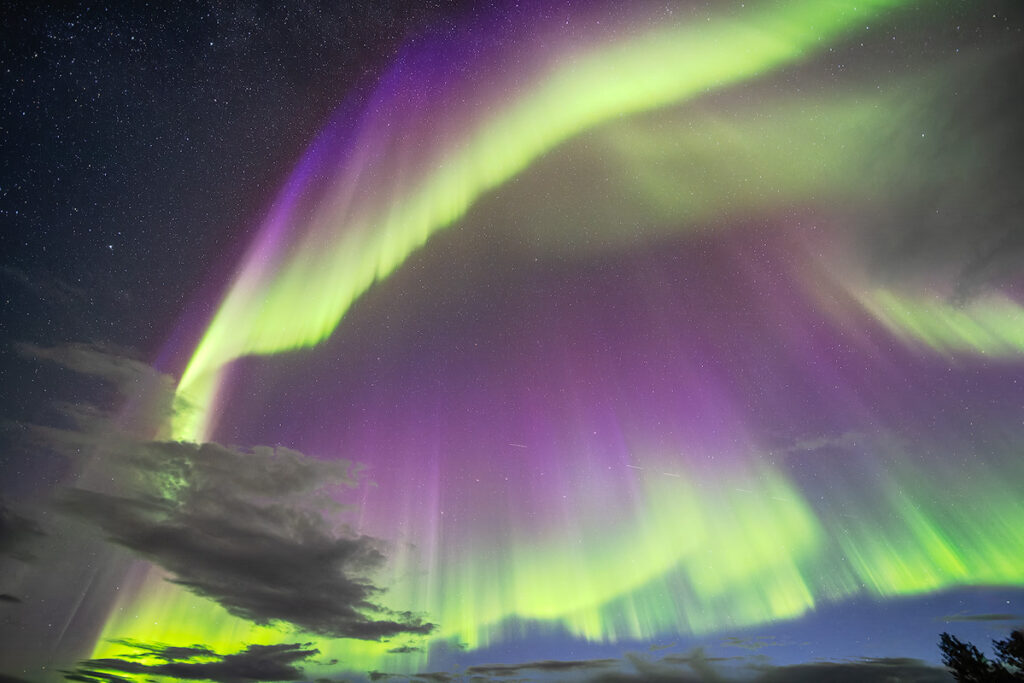
Its proximity to areas with minimal light pollution, such as Chena Hot Springs Resort, further enhances its reputation, although while staying at resorts might seem appealing, the light pollution that comes with staying there does in fact affect your viewing experience.
Fairbanks is an excellent choice for viewing tonight due to its consistent overhead activity and access to excellent aurora viewing spots. Place names like Murphy Dome are often associated with prime viewing.
Anchorage and Southcentral Alaska: Making the Most of It Tonight
While Anchorage is south of the prime auroral oval, it is still possible to see the aurora there, especially during more active periods (higher Kp index).
Viewing in Anchorage requires diligent effort to escape city light pollution. Areas to the north and east of the city, away from the urban glow, offer better opportunities.
If you are in Anchorage tonight, plan to drive at least 30-60 minutes out of town to dark skies, perhaps towards the Talkeetna Mountains, for a better viewing experience.
Denali National Park & Preserve: Wilderness Viewing Tonight
For those seeking a more remote and pristine experience, Denali National Park and Preserve offers spectacular aurora viewing opportunities. The vastness of the park and its minimal light pollution provide a stunning backdrop for the aurora.
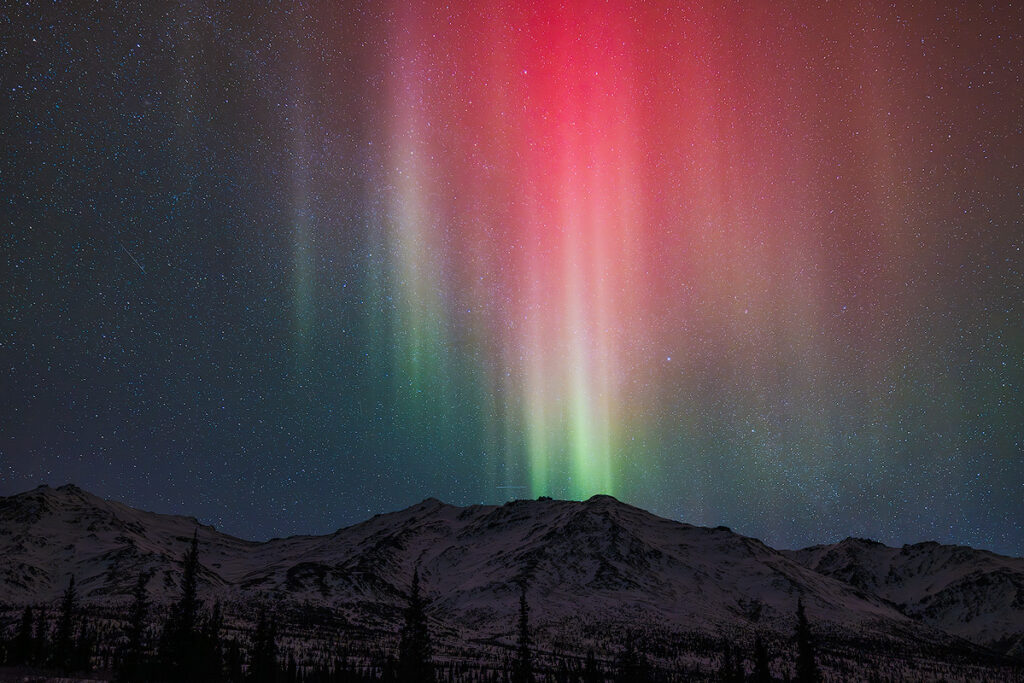
While accessible via tours or park roads (seasonal limitations apply), Denali offers a chance to witness the aurora amidst dramatic wilderness landscapes. This location is ideal for those prioritizing a less crowded experience tonight, offering a truly immersive aurora viewing spot.
Beyond the Popular: Seeking Out Remote Darkness
Beyond the well-known spots, many other areas in Alaska offer excellent aurora viewing.
Anywhere away from the light pollution of cities provides a better experience. Visiting smaller towns or wilderness areas can give you great, uncrowded aurora views without the light pollution.
Go north of Fairbanks or along the North Slope, but prepare well for extreme conditions. The key is finding a dark location with a clear view of the northern horizon. This approach can lead to discovering hidden aurora viewing spots.
How does light pollution affect the northern lights viewing experience in Alaska?
Light pollution from cities and towns is the aurora viewer’s nemesis. Artificial lights scatter atmospheric particles, creating a bright sky glow that can significantly diminish the visibility of the aurora borealis.
Faint auroras can become imperceptible, and even bright displays lose their contrast and detail against a sky illuminated by human activity. This severely impacts the viewing experience.
Avoiding Light Pollution: Your #1 Rule for Tonight
To enhance your chances of witnessing the Northern Lights tonight, it’s crucial to find an area free of light pollution. This often means venturing away from towns and cities, and importantly, avoiding popular viewing locations, as these spots tend to have ongoing light pollution throughout the night due to crowds and nearby facilities.
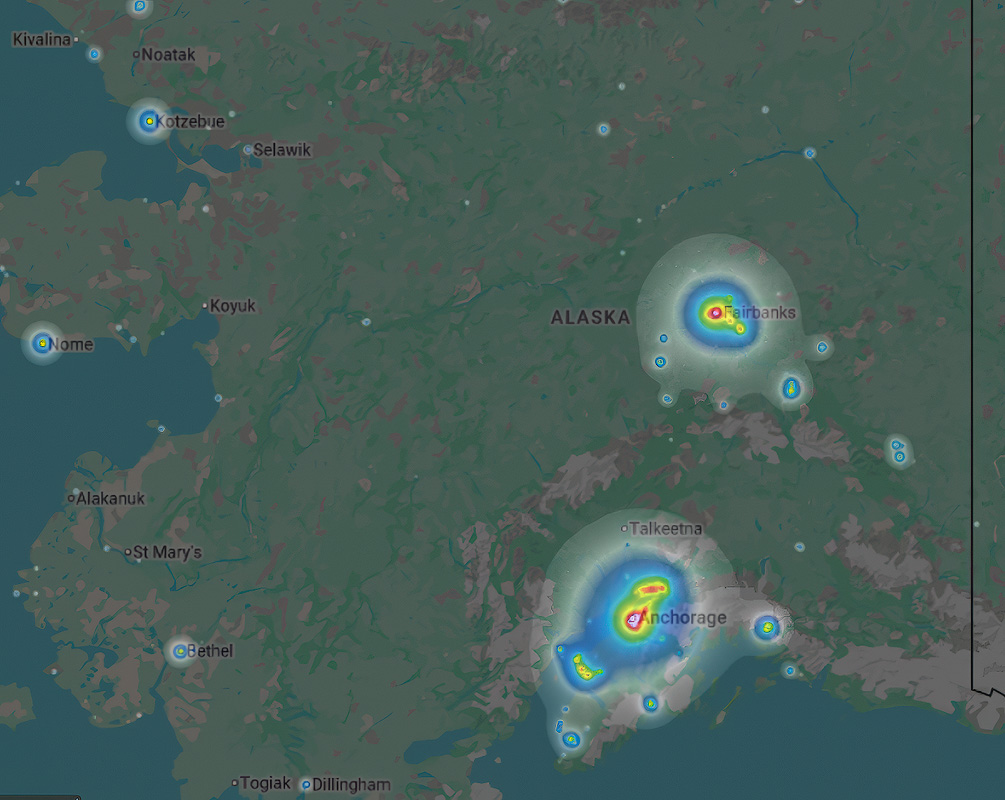
Even a small village can emit enough light to impede aurora viewing. Utilize light pollution maps to help locate truly dark areas near your destination. The darker your environment, the more vibrant and awe-inspiring the aurora will appear, allowing you to fully appreciate its breathtaking beauty. Dark sky preserves are ideal for this.
Your Action Plan for Tonight’s Aurora Quest
With the forecast understood and potential locations identified, it’s time to create a clear plan to maximize your chances of seeing the aurora borealis tonight. This action plan will guide you through the crucial steps for a successful aurora viewing experience.
Step 1: Final Forecast Check (Aurora & Weather) Before setting off, it’s wise to do a final review of both the aurora forecast—focusing on the Kp index and activity level—and the weather forecast for your selected location.
You’ll want clear skies and a Kp index of 2 or above. Tonight’s space weather affects the aurora’s strength and visibility. The speed and density of the solar wind matter. Coronal Mass Ejections (CMEs) also affect it.
Consider checking real-time data from sources like the University of Alaska Fairbanks Geophysical Institute or the Space Weather Prediction Center.
Step 2: Select Your Viewing Location Based on the forecasts and your proximity, decide on your specific viewing location. Prioritize areas with minimal light pollution.
If you’re in Fairbanks, consider heading north towards Murphy Dome or areas outside the city limits. If you’re near Anchorage, drive at least an hour away from the city, perhaps towards the Talkeetna Mountains.
Denali National Park offers unparalleled darkness but requires planning for accessibility.
For those seeking expert guidance and access to the best aurora viewing spots, consider hiring local tour guides. Experienced tour guides can enhance your Northern Lights experience by leading you to optimal locations and offering valuable insights.
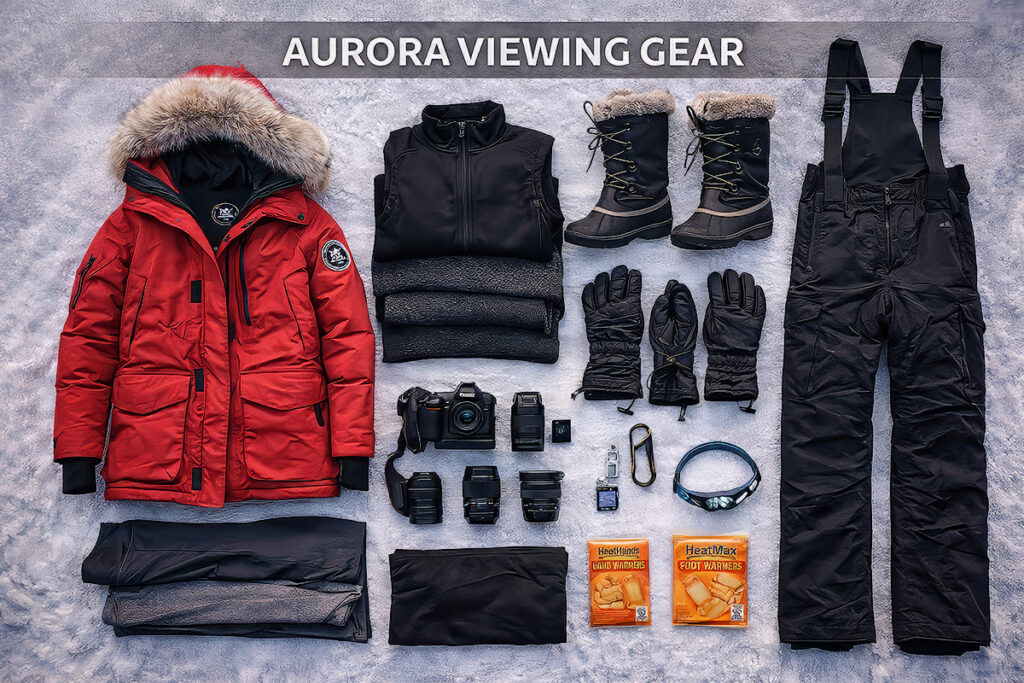
Step 3: Prepare for the Elements Alaskan nights can be frigid, even during the aurora season. Dress in layers, ensuring you have thermal and windproof clothing, a warm winter jacket, insulated boots, gloves, and a hat.
Hand warmers can be a lifesaver. Pack snacks and warm drinks. Ensure your vehicle is ready for winter driving conditions, with a full tank of gas and an emergency kit.
Inform someone of your location and expected return time.
Step 4: Be Patient and Observant The aurora doesn’t always put on a show the moment you arrive. Set up your viewing spot, get comfortable, and scan the northern sky.
The most active displays often occur between 11 PM and 2 AM, but significant aurora activity can happen at any time.
Enjoy the quiet of the Alaskan night and the anticipation. Consider activities like ice fishing during the day to make the most of your time in Alaska.
Capturing the Magic: Photography Tips for Tonight
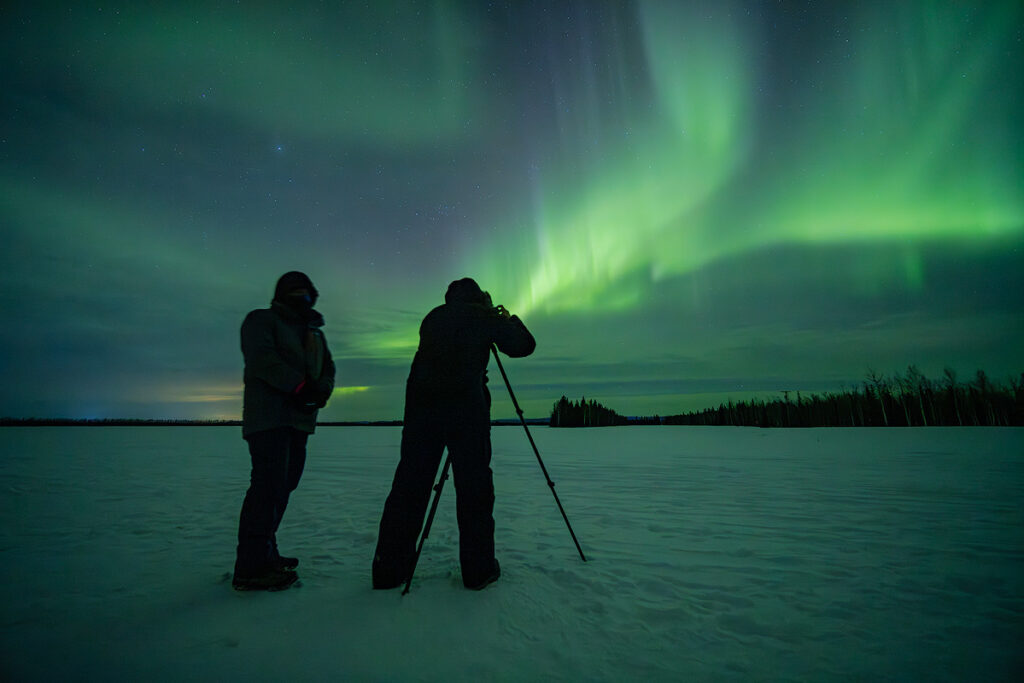
Photographing the aurora requires specific settings to capture its ethereal glow. Capturing the aurora borealis effectively enhances your viewing experience.
Essential Gear: A sturdy tripod is non-negotiable for long exposures. A DSLR or mirrorless camera with manual controls is ideal. A wide-angle lens (10-24mm) with a fast aperture (f/2.8 or faster) is recommended.
Basic Camera Settings:
- Focus: Set to manual focus and infinity (or slightly before infinity).
- Aperture: Wide open (e.g., f/2.8, f/4).
- Shutter Speed: Start with 10-20 seconds. Adjust based on aurora brightness and movement; longer for faint, shorter for active.
- ISO: Start around 800-1600 and adjust as needed. Higher ISO introduces more noise.
Best Practices: Take test shots to get exposure right. Bracket your exposures. Avoid using flash, as it will only illuminate foreground objects and detract from the aurora.
The aurora occasionally shows rare colors such as red, pink, or purple, which can be captured with the right camera settings. Many photography tours offer expert guidance on capturing the best shots.
Safety and Comfort on Your Aurora Hunt
Safety and comfort are paramount when venturing out for aurora viewing in Alaska. This ensures a positive and memorable experience.
Dressing for Extreme Cold: As mentioned, layering is key. Ensure your extremities are well-protected. Hypothermia is a real risk in Alaskan winters. Bringing thermal and windproof clothing is crucial.
Vehicle Safety: If driving, ensure your vehicle is in good condition, with a full tank of gas. Carry an emergency kit including blankets, food, water, a first-aid kit, a flashlight, and jumper cables.
Inform someone of your location and expected return time.
Wildlife Awareness: Be aware of your surroundings and potential wildlife encounters, especially in more remote areas like Denali National Park. Carry bear spray if appropriate for the season and location.
Winter Driving Precautions: Roads can be icy and snow-covered. Drive cautiously, adjust your speed, and be aware of other vehicles. Navigation signals might be less reliable in remote areas.
If Tonight Isn’t Your Night
Sometimes, despite best efforts, the aurora remains elusive. This could be due to unexpected cloud cover, a quiet geomagnetic forecast, or other factors. Don’t be discouraged if you don’t see it tonight.
Persistence is Key: The aurora is a natural phenomenon, and its appearance is not guaranteed. The more nights you dedicate to aurora hunting, the better your chances of witnessing a spectacular display.
Consider planning your trip to include multiple opportunities for viewing, making the experience part of a broader Alaskan adventure.
Alternative Activities: Even if the Northern Lights remain hidden, Alaska offers a wealth of winter experiences to enjoy. From thrilling dog sledding expeditions to peaceful ice fishing outings, embrace the rich variety of activities that make the Alaskan winter unforgettable, regardless of the aurora’s presence.
Planning for Future Viewing: Use tonight’s experience to refine your approach for future aurora hunts. Learn from the forecast, weather patterns, and your chosen location.
The Aurora Season is long, and many nights offer opportunities. Auroras can also be observed in the southern hemisphere, such as in Tasmania or New Zealand, during periods of heightened geomagnetic activity, providing alternative destinations for future aurora viewing.
How To Successfully View Alaska’s Aurora Tonight
Starting an aurora viewing trip in Alaska tonight is an exciting adventure with chances for unforgettable sights. Understanding the forecast—like the Kp index, auroral oval movement, and space weather from solar wind—boosts your success.
Clear skies, little moonlight, and avoiding light pollution are as important as a strong aurora forecast. Whether you stay near Fairbanks, explore Denali National Park, or find darker skies near Anchorage, your location matters.
Planning well, preparing for the weather, and being patient will make your trip rewarding. Alaska’s aurora borealis awaits, and with the right knowledge and preparation, tonight could be the night you see its stunning dance.
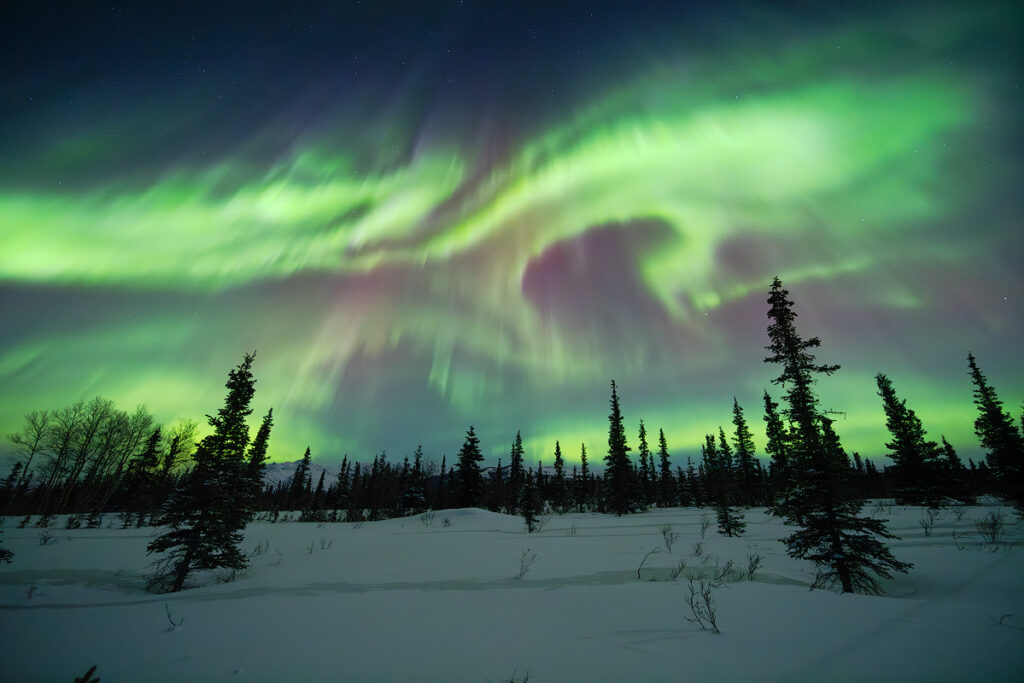
Consider visiting a dedicated aurora-viewing venue or joining photography tours for an enhanced experience. For those seeking a unique adventure, combining aurora viewing with ice fishing offers a dual Alaskan thrill.
About The Author:
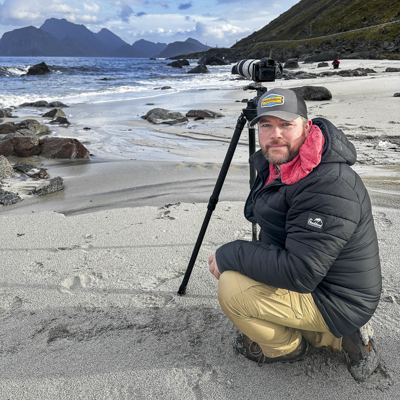
Michael Schultz: runs Face The Outdoors, a family-operated aurora tour company based deep in Alaska’s interior. Born and raised in Alaska, the northern lights have been part of his life for as long as he can remember. Face The Outdoors was recommended by National Geographic as a premier aurora tour option in the Fairbanks area. He lives with his family at the same property where guests experience the aurora — under some of the darkest skies in Interior Alaska.