
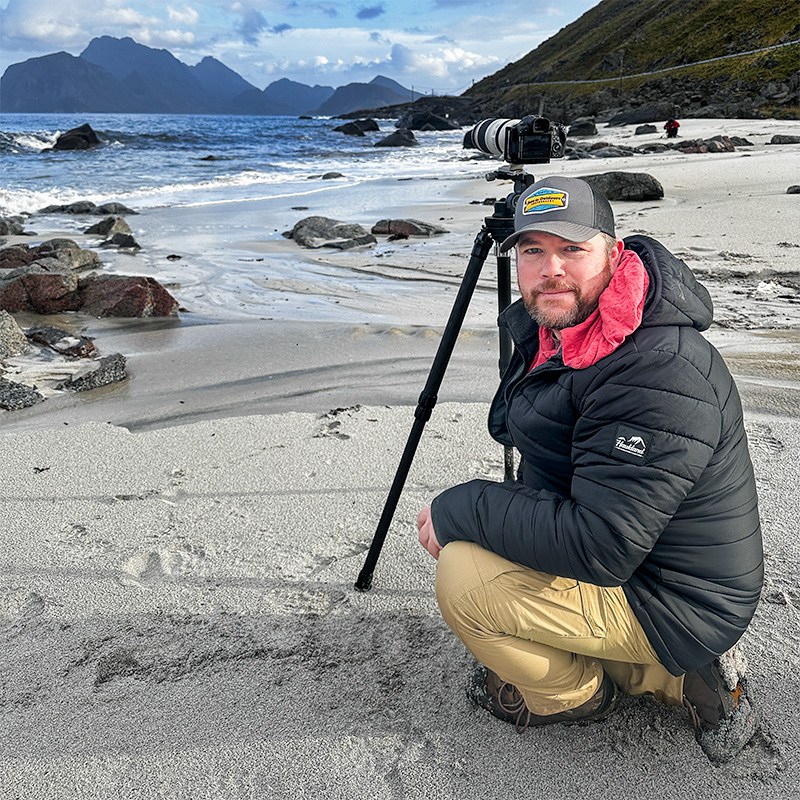
Northern Lights Forecast in Alaska
Right now, in late January through mid-February 2026, the northern lights forecast in Alaska points to prime conditions. Geomagnetic activity has been cycling between Kp 2 and Kp 5 over recent weeks, with several nights delivering brilliant displays that stretched across the northern horizon and occasionally pulsed directly overhead in Fairbanks.
Reading tonight’s forecast comes down to three factors:
- Kp index: The planetary geomagnetic index runs 0–9. Higher numbers mean stronger auroral activity and visibility further south across Alaska.
- Cloud cover: Even Kp 7 means nothing under overcast skies. Check hourly cloud forecasts for your specific location, not just regional weather summaries.
- Moon phase: A bright moon can wash out faint aurora arcs but also illuminates snowy landscapes beautifully for photography. New moon favors seeing the lights; fuller moon favors foreground detail.
It’s important to note that local auroral activity is closely related to substorm conditions and not solely determined by the global Kp index.
Interior Alaska around Fairbanks regularly sees aurora at Kp 2–3, while Anchorage and Southcentral Alaska typically need Kp 3–5 to view aurora clearly against darker northern skies.
Tonight at a Glance
Current conditions often show Kp hovering between 2 and 4 during active periods, with the best viewing hours falling between 22:00 and 02:00 Alaska time. Clear skies in the Interior create optimal conditions—coastal regions may see more cloud interference.
At Face The Outdoors Photography, we actively monitor this nightly data for our small-group photo tours, adjusting driving plans and shooting locations based on real-time space weather and local weather models.
How to Read an Alaska Northern Lights Forecast (Kp, Oval & Local Time)
Most Alaska aurora forecast tools rely on the Kp index displayed alongside auroral oval maps, all presented in Alaska time. Standard forecasts include 3-day outlooks for immediate planning and 27-day outlooks based on the sun’s rotation cycle, which brings active regions back into Earth-facing position roughly every four weeks.
Understanding the Kp index in practical terms:
- Kp 1–2: Quiet geomagnetic conditions, but aurora remains visible in Fairbanks and across the auroral zone. Faint arcs along the northern horizon are common.
- Kp 3–4: Good activity for all of Interior Alaska. Anchorage and Southcentral Alaska begin seeing displays, especially with clear northern horizons away from city lights.
- Kp 5+: A geomagnetic storm. Widespread viewing across Alaska, with aurora potentially visible as far south as Southeast Alaska and even the northern Lower 48 states.
The auroral oval—that ring of activity circling the magnetic poles—shifts and expands based on geomagnetic activity. These auroral ovals are monitored across the northern hemisphere, with Alaska being one of the prime locations for observation. On quiet nights, the green band sits over the Arctic coast near Utqiaġvik and Toolik. As activity increases, it expands southward over Fairbanks, then toward Cook Inlet and Anchorage. Watching this oval on NOAA’s OVATION model or the Geophysical Institute’s forecast shows exactly where aurora is most likely overhead versus on the horizon.
Most forecasting sites—including NOAA’s Space Weather Prediction Center and the University of Alaska Fairbanks Geophysical Institute—display predictions in Alaska Standard or Daylight Time. Visitors arriving from other time zones should always double-check local time conversions when planning their night.
Face The Outdoors Photography uses these same scientific tools daily when planning workshop shooting locations, whether we’re working around Alaska Fairbanks, along the Richardson Highway, or guiding international trips to Norway and Iceland.
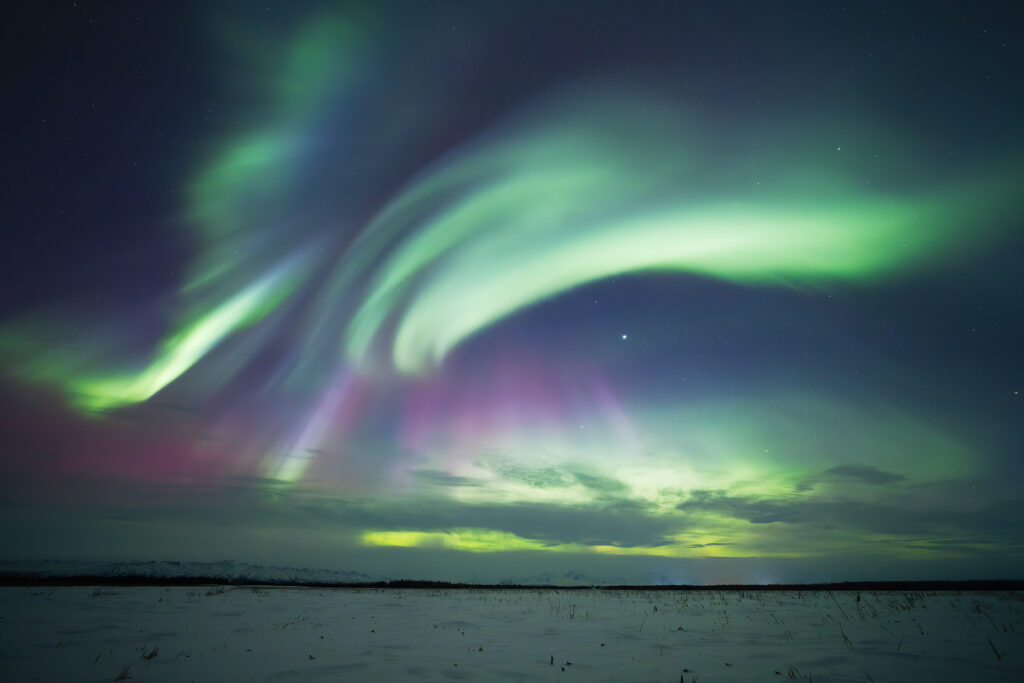
Best Time of Year to See the Northern Lights in Alaska
Alaska’s core aurora season runs from roughly mid-August through late April—specifically, from around August 21 through April 21, when darkness returns to northern latitudes. Outside this window, the midnight sun keeps skies too bright for northern lights viewing, even when the Kp index climbs high.
Late August through September marks the return of dark nights after the summer months of endless twilight. Early fall often brings surprisingly strong auroral activity due to equinox effects—the orientation of Earth’s magnetic field relative to the solar wind creates conditions favorable for geomagnetic storms. Late August arrivals can catch the season’s first displays against lingering autumn colors.
October through February delivers the longest nights and most frequent aurora opportunities in Interior Alaska. Deep winter means darkness arrives by 15:00 and lingers past 09:00, giving observers extended windows to see the aurora. Cold temperatures are significant—nights regularly drop below -20°F in January—but clear skies are more common in the interior during this period than along the coast.
March through early April brings the second equinox peak, often with the most dramatic geomagnetic activity of the year. Nights remain dark enough to view aurora while temperatures moderate slightly, making extended outdoor photography more comfortable. Early spring represents a sweet spot: strong activity, reasonable conditions, and snow still covering the landscape for clean foregrounds.
From late April through mid-August, the midnight sun makes aurora viewing essentially impossible across most of Alaska, regardless of how active the sun becomes.
The broader 11-year solar cycle matters here too. We’re currently near solar maximum for Solar Cycle 25, with peak activity occurring between 2024 and 2026. This means even “average” nights during the current season can produce aurora displays that would be exceptional during quieter phases of the cycle. After this cycle declines, comparable activity won’t return until the mid-2030s.
Face The Outdoors Photography schedules most Alaska aurora workshops between late August and early April to match these conditions, timing departures around both seasonal darkness and solar cycle activity.
Best Time of Night for Alaska Northern Lights
Aurora can technically appear anytime it’s dark, from the moment twilight fades until dawn returns. But statistically, displays peak around local magnetic midnight—which in Alaska falls roughly between 23:00 and 02:00, depending on your precise location within the state.
The typical Alaska viewing window runs from 21:00 to 03:00, with the most active period between 23:00 and 02:00 Alaska time. Locations like Fairbanks, Chena Hot Springs, and Murphy Dome regularly see their strongest activity during these hours.
Key timing considerations:
- Patience is essential. Auroral activity often pulses—15–30 minutes of intense dancing curtains followed by quieter stretches where only faint arcs glow on the northern horizon. Staying out through the quiet periods increases your chances of witnessing the next burst.
- Deep winter extends the window. In November through January, darkness arrives early enough that displays can begin as early as 18:00–19:00, especially in the interior and Arctic regions. This longer night creates more opportunities to see the aurora without staying up past midnight.
- Activity doesn’t follow a schedule. The northern lights occasionally shows up at unexpected hours—some displays continue until 05:00 or later, while others peak before 22:00 and fade. Flexibility matters more than rigid planning.
Face The Outdoors Photography structures nightly field time for photo tours around these patterns. We typically gather after dinner, drive to our selected location based on that evening’s forecast, and remain flexible until 02:00 or later when conditions justify the extended effort. On nights with strong geomagnetic activity, we’ve stayed out until the sky finally quieted near dawn.
Key Aurora Forecast Tools for Alaska (and How We Use Them)
Reliable Alaska northern lights planning requires layering several information sources: space weather data for solar activity, local aurora cameras for real-time confirmation, and hourly cloud forecasts for specific overnight hours.
Scientific sources form the foundation:
- NOAA Space Weather Prediction Center (SWPC): Real-time solar wind data, coronal mass ejection (CME) tracking, and OVATION auroral oval maps showing predicted activity intensity. This is the primary source for understanding what’s coming from the sun.
- University of Alaska Fairbanks Geophysical Institute: Three-day Alaska-time aurora forecast with straightforward probability assessments for different regions of the state. Their forecast integrates well with local conditions.
- Magnetometer data: Real-time measurements of geomagnetic disturbance from stations across Alaska indicate when activity is actually occurring versus predicted.
All-sky cameras provide visual confirmation before committing to a drive:
- Poker Flat Research Range north of Fairbanks
- Toolik Field Station on the Arctic coastal plain
- Gakona in the Copper River Valley
- Various Fairbanks-area installations
These cameras show whether aurora is actually overhead right now, helping differentiate between forecast potential and current reality—especially useful when deciding whether to bundle up and head out into -30°F temperatures.
Consumer-facing tools like aurora tracking apps and local tourism “aurora tracker” pages aggregate this data into more accessible formats. They’re useful starting points, but always cross-check Kp readings, cloud cover, and local time against primary sources before making plans.
Each afternoon and evening, Face The Outdoors Photography combines these tools to choose that night’s shooting location—whether we stay close to Fairbanks, drive south along the
Weather, Clouds & Moonlight: The Other Half of the Forecast
Even a strong Kp of 5 delivers nothing under thick cloud cover. Alaska aurora forecasting always requires balancing space weather against local weather models—the best geomagnetic storm in years means nothing if you can’t see the sky.
Interior Alaska—the region around Fairbanks, Delta Junction, and the Nenana area—typically offers clearer mid-winter skies than coastal regions like Anchorage, Seward, or Southeast Alaska. The interior’s continental climate produces more stable winter conditions, while coastal areas contend with moisture from the Gulf of Alaska and North Pacific. This reliability makes Interior Alaska the preferred base for multi-night aurora trips.
Practical weather strategy:
- Check high-resolution cloud forecasts for specific overnight hours (22:00–04:00), not just daily summaries. Conditions change rapidly.
- Remain willing to drive north or south of your base location to find clear gaps in cloud cover. Sometimes 30 miles makes the difference between overcast and open sky.
- Monitor real-time satellite imagery when clouds are patchy—holes in the cover can provide windows for viewing even on generally cloudy nights.
Moon phase creates both challenges and opportunities:
A full moon washes out faint aurora arcs, making subtle displays harder to detect with the naked eye. But that same moonlight beautifully illuminates snowy landscapes, frozen rivers, and mountain ridges—creating balanced exposures where foreground and sky both register detail without artificial light.
A new moon maximizes aurora visibility, allowing even faint activity to stand out against the darkest possible sky. However, foregrounds go nearly black without supplemental light sources, limiting composition options for photography.
Face The Outdoors Photography intentionally schedules some workshops around darker skies for maximum aurora contrast, while timing others near brighter moonlight to help participants photograph illuminated mountains, boreal forests, and remote cabins beneath the lights. Both approaches produce compelling images—just different ones.
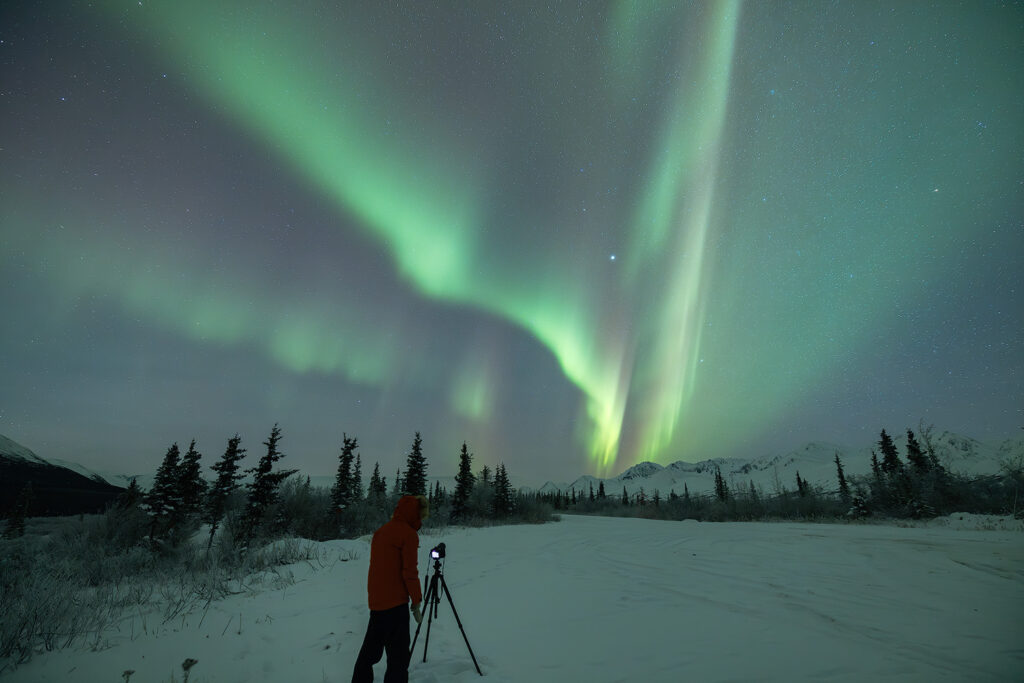
Best Places in Alaska to See & Photograph the Northern Lights
Alaska spans an enormous geographic range—from the Arctic coast to the temperate rainforests of the Southeast, from volcanic Aleutian islands to the Canadian border. Aurora visibility varies dramatically based on latitude, road access, typical cloud cover, and proximity to city lights.
Interior Alaska (Fairbanks Region)
The Fairbanks area remains the most reliable aurora destination in the state:
- Fairbanks proper: Numerous viewing pullouts within a short drive of town. Light pollution exists but remains manageable compared to larger cities. The location sits squarely within the auroral zone for maximum viewing frequency.
- Murphy Dome and Cleary Summit: Elevated viewpoints north of Fairbanks offering unobstructed 360-degree horizons. The altitude provides clearer air and positions you closer to overhead aurora during active displays.
- Chena Hot Springs Road corridor: Dark skies, winter road access, and the added appeal of hot springs for warming up between viewing sessions. Popular for good reason.
Highway Corridors
- Richardson Highway (Fairbanks to Delta Junction): Excellent roadside pullouts with mountain backdrops and minimal traffic. The Delta area offers even darker skies than Fairbanks.
- Glenn Highway (Palmer to Glennallen): When Southcentral Alaska sees clear skies, this corridor provides dramatic mountain foregrounds beneath aurora. Requires higher Kp levels (3–5) for strong displays.
- Denali National Park area: Aurora lights up skies above snow-covered peaks and frozen rivers when clear spells align with activity. Winter access is limited, but the scenery justifies the effort.
Arctic Locations
- Toolik Field Station and Prudhoe Bay/Deadhorse: High-latitude positions beneath the heart of the auroral oval. These locations see aurora even on relatively quiet nights but require specialized logistics to reach.
Coastal and Southcentral Alaska
Anchorage sees excellent northern lights on Kp 3–5 nights, especially with a clear northern horizon away from the city. Viewing locations along the Knik River, Turnagain Arm pullouts, and the Hatcher Pass road provide options. Southeast Alaska occasionally witnesses aurora during strong geomagnetic storms, though the region’s frequent cloud cover reduces reliability.
Face The Outdoors Photography primarily bases aurora workshops in the Fairbanks and Interior region due to this reliability, then adds side trips along scenic highways to capture diverse foregrounds—river reflections, boreal forest silhouettes, and distant mountain ranges beneath the dancing lights.
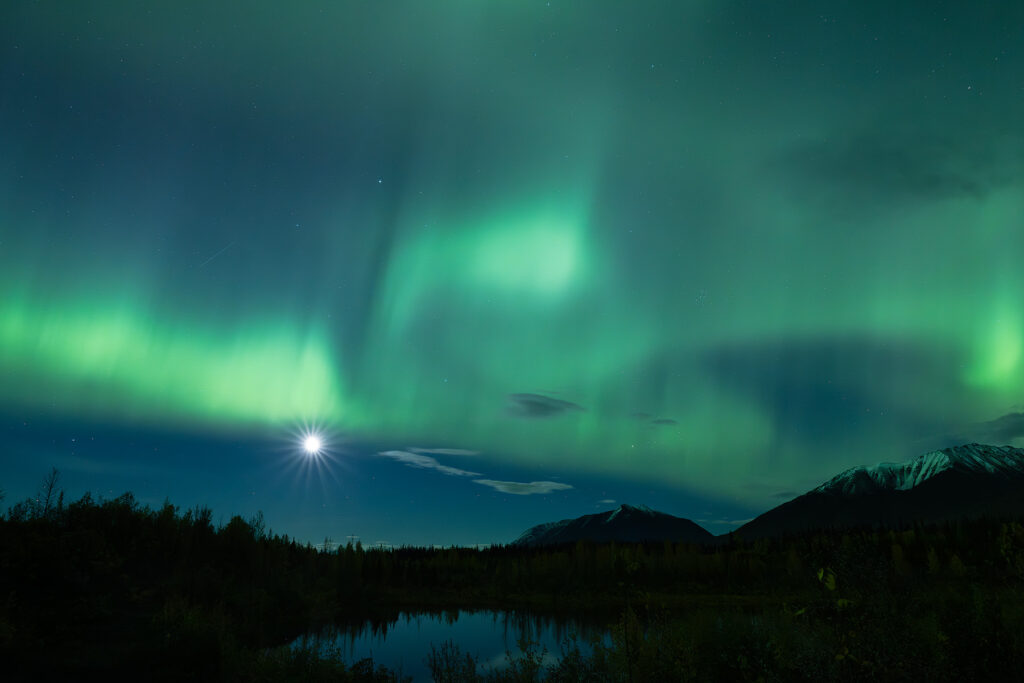
Aurora Science in Plain Language: Why Forecasts Work
The aurora borealis occurs when electrically charged particles streaming from the sun ride the solar wind and enter Earth’s atmosphere near the magnetic poles. Earth’s magnetic field normally deflects most of these particles, but near the north pole and south pole, some slip through and collide with atmospheric gases—primarily oxygen and nitrogen molecules—in the upper atmosphere. The resulting light displays are visible around the Earth’s surface, especially near the magnetic poles.
These collisions determine the colors we see. The familiar green yellow color comes from oxygen at lower altitudes gaining energy from impacts with charged particles and releasing photons as the atoms return to their normal state. All red auroras occur at higher altitudes where oxygen is less dense. Purple and pink aurora makes its appearance when nitrogen gets involved, with nitrogen molecules also gaining energy and creating different forms depending on altitude and particle energy.
Think of it like a neon light: electricity runs through neon gas inside a light fixture, exciting atoms that release the familiar neon glow. Aurora works similarly—just on a planetary scale, with the sun collide energy rather than household current.
Why forecasting is possible:
Solar events—coronal mass ejections and persistent coronal holes—send streams of charged particles that take roughly 1–3 days to reach Earth. This travel time creates the forecasting window. When scientists detect a CME leaving the sun, they can predict when those particles will arrive and estimate the resulting geomagnetic storm intensity.
The sun rotates approximately every 27 days, meaning active sunspot regions cycle back to face Earth about once per month. This creates the 27-day aurora outlooks—if a coronal hole or active region produced strong aurora last month, similar conditions may return as that feature rotates into view again. Sunspot activity follows broader patterns that make longer-range forecasting partially possible.
The 11-year solar cycle influences overall aurora frequency across both northern and southern hemispheres. Near solar maximum (like the current 2024–2026 period), more frequent bright displays occur over Alaska. During solar minimum, aurora still happens but with less intensity and regularity.
At Face The Outdoors Photography, we often plan workshop timing around these repeating patterns—if a big geomagnetic storm delivers incredible aurora, we watch for that same active region to rotate back into position 27 days later for potential repeat performance.
Using the Forecast for Photography: Tips from Face The Outdoors Photography
Turning a favorable aurora forecast into successful images requires more than showing up with a camera. This is practical guidance for photographers—beginners to intermediate—on translating predictions into photographs worth printing.
Planning composition around the forecast:
- Scout foreground elements during daylight hours that align with the predicted direction of strongest aurora arcs. In Fairbanks, activity often appears toward the north initially, then expands overhead during stronger periods.
- Classic foregrounds include isolated spruce trees, frozen rivers, mountain ridges, and rustic cabins. These elements create scale and visual anchors beneath the lights.
- Consider how moonlight affects your scene. Brighter moon means natural foreground illumination; darker moon means you’ll need longer exposures or supplemental light to render detail.
Baseline camera settings for Interior Alaska:
| Setting | Starting Point | Adjustment |
|---|---|---|
| ISO | 1600–3200 | Higher for faint arcs, lower for bright curtains |
| Aperture | f/1.4–f/2.8 | Wide open for maximum light gathering |
| Shutter | 3–10 seconds | Shorter for fast-moving aurora, longer for static arcs |
| Focus | Manual, infinity | Use live view on a bright star to confirm |
| White Balance | 3500–4000K | Adjust to taste; auto often skews green |
Adapting to changing activity:
- When aurora pulses bright and fast-moving, drop to 2–3 second exposures to freeze the curtain structure. Motion blur in aurora can look beautiful or muddy depending on the display.
- For faint, slow-moving arcs, extend to 8–15 seconds to gather more light. The aurora isn’t moving quickly enough to blur at these durations.
- Check your histogram frequently—LCD previews in cold conditions often appear brighter than actual exposure. The histogram tells truth.
- Battery life drops dramatically in cold. Carry spares in inside pockets close to your body, rotating warm batteries into the camera as needed.
Face The Outdoors Photography’s small-group workshops provide on-location coaching through all of this—reading live forecasts together, scouting foregrounds in daylight, then teaching participants how to react when aurora suddenly intensifies or shifts direction overhead. The learning comes from doing, adjusting, and reviewing results in real time.
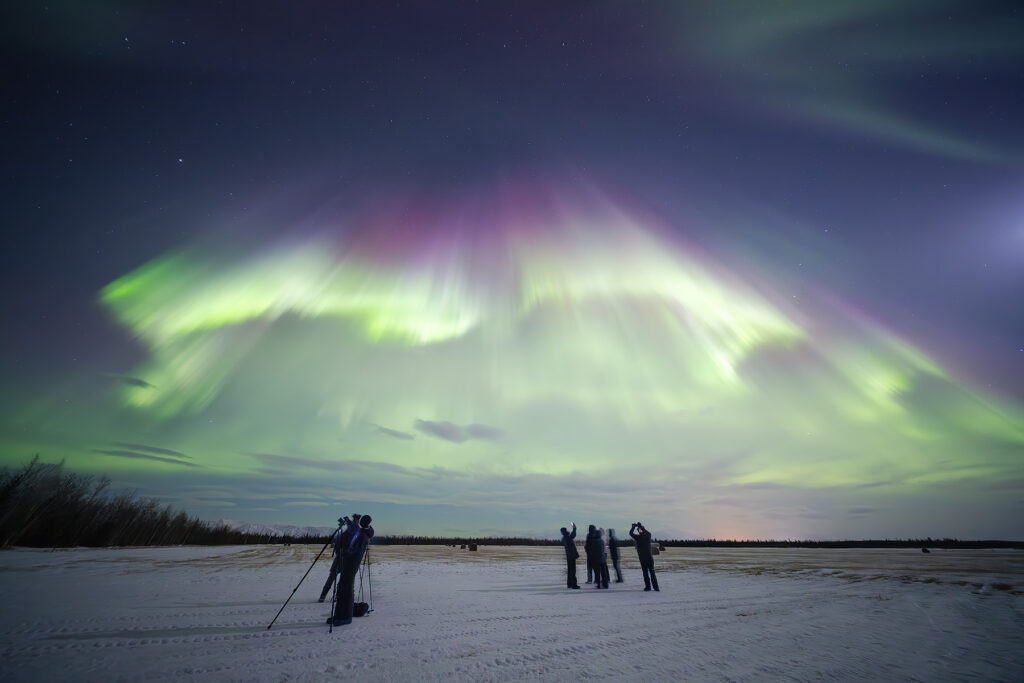
Safety Precautions and Guidelines for Aurora Chasing in Alaska
Chasing the aurora borealis across Alaska is a thrilling adventure, but the magic of northern lights viewing comes with its own set of challenges. Whether you’re a first-time visitor or a seasoned aurora chaser, prioritizing safety ensures your aurora quest is both memorable and secure.
Dress for the Arctic Circle: Alaska’s auroral zone, especially in interior Alaska and near Denali National Park, is known for its frigid temperatures—often well below zero during peak auroral activity in late August through early spring. Layer up with insulated, waterproof clothing, and don’t forget essentials like a hat, gloves, and scarf to protect against biting winds.
Monitor Space Weather and the Aurora Forecast: The best northern lights displays often coincide with geomagnetic storms and heightened solar cycle activity, especially near solar maximum. Stay updated with real-time aurora forecasts from trusted sources like the Geophysical Institute. Knowing when and where auroral activity is likely to peak helps you plan your outing and avoid unnecessary exposure to the elements.
Choose Your Location Wisely: To maximize your chances of seeing the aurora, seek out dark skies away from city lights and light pollution. Remote areas in interior Alaska, Denali National Park, and even select spots in southeast Alaska offer prime aurora viewing. Always respect private property and stick to public lands or designated viewing areas.
Be Weather-Wise and Road-Smart: Alaska’s weather can change rapidly, especially during geomagnetic storms that often bring increased cloud cover. Check local conditions before heading out, and be prepared for icy roads, snowdrifts, and limited visibility. If you’re venturing into remote locations, let someone know your plans and expected return time.
Respect the Environment: The arctic circle ecosystem is fragile. Stay on marked trails, pack out all trash, and avoid disturbing wildlife. Responsible aurora chasers help preserve these pristine auroral zones for future generations.
Pack for Comfort and Emergencies: Bring warm beverages, high-energy snacks, and a well-stocked first-aid kit. A fully charged phone, extra batteries, and a flashlight are must-haves for any northern lights viewing trip. Know the location of the nearest shelter or emergency services, especially if you’re far from town.
Stay Informed and Flexible: Space weather is unpredictable, and the best aurora often appears when you least expect it. Keep an eye on the latest updates from the Geophysical Institute and be ready to adjust your plans if conditions change.
Be a Good Neighbor: Always respect local regulations and private property. Avoid trespassing, and be considerate of other aurora chasers sharing the same location.
By following these safety guidelines, you’ll be well-prepared to enjoy the breathtaking spectacle of the aurora borealis in Alaska’s legendary auroral oval. With a little planning and respect for the environment, your northern lights adventure will be as safe as it is unforgettable.
Planning Your Alaska Aurora Trip Around the Forecast
No aurora forecast is perfect—the sun remains fundamentally unpredictable, and local weather adds another layer of uncertainty. But a 4–7 night visit to Interior Alaska statistically provides high odds of at least one or two clear nights with visible aurora, often more during active periods.
Trip planning fundamentals:
- Target months with long dark nights. September through March offers the best combination of darkness and reasonable weather. December and January provide maximum darkness; September and March bring equinox-enhanced activity.
- Avoid single-night “hope and pray” trips. Aurora viewing requires patience and multiple opportunities. One cloudy night shouldn’t end your quest before it begins.
- Stay flexible with schedules. Build in the ability to shift driving plans, adjust sleep timing, and respond to conditions as they develop. Rigid itineraries work against aurora chasers.
- Check the 27-day outlook and recent CME reports 1–2 weeks before travel, then follow 3-day forecasts and hourly cloud maps closely once on the ground in Alaska.
Lodging and logistics:
Base yourself where you can easily reach dark locations. Fairbanks offers the best combination of aurora reliability, road access, and services. Lodges along the Chena Hot Springs Road or near Murphy Dome put you even closer to prime viewing spots.
Winter driving in Alaska requires preparation—studded tires, emergency gear, and knowledge of how to handle icy roads in darkness. This is one area where guided outings provide significant value beyond just photography instruction.
Consider guided experiences, especially in unfamiliar conditions. Face The Outdoors Photography handles forecast interpretation, driving decisions, and location selection so guests can focus on staying warm and creating images. There’s no shame in letting someone else navigate -30°F nights on unfamiliar roads while you concentrate on composition and camera settings.
With a basic understanding of Alaska’s aurora forecast tools and a bit of patience, visitors dramatically improve their chances of standing beneath—and photographing—the northern lights. The ice fishing enthusiasts joke that aurora hunting is similar: the forecast helps, but presence and persistence matter more than any single prediction.
About Face The Outdoors Photography
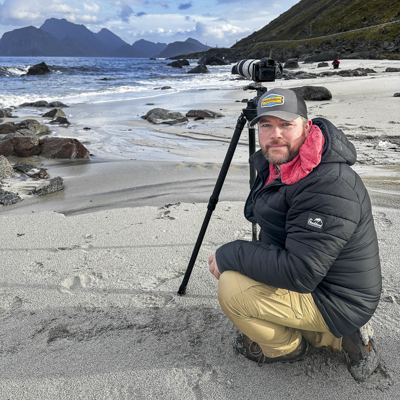
Recently featured in National Geographic as a premier option for viewing the northern lights in the Fairbanks area, Face The Outdoors Photography is led by landscape and wildlife photographer Michael Schultz. We specialize in small-group aurora and landscape photo workshops in Alaska, alongside international destinations like Norway, Iceland, and Portugal. Our approach prioritizes hands-on instruction in the field, responsible wildlife and landscape ethics, and the use of real-time aurora forecasts to maximize your chances of witnessing and capturing the northern lights.
Workshop experiences focus on what matters: understanding light, reading conditions, and translating genuine moments in nature into images worth keeping. We invite you to explore upcoming Alaska aurora workshops and fine art print collections featuring northern lights over Interior Alaska—not as a sales pitch, but as an open door for photographers who want to experience these places with guidance from someone who’s stood in the cold watching the sky countless times before.