
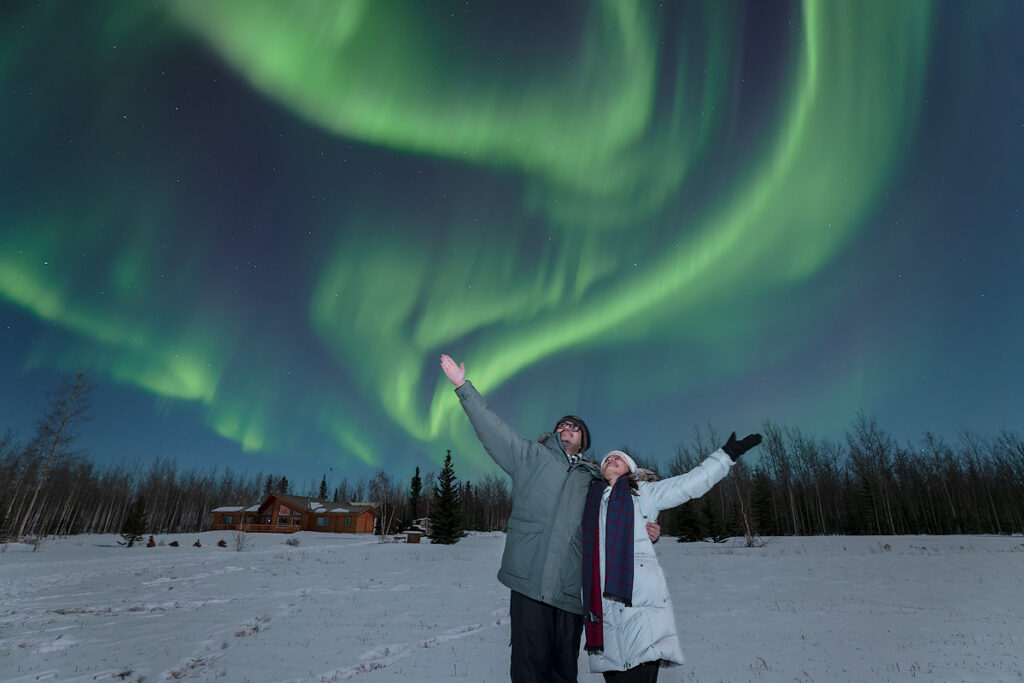
If you’re planning a northern lights tour in Fairbanks, Alaska, you’ve probably noticed there are a lot of options. Lodge tours, chase tours, bus tours, resort stays, hot springs combos—the list is long, and honestly, the marketing language makes it hard to tell them apart. I get it. I talk to guests every week who feel overwhelmed trying to figure out which tour is actually going to deliver.
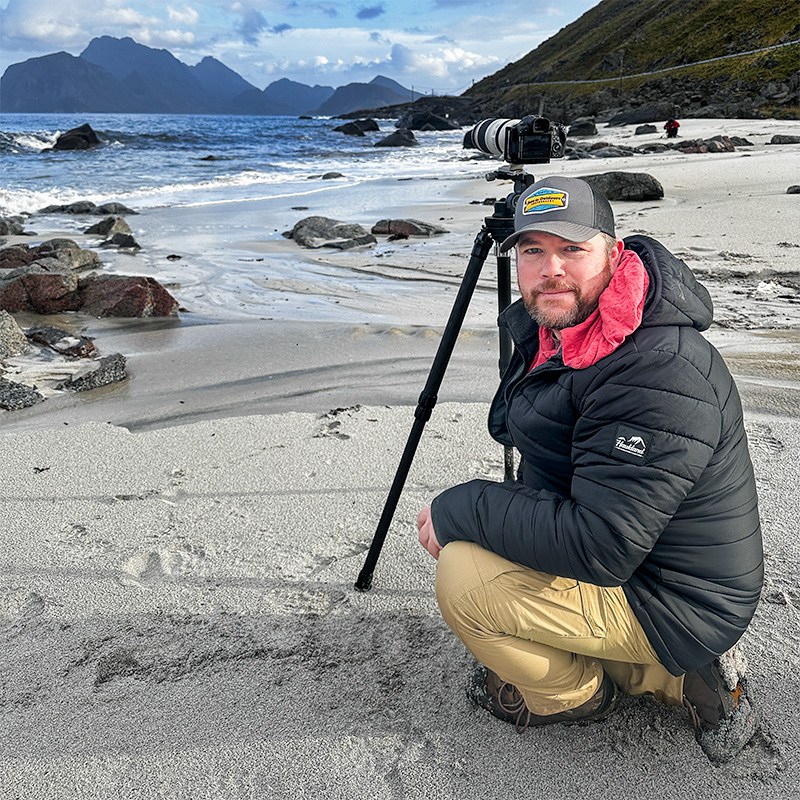
My name is Michael Schultz. I was born and raised here in Alaska, and I’ve been watching the northern lights for over twenty years—not as a seasonal side gig, but as someone who grew up under this sky. I run Face The Outdoors with my family, and our approach to aurora viewing is different from most operators in Fairbanks. For those who want to see the northern lights, joining a guided tour led by an experienced local greatly increases your chances and ensures you get the most out of this awe-inspiring natural event. Not because of some marketing angle, but because I built this around what actually works for seeing the aurora and having a real experience out here. Many travelers begin their Alaska adventure in Anchorage before heading north to Fairbanks for the best northern lights tours.
Here are five reasons guests consistently choose Face The Outdoors over other Fairbanks northern lights tours—and why those differences matter when you’re standing under the sky at 1 a.m. in the Interior Alaska cold. Be sure to plan your visit to Fairbanks during peak aurora season for the best chance to see the northern lights at their brightest.
Discovering Aurora Borealis Tours
Why Fairbanks is Ideal for Aurora Viewing
Fairbanks, Alaska, holds something extraordinary beneath its winter skies—the aurora borealis in its most vivid, reliable form. As one of the most amazing phenomena on earth, the aurora is positioned directly under the auroral oval in this northern city, offering encounters with the dancing lights that feel almost unreal when you’re standing there, breath crystallizing in sub-zero air, watching green curtains ripple across star-drunk darkness.
Guided Aurora Borealis Tours in Fairbanks
For those drawn to witness these celestial displays, joining a guided Aurora Borealis tour in Fairbanks makes profound sense. Alaska’s weather shifts without warning, and finding clear skies beyond the city’s glow requires knowledge that only comes from years of reading this landscape.
A thoughtfully planned Fairbanks aurora expedition unfolds under the guidance of seasoned local experts—individuals who read weather patterns like ancient scripts and know precisely where pale light cuts through northern darkness. Departures happen in late evening hours, between 8 and 11 p.m., returning as dawn threatens the horizon. The rhythm depends entirely on seasonal shifts and aurora intensity. Before you venture into that vast night, expect a detailed briefing call. Pickup times. Driving distances through snow-muffled forests. Weather conditions that change like moods. What layers will keep you warm while you wait. Hot drinks. Heated transportation. Expert guidance that transforms a cold night into something approaching magic.
Winter Activities to Complement Your Aurora Experience
These expeditions reach beyond simple aurora chasing into Alaska’s winter soul. Dog sledding through snow-heavy spruce forests. Ice fishing on frozen lakes where silence feels tangible. Soaking in the legendary Chena Hot Springs, where mineral-rich water steams against frigid air. Some journeys push north toward the Arctic Circle, revealing landscapes so remote they feel prehistoric. Whether you’ve chased aurora before or you’re discovering Alaska’s winter depths for the first time, these guided aurora tour experiences connect you with both the lights and the land that births them.
Aurora Photography Tips and Education
Photography becomes inevitable. Capturing aurora light proves challenging—the way it moves, shifts, vanishes before your settings adjust. Most expeditions include basic instruction, techniques for translating what your eyes witness into aurora photographs that hold meaning. But the real education comes from learning the science behind these displays, the history indigenous peoples have woven around them, the way solar winds become visible poetry across northern skies.
Sustainability and Preserving the Night Sky
Sustainability matters here, in ways that extend beyond simple environmental consciousness. Many expedition companies now encourage you to bring a reusable water bottle and eliminate single-use plastics where possible. This isn’t just environmental theater—it’s recognition that the pristine darkness required for aurora viewing must be preserved. These northern landscapes must remain wild. Untouched. Ready for the next generation of travelers who need to stand beneath these lights and feel their world expand.
When to Visit for the Best Aurora Viewing
Late August through April creates the aurora window in Fairbanks. Peak activity clusters around the equinoxes—September and March—when solar activity aligns with seasonal darkness. Understanding the best time to see the aurora borealis helps you choose dates with the highest odds of clear, dark skies. Planning ahead becomes essential. Book early. Pack serious layers: hat, gloves, scarf, insulation that matters when temperatures drop toward hostile. Prepare for cold that bites, weather that changes direction without consultation. The aurora remains wild, unpredictable, never guaranteed. But joining an expedition led by local experts who understand this landscape maximizes your chances of witnessing what can only be called natural magic.
Local Culture and Attractions in Fairbanks
Fairbanks itself pulses with authentic northern character—museums holding frontier stories, local events that celebrate winter’s harsh beauty, winter sports that embrace the cold rather than merely survive it. The famous Chena Hot Springs. Whether you seek adventure, cultural depth, or simply the profound experience of standing small beneath lights that dance without music, an aurora expedition in Fairbanks delivers something real. With expert guides who know this land intimately, activities that connect you to Alaska’s winter essence, and genuine commitment to preserving what makes this place special, Fairbanks offers encounters with the aurora borealis that lodge themselves permanently in memory, especially when you understand the best places to see the aurora in Alaska.
Quick Summary: Why Face The Outdoors Stands Out
- Private aurora viewing lodge deep in Alaska’s interior with virtually zero light pollution—far beyond the 15–20 minute radius from Fairbanks that most operators use.
- Lodge-plus-chase hybrid model: warm home base on clear nights, mobile sky-chasing when clouds roll in. No other lodge-based tour in Fairbanks offers both.
- Owner-operated by a native Alaskan with 20+ years of aurora experience. Michael guides every tour personally—no rotating seasonal staff.
- Maximum 10 guests per tour. Complimentary aurora portraits, hot drinks, snacks, and help with your phone or camera if you want it.
- Aurora Commitment: if no aurora is visible during your tour, join another night free of charge during your Fairbanks trip.
- Convenient hotel pick-up and drop-off available for all guests, or coordination with local hotels to ensure a seamless experience.
1. A Private Lodge Deep in Alaska’s Interior — Not 15 Minutes From Downtown
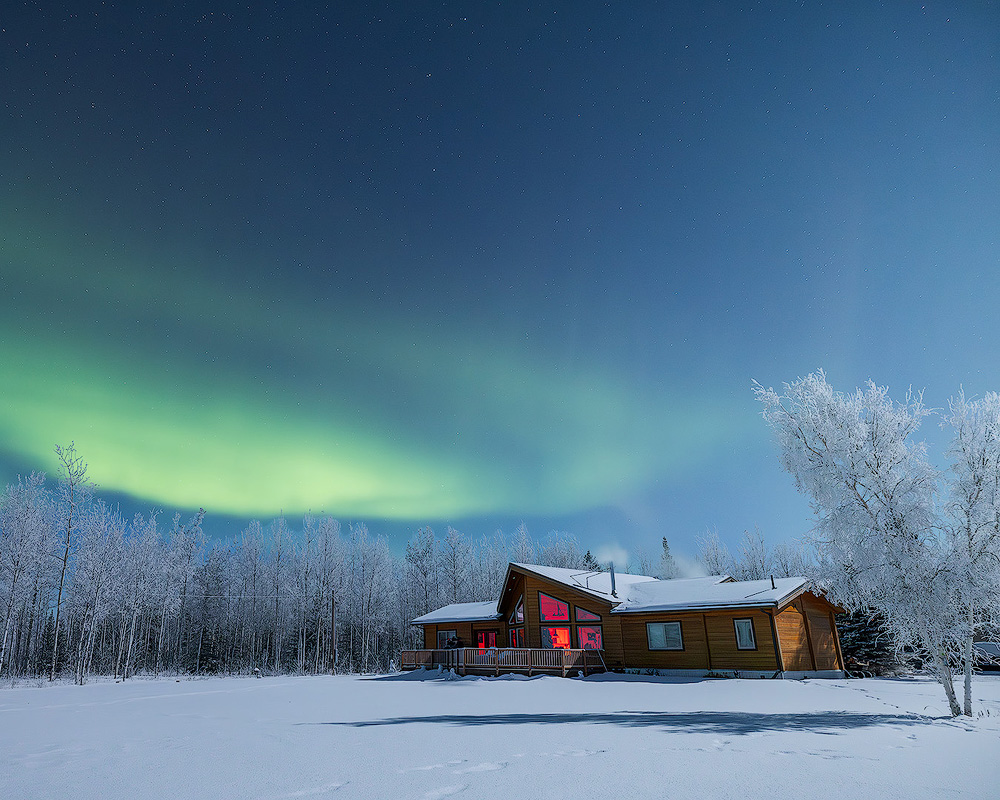
Our private aurora viewing lodge is located deep in Alaska’s interior, far from city lights and crowds. This remote setting offers pristine dark skies for optimal Northern Lights photography and an immersive wilderness experience, similar to other best places to see the aurora borealis in Interior Alaska. Driving distance from Fairbanks is a key factor in selecting the optimal location for aurora viewing, allowing us to maximize your chances of seeing the Northern Lights away from city light pollution.
While many best northern lights tour Fairbanks options operate within the greater Fairbanks area—selecting viewing locations based on weather and aurora forecasts—our lodge’s exclusive location ensures you’re surrounded by untouched wilderness, away from the typical tour routes and light pollution.
How Far From Fairbanks Should an Aurora Tour Go?
This is where most people don’t realize how big the differences are between Fairbanks aurora tours. Some operators drive 15 to 20 minutes from downtown and call it a viewing location. At that distance, you’re still within the light pollution footprint of a city of over 30,000 people. Fairbanks isn’t huge, but its glow is enough to wash out faint aurora arcs for miles in every direction.
Our lodge sits deep in Alaska’s interior—deep enough into the interior that city light disappears entirely. And it’s not a rented venue or a third-party facility. It’s our actual home. We live here, under some of the darkest skies in the state, directly beneath the auroral oval. Each night’s tour location is carefully selected based on driving distance, current weather conditions, and aurora forecasts to maximize your chances of witnessing the best northern lights displays.
According to Face The Outdoors, the difference between a pullout on the outskirts of Fairbanks and a location deep in Alaska’s interior isn’t incremental—it’s the difference between squinting at a dim green smudge and watching vivid curtains of color fill the sky overhead.
The lodge itself is set up for comfort. Couches, large windows for watching from inside, a clean bathroom, hot drinks, snacks—all the things that matter when you’re spending 6 to 8 hours waiting for the aurora to peak. You can step outside for the full experience or stay warm and watch through the windows. Your call, and it’s these kinds of aurora viewing lodge tour highlights that make the long night both comfortable and memorable.
2. The Only Lodge-Plus-Chase Model in Fairbanks
What Happens When Clouds Roll In on Your Northern Lights Tour?
Alaska weather doesn’t always cooperate. A sky that was wide open at 9 p.m. can sock in by 11. Cloud cover is the one factor that will shut down an aurora night completely—no amount of geomagnetic activity matters if you can’t see the sky. Cloudy skies are a major challenge for Northern Lights viewing, as even the most active aurora displays are hidden from sight when clouds roll in.
This is where the Fairbanks aurora tour landscape splits into two camps, and neither one is ideal on its own. Fixed-location tours and static lodges have no option if clouds roll in. The night is just over. Chase-only bus and van tours are always moving, never settled, and can burn half the night driving between mediocre roadside stops without a warm place to regroup.
Face The Outdoors operates differently. Our lodge is home base on clear nights. But if clouds move in, we become mobile aurora chasers—reading real-time space weather and local forecasts, identifying where cloud cover is breaking, and driving to that opening using the same principles outlined in our best northern lights forecast in Alaska guide. No other lodge-based tour in Fairbanks offers this.
You get the comfort of a private lodge and the flexibility of a chase tour in one night. That’s not marketing language—that’s how we actually run every single tour.
3. Born and Raised in Alaska — Not a Seasonal Guide Learning on the Job
Michael’s deep roots in Alaska and years of guiding experience mean you benefit from real-time interpretation of space weather data and local conditions. He closely monitors aurora strength—using up-to-date forecasts and technology to assess the intensity and likelihood of Northern Lights activity—so you’re always positioned at the right place, on the best nights, for optimal viewing. This expertise ensures your best chance to witness a vibrant aurora display and reflects the philosophy outlined on our About Face The Outdoors page.
Does It Matter Who Your Aurora Guide Is in Fairbanks?
More than most people realize. There’s no certification or licensing requirement for aurora tour guides in Alaska. Someone could arrive in Fairbanks last month, read a few online articles about KP indexes, and start advertising themselves as an expert aurora guide this week. It happens more often than you’d think.
I was born and raised in Alaska. The northern lights have been part of my life for as long as I can remember. Twenty-plus years of watching and studying aurora behavior under Interior Alaska’s skies—not because it’s a business opportunity, but because it’s just what we do out here.
That experience shows up in real ways during your tour. I know how to interpret real-time space weather data from NOAA’s Space Weather Prediction Center. I understand the difference between aurora forecasts and nowcasts, and why specific IMF orientations matter more than just high KP numbers, all of which we break down further in our guide to the best northern lights forecast in Alaska. I know how local atmospheric conditions in Interior Alaska interact with geomagnetic activity. And I know the roads, the weather patterns, and exactly where to go when conditions shift.
Face The Outdoors was recommended by National Geographic as a premier aurora tour option in the Fairbanks area. That recognition came from doing this the right way, consistently, for years.
Some larger tour companies rotate through multiple guides, and the quality of your experience depends on which one you get that night. At Face The Outdoors, I personally guide every tour. You’re not getting a random assignment. You’re getting the person who built this.
4. Maximum 10 Guests — A Personal Experience, Not a Crowd
Are Small Group Northern Lights Tours Worth It?
If you’ve read reviews from guests who booked large, heavily marketed tours in Fairbanks, you’ll notice a pattern. The logistics of moving a crowd kept them from being in the right place at the right time. Packed vans, multiple vehicles, groups of 30 or 40 or 60 people—the experience starts to feel more like event management than aurora viewing, which is why it’s worth asking whether you need a tour to see the northern lights in Fairbanks and what kind of tour actually serves you best.
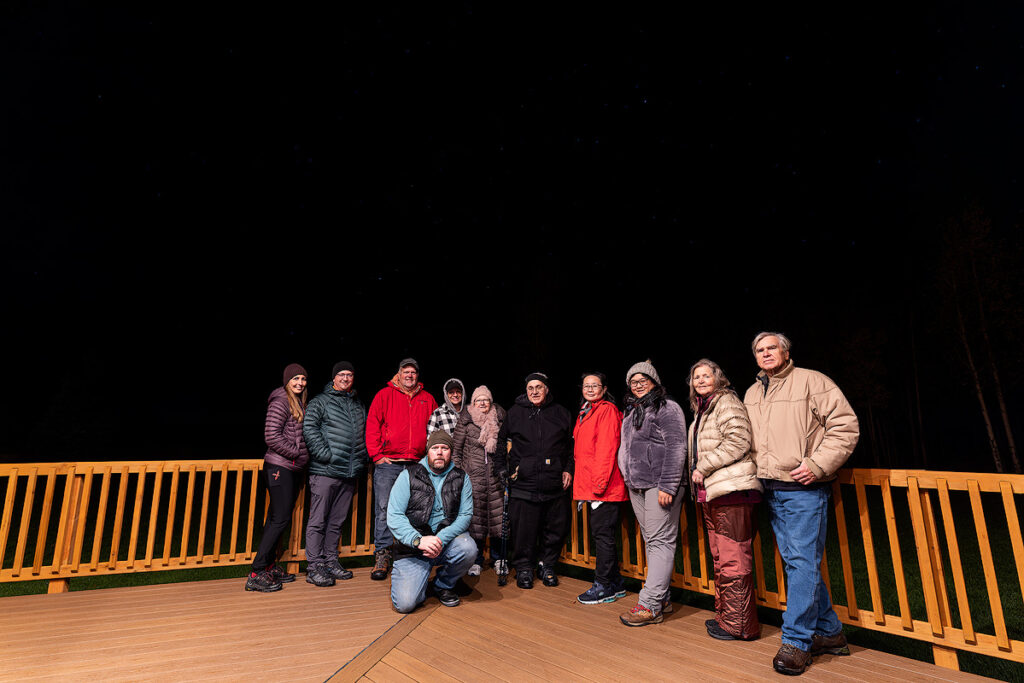
We cap every tour at 10 guests. That’s not a suggestion—it’s a hard limit. With a small group, I have time for everyone. Whether you want to learn about the science behind what you’re seeing, just take it in quietly with someone you love, or get help capturing it on your phone—that attention is possible because we’re not herding a crowd.
You don’t need to be a photographer to enjoy this tour. Most of our guests aren’t. They’re couples, families, solo travelers, people who just want to stand under the sky and watch. That’s what this is really about. The aurora is something you experience first with your eyes—the cameras are secondary.
That said, every tour includes complimentary aurora portraits—photos of you and your group with the northern lights overhead. These aren’t upsells or add-ons you find out about after arrival. They’re part of the experience. We also provide photographic evidence of the northern lights as part of your tour, ensuring you have proof of your aurora experience. And if you do want help getting your own shots, whether on a phone or a dedicated camera, I’m happy to walk you through it as part of our best way to see the northern lights in Alaska tours.
Not gonna lie—some tour companies treat aurora photos like amusement park pictures. They take them, show you thumbnails, and then charge you to actually receive them. That’s not how we operate.
5. Our Aurora Commitment — We Stand Behind Your Experience
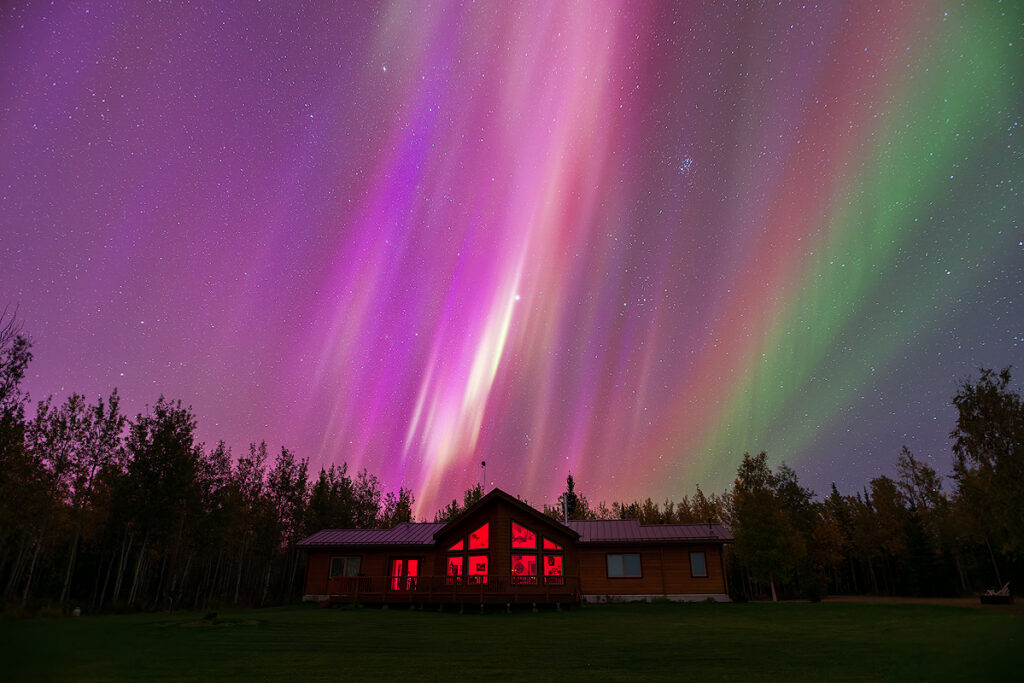
Our prime location near Fairbanks puts you in the heart of Alaska’s aurora zone, and our mobile chasing capability means we can adapt to changing conditions. Each night’s tour location is carefully selected based on up-to-date weather and aurora forecasts, ensuring you have the best possible chance to witness the Northern Lights. Tours generally depart in the evening, timed to maximize your opportunity to see the aurora at its peak.
While sightings are never guaranteed, our success rate is among the highest in the region. Booking several nights greatly reduces the chance you’ll miss the northern lights, as each additional night increases your odds of experiencing a spectacular aurora display—and aligns with our guidance on how many nights for northern lights in Fairbanks.
What If the Northern Lights Don’t Show Up on My Tour?
Face The Outdoors offers an Aurora Commitment: if no aurora sighting is observed during your tour—either visually or by camera—you can join another night free of charge during your Fairbanks trip, subject to availability. This policy is possible because of our prime location under the auroral oval, our mobile chasing capability, and over two decades of experience finding the lights.
That’s a genuine guarantee backed by a high success rate—not a marketing gimmick. We also offer free rescheduling within 12 months, we never cancel tours (we run even with one guest), and if severe weather forces a cancellation on our end, you get a full refund. No questions.
Compare that to operators with strict no-cancellation, no-refund policies—even when weather events beyond anyone’s control disrupt travel plans. Or operators that offer rebooking only at their discretion with a 30-day window. Our policy exists because we’re confident in our approach and we want you to feel that confidence too.
Booking 3 or more nights gives you approximately a 90% success rate of seeing the aurora with us. That widely cited number from Explore Fairbanks is accurate for seeing some aurora over three clear nights—but “some aurora” can mean a barely-visible pale green band your camera registers but your eye struggles to see. If you want the kind of display that stops you in your tracks, consider five to seven nights. That’s what I quietly recommend to friends and family.
What To Know Before You Book
Choosing a northern lights tour in Fairbanks comes down to a few things: how far from the city are they actually taking you, what happens when the weather changes, who is guiding you, how many people are in the group, and what happens if the aurora doesn’t cooperate.
For the best northern lights viewing in Fairbanks, plan your trip between fall and April, with November and February being especially prime months. The aurora season starts in the fall and continues through the snowy winter, and mid-moon phases are ideal for clear skies and minimal moonlight interference. Unique accommodations like Borealis Basecamp, located near Fairbanks, offer immersive aurora experiences with luxury igloos and aurora-viewing cubes. During the snowy months, popular winter activities such as dog mushing can be combined with northern lights tours for a true Alaskan adventure, and resources like our ultimate guide to your northern lights vacation in Alaska can help you tie all the pieces together.
We put together a free Aurora Viewing Checklist—15 things to know before your first night under the northern lights. What to wear for -20°F to -40°F conditions, how to read KP index and solar wind forecasts, phone and camera settings for aurora photos, and what to look for when comparing tours. You’ll also find deeper trip-planning articles and stories on our Face The Outdoors aurora blog if you want to dig further into the details.
If you have questions about booking or what to expect, check our Ultimate Guide to Northern Lights Tour Alaska FAQs or reach out directly. We’re happy to help you plan.