
Witnessing the Northern Lights of Alaska is a bucket-list experience for countless travelers, a celestial ballet of light and color that dances across the polar skies. This ethereal phenomenon, also known as the aurora borealis, is a powerful reminder of our planet’s connection to the cosmos. The aurora makes vivid visual displays in the night sky, producing shimmering curtains, arcs, and bursts of color as charged solar particles interact with Earth’s magnetic field and atmosphere.
For those in the United States, there is no better stage for this spectacle than Alaska. The state’s vast wilderness, northern latitude, and long winter nights create the perfect conditions for an unforgettable show.
However, simply arriving in Alaska isn’t a guarantee of seeing the lights. A successful trip requires planning, knowledge, and a bit of luck. The key lies in understanding where to go, when to go, and how to prepare for the adventure. This guide will be your complete resource. It explains the science behind the aurora, shows the best places to see it, and also gives important tips to help you see one of nature’s most amazing shows.
When Is The Best Time To See Aurora In Alaska?
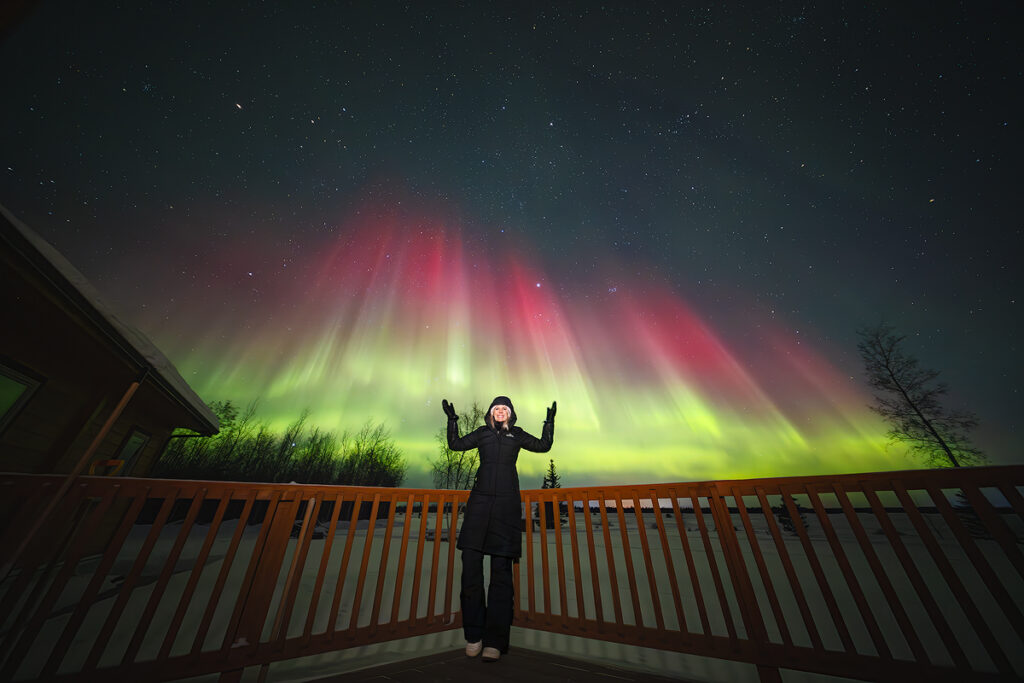
Timing is everything when it comes to aurora viewing. The primary season in Alaska runs from late August to mid-April, a period defined by the return of long, dark nights essential for spotting the lights.The aurora is active all year. However, during the summer months, Alaska’s sun causes constant daylight, making the aurora invisible during that time.
The most reliable viewing window is often between 10 PM and 2 AM, when the sky is at its darkest.
While spectacular displays can happen anytime during the night, centering your efforts around midnight generally yields the best results. Focusing on these hours is your best bet for seeing the aurora. For an added edge, plan your trip during the new moon phase to minimize lunar brightness and maximize the contrast of the aurora against the sky. If witnessing vibrant colors is a priority, consider planning your visit when there is some moonlight, as the additional light can help your eyes perceive colors better in the dark.
Embrace the moon phases in your planning; many aurora enthusiasts appreciate capturing the Northern Lights when the moon is shining. Many fans say the weeks around the spring and fall equinoxes are times of more geomagnetic activity. This can cause more frequent and stronger auroras, making late March and late September particularly promising periods.
Space Weather
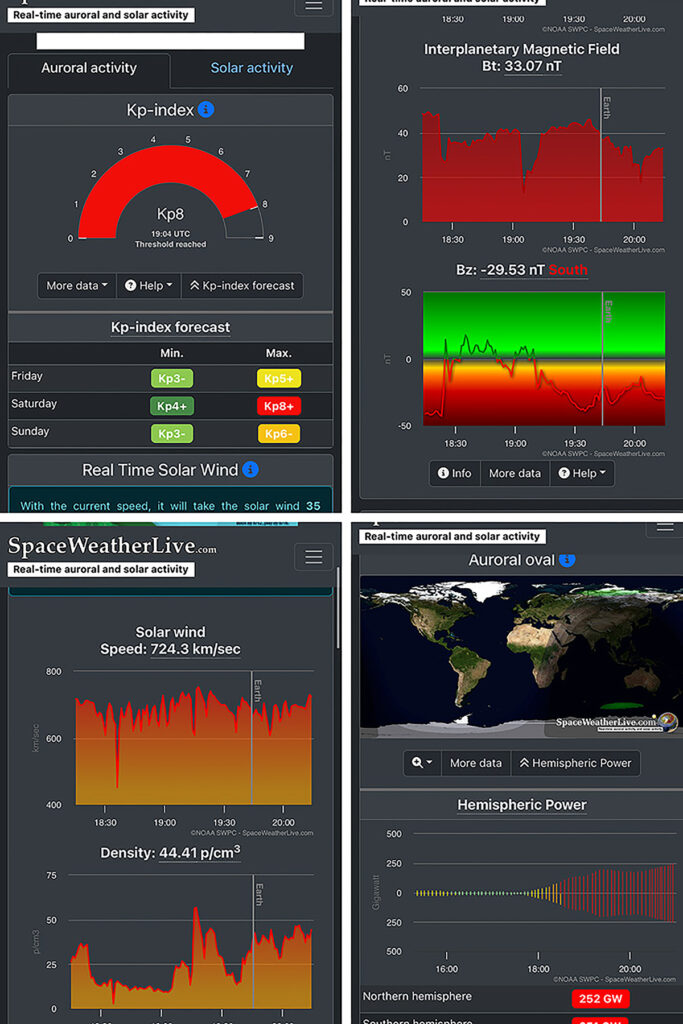
To truly understand the best time to see the lights, however, one must look beyond the calendar and into the science of space weather. The aurora borealis is the result of a cosmic collision. The sun constantly emits a stream of electrically charged particles known as the solar wind. During periods of high solar activity, events like solar flares or coronal mass ejections can send massive clouds of these particles hurtling toward Earth. When this solar wind interacts with our earth’s magnetic field, the particles are channeled toward the geomagnetic poles. As they enter the upper atmosphere, they excite atoms of oxygen and nitrogen, causing them to glow in a brilliant array of colors.
This activity happens in a ring-shaped zone around the poles called the auroral oval. Alaska’s interior, especially near Fairbanks, lies under this oval, making it a top spot to see the aurora. To predict how strong a display might be, you need to check an Aurora forecast. These forecasts track solar events and their potential impact on Earth. Near a solar maximum—the peak of the sun’s 11-year cycle—these events become more frequent and intense, and can promise better and more frequent shows for sky-watchers.
What is the Kp Index?
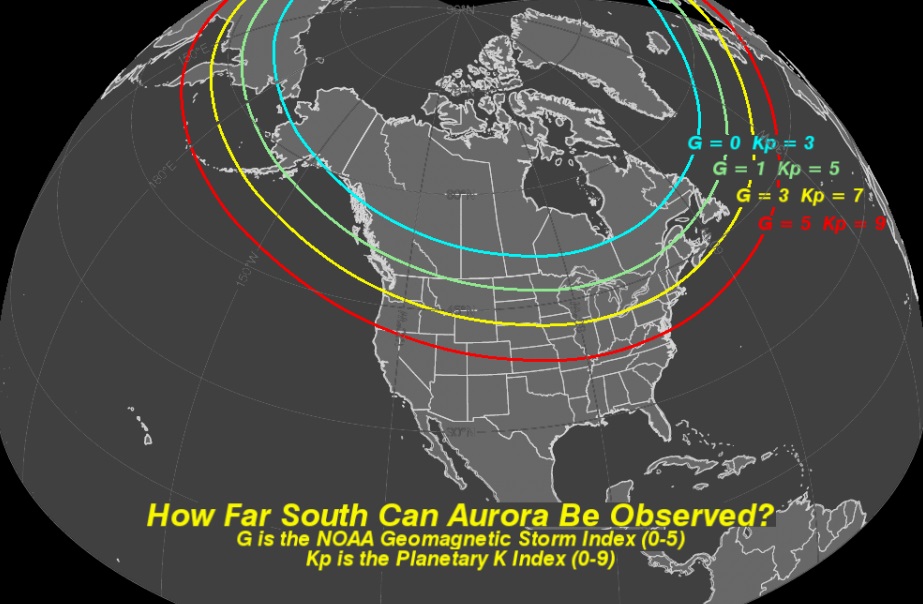
When you start checking forecasts, you’ll inevitably encounter the Kp index. This scale, ranging from 0 to 9, measures global geomagnetic activity. The Kp index is a measure of auroral activity, indicating how active or intense the aurora is likely to be. While a higher KP number (typically 4 or above) indicates a stronger geomagnetic storm and a higher likelihood of seeing the aurora farther south, it’s not the only metric to watch, especially in Alaska. Because Alaska sits directly under the auroral oval, you can often see a beautiful display even with a low Kp of 1 or 2.
For the most accurate and up-to-date information, turn to the experts. The University of Alaska Fairbanks Geophysical Institute provides a fantastic, localized Aurora forecast specifically for the state. Another indispensable resource is the National Oceanic and Atmospheric Administration Space Weather Prediction Center (NOAA SWPC), which offers detailed, real-time data on solar wind speed and other factors that influence auroral intensity. Relying on these specialized forecasts rather than just a single KP number will give you a much more nuanced and reliable prediction for your night of viewing.
Dress For The Conditions
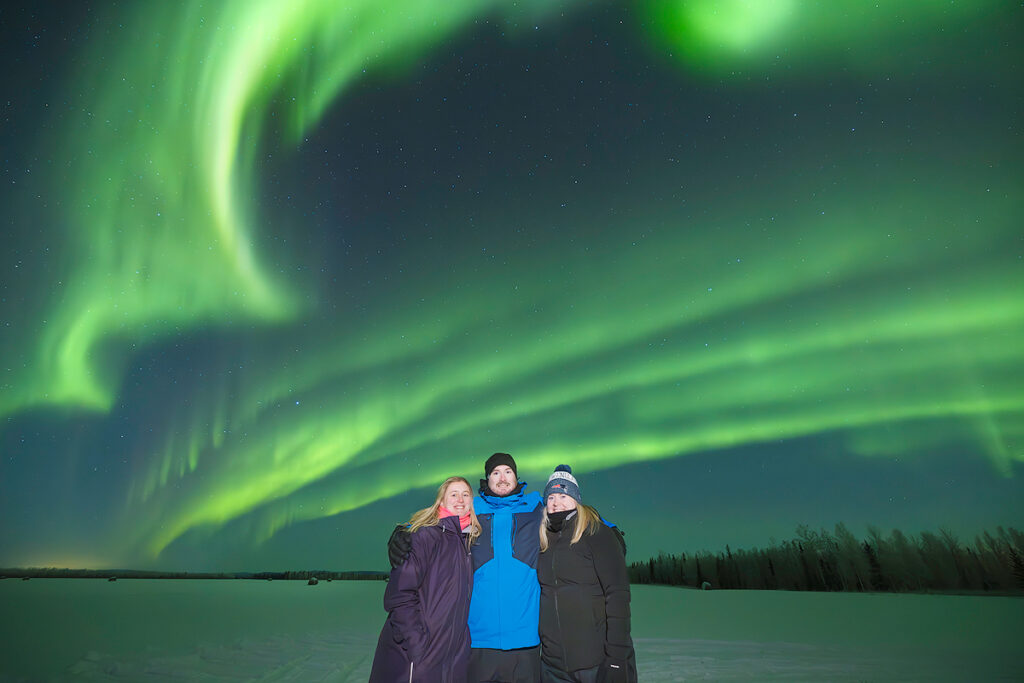
A magical aurora viewing experience can be quickly ruined by the biting cold of an Alaskan winter night. Proper attire isn’t just about comfort; it’s about safety and endurance. Waiting for hours in sub-zero temperatures requires a strategic approach to clothing and gear.
Personal Gear for Warmth and Comfort:
The golden rule is to dress in layers. This allows you to regulate your body temperature by adding or removing clothing as needed.
- Base Layer: Start with moisture-wicking thermal underwear (both top and bottom) made from merino wool or synthetic materials. Avoid cotton, as it retains moisture and will make you feel colder.
- Mid Layer: Add one or two insulating layers, such as a fleece jacket or a down vest. This layer is designed to trap body heat.
- Outer Layer: Your final layer should be a high-quality, insulated, and windproof/waterproof parka and snow pants. This shell protects you from the elements.
- Extremities: Your head, hands, and feet are most susceptible to cold. Wear a warm hat that covers your ears, insulated gloves or mittens (mittens are often warmer), and thick wool socks inside insulated, waterproof winter boots. Consider bringing chemical hand and foot warmers for an extra heat boost.
A thermos of hot beverages like cocoa or tea can also be a welcome companion, providing warmth from the inside out and making the wait more enjoyable.
Set Yourself Up For Success, Not Failure!
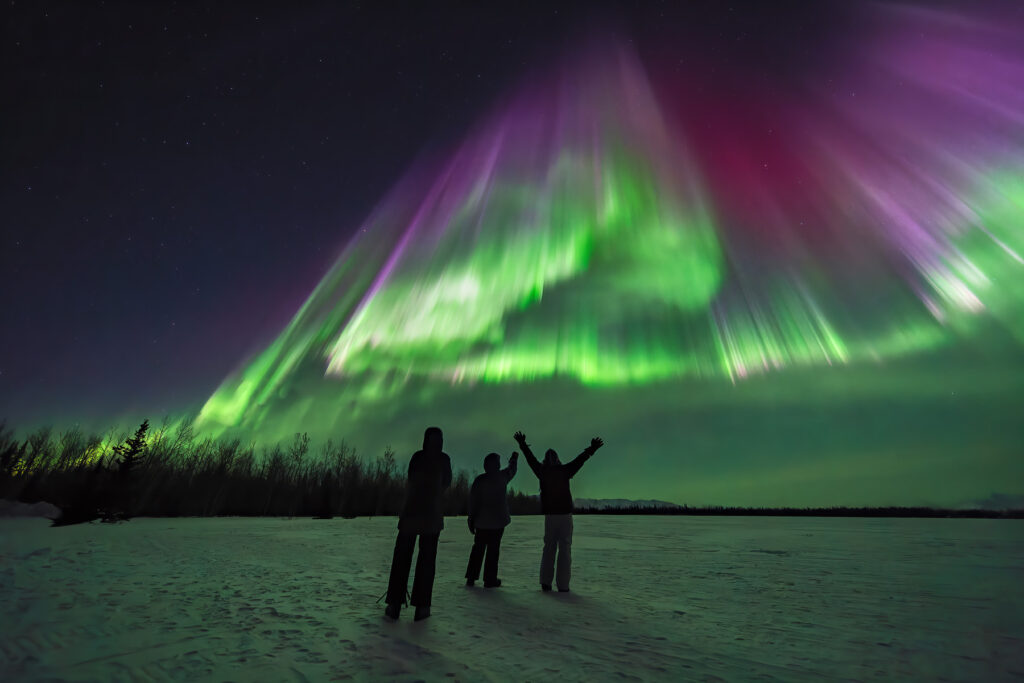
With the right timing and gear, the final piece of the puzzle is location. How to successfully see the Northern Lights in Alaska comes down to two critical factors: finding a spot under the auroral oval and ensuring you have minimal light pollution. For the best viewing, seek out areas known for optimal conditions and minimal interference. Big, open dark skies are your best friend. When choosing your spot, make sure you have a clear view of the northern horizon, as this maximizes your chances of observing the aurora in its full glory.
The Interior: The Epicenter of Aurora Viewing
For the highest probability of success, head to Alaska’s Interior. Fairbanks is known worldwide as a top place to see the aurora. This is because of its good location, many facilities, and many northern lights tours. The viewing opportunities in Fairbanks and the Interior are among the best in Alaska, often surpassing other regions due to frequent clear nights and high auroral activity. However, for the best views, you’ll want to drive a short distance out of the city to escape any residual glow.
A premier destination just a little over an hour from Fairbanks is the Face The Outdoors Aurora Viewing Lodge. The location is exceptional not only because it sits directly under the most active part of the auroral oval but also because it boasts its location has its own microclimate, often resulting in clearer skies than Fairbanks. The important thing is to get away from city lights and enjoy the darkness.
The lodge uniquely combines prime viewing conditions for the northern lights. When the sky is uncooperative, they relocate to areas with clearer vistas, while on clear nights, you enjoy the comfort of home-like amenities. This setting delivers an intimate, authentic Alaskan experience, distancing you from crowds and light pollution through small group tours. Steering clear of gimmicky tactics used by others, Face The Outdoors prioritizes your experience and overall enjoyment above all. Other locations in Alaska, such as Coldfoot, Wiseman, and Girdwood, also offer excellent aurora viewing, especially for those seeking more remote or alternative destinations.
Beyond Fairbanks, prime locations for aurora viewing include Denali, the Mat Su Valley, and the Brooks Range. While Chena Hot Springs is a popular option due to its accessibility and amenities, it’s important to note that it attracts large crowds of aurora chasers, and light pollution around the resort has increased significantly over the years—it’s not the secluded, dark-sky location it once was. For photographers seeking pristine conditions and minimal light interference, more remote locations often provide superior opportunities. Coastal areas, while sometimes challenged by dynamic weather and occasional cloud cover, can provide unique viewing experiences with dramatic contrast against the dark ocean.
Is it better to go to Fairbanks or Anchorage?
When it comes to viewing the northern lights in Alaska, both Anchorage and Fairbanks offer unique experiences, but there are some differences that might make one more appealing depending on your preferences. During solar minimum, auroral activity often shifts, with substorms occurring more frequently north of Fairbanks and in the midnight hours, which can affect the likelihood of seeing the aurora in Fairbanks compared to Anchorage.
Aurora visibility in both cities can be seen in varying degrees, depending on factors like weather conditions, solar wind, and the current phase of the solar cycle. This means that the intensity and frequency of the northern lights can differ between Anchorage and Fairbanks from night to night.
Fairbanks
- Location and Latitude: Fairbanks is located further north than Anchorage, at approximately 64 degrees latitude. This closer proximity to the Arctic Circle means it’s generally within the auroral oval, giving it a higher likelihood of northern light displays.
- Clear Skies: Fairbanks typically has clearer skies and less precipitation compared to Anchorage. This means more optimal conditions for observing the aurora borealis without cloud cover.
- Dedicated Facilities: There are several dedicated aurora viewing facilities around Fairbanks, such as the Face The Outdoors Aurora Viewing Lodge, which provides tours and amenities specifically for viewing the northern lights.
- Aurora Season: The best times to see the northern lights in Fairbanks are usually from late August to April, with prime viewing typically in the colder months when the nights are longest and skies are darkest.
Anchorage
- Accessibility: Anchorage is a larger city with more direct flight options and better overall accessibility for many travelers, which can make it a more convenient starting point.
- Cultural and City Attractions: As the largest city in Alaska, Anchorage offers a variety of cultural activities, dining, and shopping opportunities that might appeal to travelers who want a mix of urban and natural experiences.
- Viewing Conditions: While northern lights can be seen from Anchorage, it’s often necessary to travel outside the city and away from light pollution for the best experience. Places like the Glen Alps or Eklutna Lake are popular choices.
- Weather Considerations: Anchorage tends to have more precipitation and cloud cover than Fairbanks, which might limit opportunities for viewing the aurora under optimal conditions.
Aurora Viewing Etiquette
Standing beneath Alaska’s aurora-draped sky is profound—a moment when the universe reveals its hidden artistry in bands of emerald fire and violet silk. This privilege carries weight. The responsibility to preserve these pristine landscapes and ensure the aurora borealis remains accessible to those who seek its magic. Practicing thoughtful aurora viewing etiquette transforms your encounter from mere observation into stewardship, protecting the dark skies and untouched beauty that make Alaska a sanctuary for those who chase the dancing lights.
- Respect Dark Skies: The aurora demands darkness. Pure, uncompromised darkness. Bright white flashlights and glowing phone screens shatter this delicate environment, disrupting night vision and stealing the aurora’s ethereal presence from camera sensors. Choose red lights instead. Cover your beam with crimson filters. Watch how this simple act preserves the natural rhythm of darkness and allows every observer’s eyes to drink in the night sky as it was meant to be experienced.
- Keep the Peace: Aurora borealis unfolds in whispers. In the profound silence that only exists when civilization falls away. Loud conversations and jarring noises fracture this serenity, severing the connection between observer and phenomenon. Speak softly. Listen deeply. Let the aurora’s soundless dance across star-scattered darkness become the only performance that matters.
- Stay on Designated Paths: Whether you’re navigating trails around Chena Hot Springs Resort, venturing through Denali National Park’s wild expanse, or seeking solitude in the Brooks Range and Southeast Alaska’s remote corners, honor the marked routes. These boundaries protect fragile ecosystems—Arctic tundra that recovers from a single footstep over decades. Stick to established paths. Preserve wilderness.
- Follow Local Guidelines: Popular aurora viewing locations, from spots frequently shared on social media platforms and photography forums to community-managed sites throughout Interior Alaska and Southcentral Alaska, exist within frameworks of protection. Posted signs and guide instructions aren’t restrictions—they’re invitations to experience wonder responsibly. Listen. Respect. Trust that local knowledge balances safety, comfort, and optimal aurora encounters.
- Be Prepared for Weather Conditions: Alaska’s weather shifts like living light across the sky, especially during prime aurora season from late August through late April. Layer your clothing with intention. Pack hot beverages that warm from within. Check aurora forecasts from trusted sources like the Alaska Fairbanks Geophysical Institute with the same attention you’d give camera settings. Understanding KP index fluctuations and solar cycle patterns—whether solar maximum or minimum—transforms random hope into informed anticipation beneath star-filled nights.
- Respect Private Property: When aurora pursuit leads you near private land—cozy cabins or private igloos at Borealis Basecamp—seek permission before crossing boundaries. This courtesy maintains relationships with communities who share their northern home with aurora chasers. Respectful engagement keeps access open. Builds trust. Preserves welcome.
- Leave No Trace: Alaska’s wild beauty exists in its untouched state—whether you’re standing in the Alaska Range, near the Arctic Circle, or experiencing Fairbanks’ dark sky sanctuary. Pack out every fragment of your presence. Leave landscapes exactly as you found them, so future observers can witness the same breathtaking aurora displays dancing above pristine wilderness.
- Support Local Communities: Choosing local tour operators, guides, and accommodations enriches your aurora experience while sustaining the people who call these northern regions home. Community-based tourism in Interior Alaska and Southcentral Alaska preserves both vibrant culture and economic vitality in these aurora-rich territories. Your choices matter. Support the communities that guard these magnificent viewing locations.
- Learn and Share: Deepen your aurora encounter by understanding the science behind this celestial phenomenon—how solar activity and Earth’s magnetic field collaborate to create these spectacular auroral displays. Share this knowledge with fellow travelers. Spread responsible viewing practices. Transform wonder into wisdom.
Following these principles ensures the northern lights in Alaska remain magical and sustainable for every observer who makes this journey. Whether you’re soaking in Chena Hot Springs’ warmth, joining carefully guided northern lights tours, or photographing aurora from remote lodges, thoughtful etiquette creates truly transformative northern lights encounters. Authentic. Respectful. Unforgettable.
Key Factors
When it comes to viewing the northern lights, Fairbanks offers several advantages over Anchorage that make it a premier destination for aurora enthusiasts. Here are a few reasons why Fairbanks is a superior choice:
Climate and Weather Conditions: Fairbanks located in the Alaska Interior, which is known for its drier climate compared to Anchorage, which sits along the coast. The coastal location means Anchorage often experiences more moisture in the air, resulting in a higher likelihood of cloudy nights. In contrast, Fairbanks typically enjoys clearer skies, providing more optimal conditions for northern lights viewing.
Reduced Light Pollution: Anchorage, being the largest city in Alaska, has significant urban light pollution that can detract from the visibility of the auroras. In Fairbanks, the city is smaller and surrounded by vast wilderness, allowing for easier access to dark skies with minimal light interference. This significantly enhances the viewing experience and increases the chances of seeing the auroras vividly.
Proximity to Viewing Spots: In Fairbanks, you can quickly reach remote areas with minimal light pollution, often just a short drive from the city center. This is not the case in Anchorage, where escaping the city lights typically involves longer drives. The convenient access to dark sites in Fairbanks means you can spend more time enjoying the northern lights rather than traveling to get away from the lights.
Aurora Viewing Infrastructure: Fairbanks has developed a robust infrastructure to support aurora tourism, with numerous lodges, cabins, and tour operators catering specifically to northern lights seekers. Many of these places are strategically located outside the city to maximize the chances of a successful sighting.
In summary, for those whose main goal is to experience the breathtaking beauty of the northern lights, Fairbanks provides an almost unbeatable combination of clearer skies, less light pollution, and convenient access to ideal viewing locations. While Anchorage has its own unique appeal, Fairbanks undoubtedly offers a more conducive environment for witnessing one of nature’s most magnificent spectacles.
Capturing the Magic: Aurora Photography
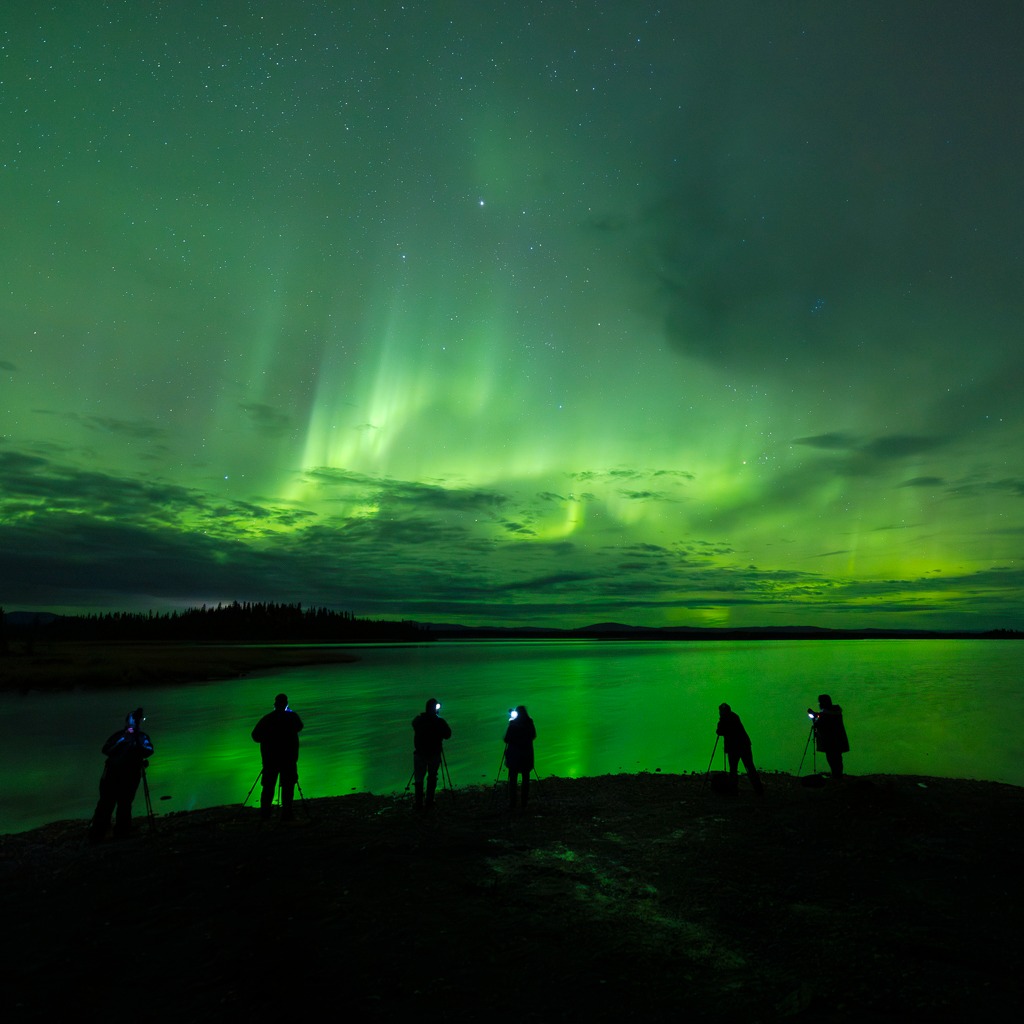
Taking photos of the aurora is rewarding, but it is also technically challenging. To capture the dancing lights, you will need a camera with manual settings, a sturdy tripod to prevent blurring during long exposures, and a wide-angle lens (f/2.8 or faster is ideal). Don’t forget extra batteries, as the cold drains them quickly, and a high-capacity SD card. Many local guide services offer specialized photography workshops and tours to help you master the settings and find the best compositions. Learn how to photograph the northern lights.
Be sure to scout your location during daylight hours to plan your foreground and composition. Interesting foreground elements, such as trees, mountains, or even a cabin, can add depth and scale to your images, making them more compelling.
When setting up for a shot, begin by setting your camera to manual mode and adjusting the ISO to a high value, such as 1600 or more, to capture more light. Pair this with a long exposure time—typically between 5 to 30 seconds—depending on the brightness of the aurora and ambient light conditions. Remember to focus manually; autofocus can struggle in low-light conditions. A helpful trick is to focus on a distant bright star or the moon, then switch back to manual focus to lock it in place.
Another important aspect is the white balance. While auto white balance can work, setting it to daylight or creating a custom balance can preserve the colors of the aurora more accurately. Experiment with your settings, review your shots often, and adjust as necessary to capture the best possible images.
Lastly, dress warmly and bring hand warmers; you’ll be standing still for extended periods, and it’s easy to get cold. Having a remote shutter release will also prevent camera shake, allowing you to capture steady shots. If you’re looking to enhance your northern lights photography skills and prefer not to worry about choosing the right location or foreground elements, consider joining a photography workshop. These workshops handle all the logistics, allowing you to simply show up and focus on honing your techniques and capturing stunning aurora images.
Conclusion
The quest to see the Northern Lights in Alaska is more than just a trip; it’s an adventure into the heart of the wild, governed by the rhythms of the sun and the Earth. Success hinges on a thoughtful combination of strategy and preparation. You can increase your chances of seeing the aurora by going during the dark winter months. Position yourself under the strong auroral oval in the state’s Interior. Use tools like the Aurora forecast from the Geophysical Institute.
By targeting the right locations, from the accessible areas around Fairbanks to the unique comfort of Face The Outdoors Aurora Viewing Lodge, the key is to escape the city’s light pollution and embrace the darkness. And once you’ve settled on the Interior, the last decision is who to go with — see which Fairbanks aurora tour to book, compared side by side on group size, photos, and policies.
Remember to dress for the extreme cold and, if you’re a photographer, come prepared with the right gear to capture the magic. Expect to stay at least 5-7 days to increase your odds of seeing an amazing show and if you plan carefully, you can make your dream come true.