Best Time to See Northern Lights in Alaska
Best time to see northern lights in Alaska? If you're planning a Fairbanks aurora trip, timing is the single biggest factor in whether you actually see the lights — pick the wrong window and you can fly all the way to Alaska and miss it. This guide breaks down the best months, the best hours of the night, and the conditions that decide your odds, from a native Alaskan guide who's spent a lifetime under these skies.
⚡ The Short Answer
The best time to see northern lights in Alaska — also called the aurora borealis — runs from August 20 through April 20, with the peak window between September and March. That's roughly 240 nights of aurora season each year.
Check the aurora forecast from the University of Alaska Fairbanks Geophysical Institute or NOAA before heading out — real-time predictions help you plan your viewing nights for the best conditions.
Which nights? Get the free season calendar.
Every viewable week from August 2026 through April 2027 — moon phases, dark hours, and the strongest nights to plan around, plus a 16-page field guide on reading the aurora forecast and what the lights really look like. From a native Alaskan guide. Free.
Northern Lights Season: What Each Window Looks Like
Not all months during aurora season are equal. The solar wind from the sun's corona sends charged particles toward Earth, where they interact with our planet's magnetic field to create the northern lights. Solar Cycle 25 peaked in October 2024 and is now in its declining phase, but aurora activity stays strong through 2027 — many of the cycle's most dramatic displays happen years past peak. Here's what a lifetime under Interior Alaska's skies has revealed about each window.
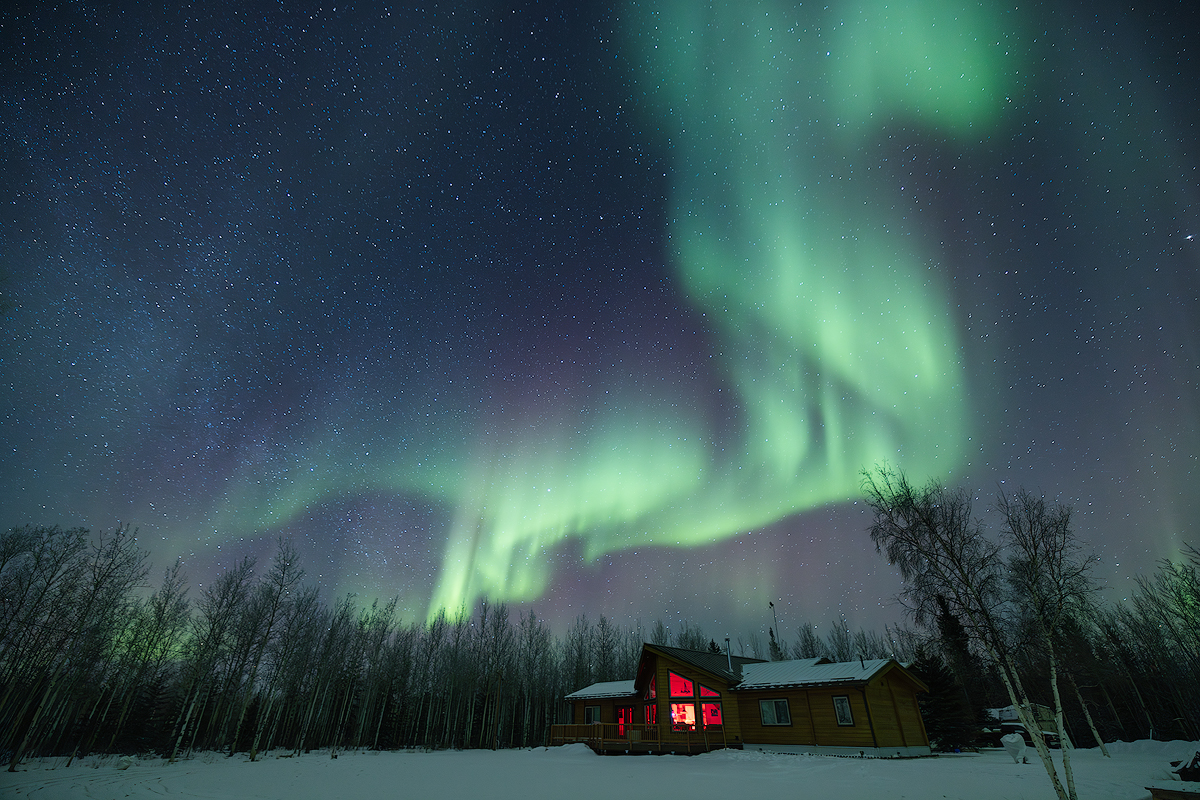
Peak Season
The window I'd pick if I only had one shot. Up to 20 hours of darkness per night around the winter solstice. Cold, dry air keeps the skies clear, and snow on the ground reflects the aurora borealis back up — the whole landscape glows green and purple.
- Longest viewing windows (9 PM–5 AM)
- Snow-covered terrain as natural reflector
- Best overall consistency of any season
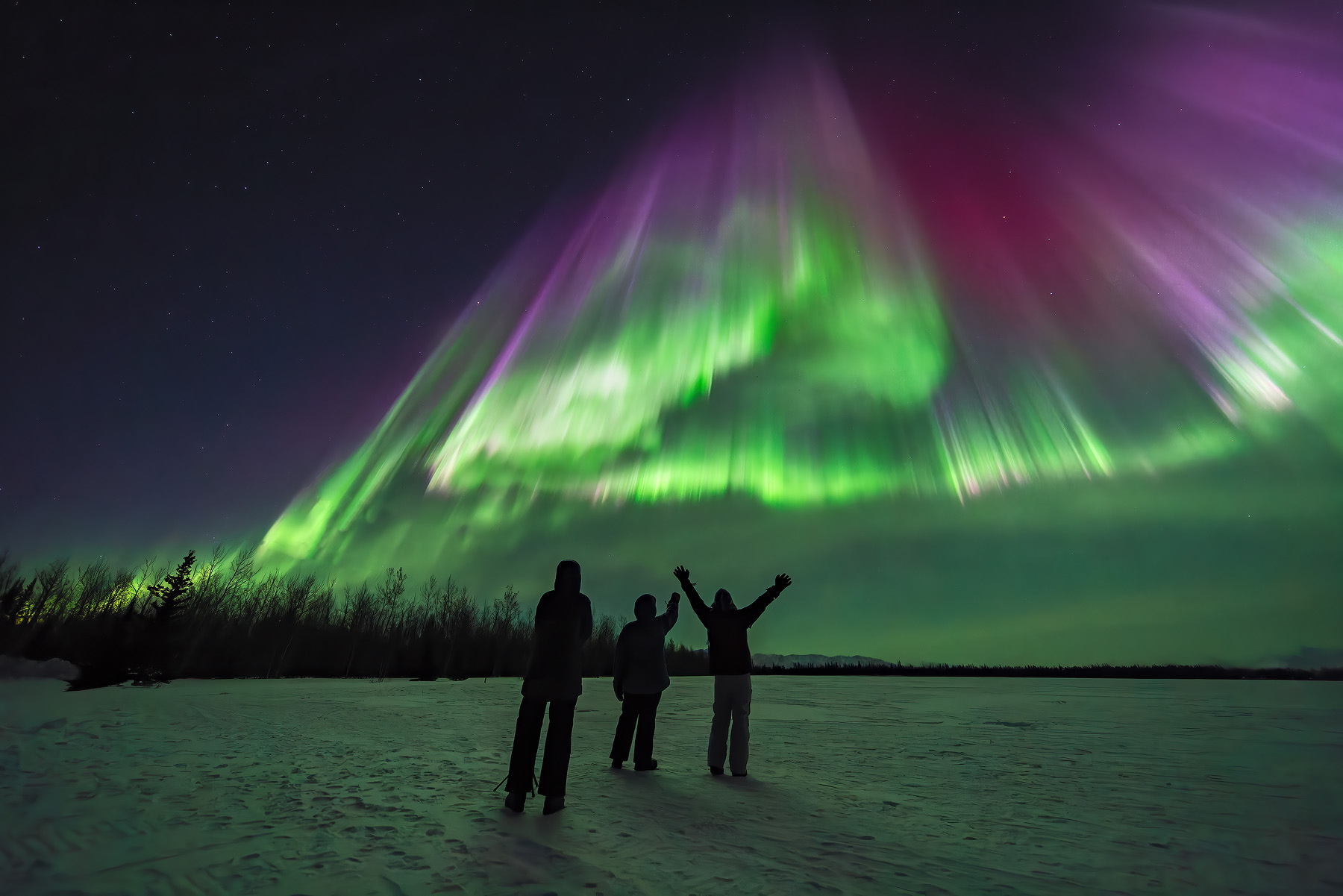
Spring Equinox
The wild cards. Earth's magnetosphere geometry around the equinox funnels more solar wind toward the poles, producing intense geomagnetic storms. March often delivers the most colorful, active displays of the entire season — the dancing lights can be extraordinary.
- Equinox-driven aurora storms
- Warmer viewing temps (0°F to 20°F)
- Often the most colorful auroral displays
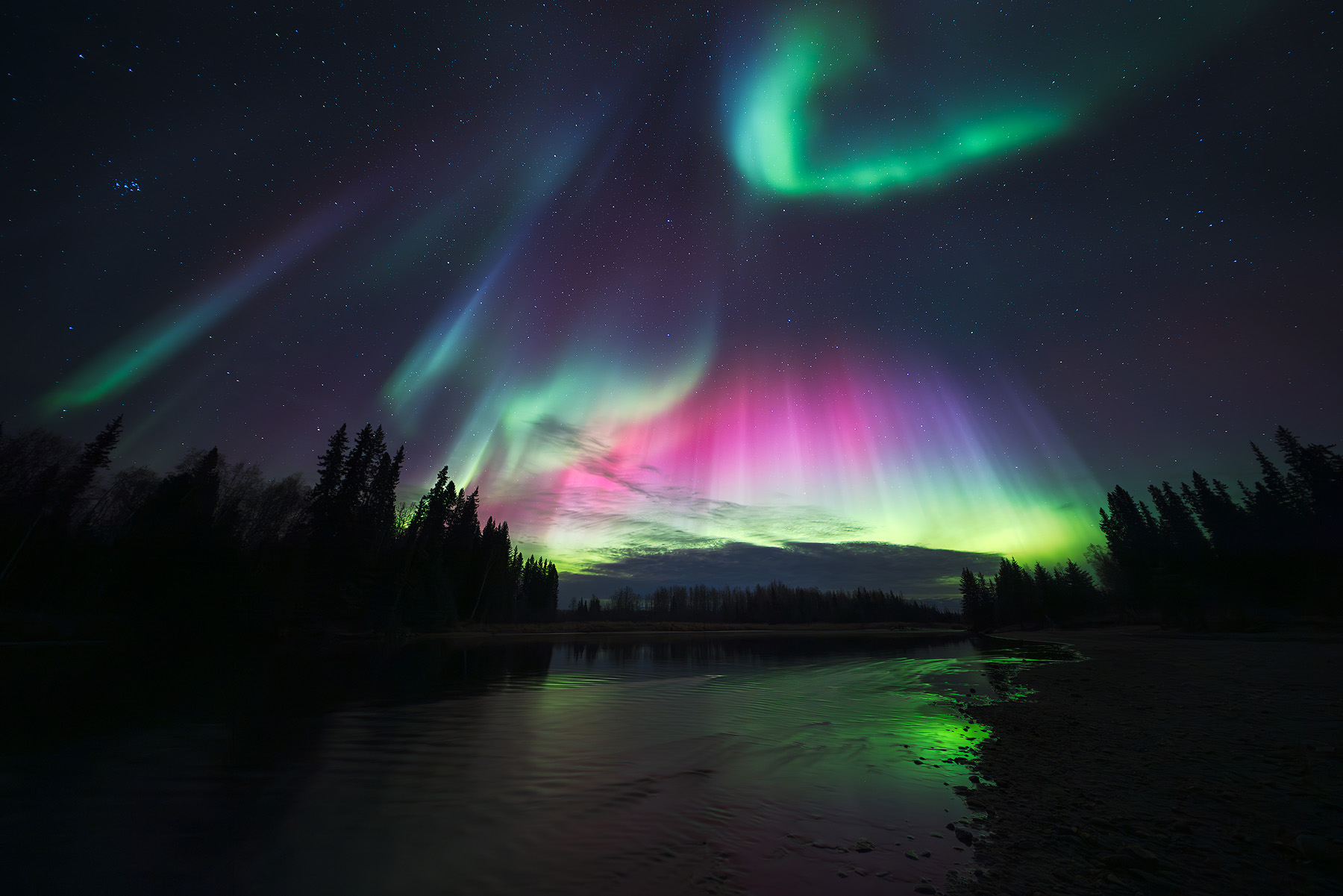
Fall Equinox
The season opener. Darkness returns in late August, and by mid-September you've got 10-12 hours of night. Temperatures are the mildest of any aurora viewing window, and fall colors combined with the northern lights create a uniquely Alaskan experience.
- Comfortable temps for first-time visitors
- Fall colors + aurora combo
- Less crowded, easier bookings
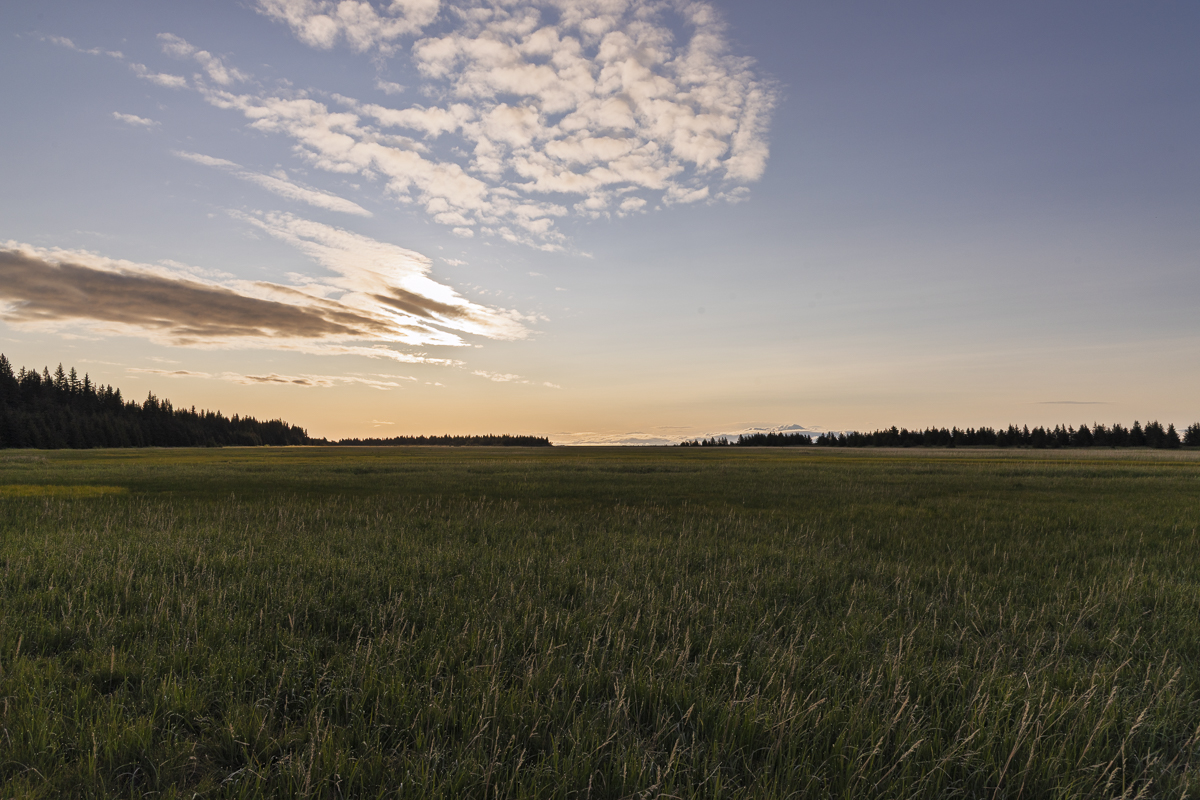
Midnight Sun (Off-Season)
No northern lights viewing possible. Fairbanks gets nearly 24 hours of daylight around the summer solstice — there simply aren't enough dark hours in the summer months to see the aurora. The aurora is still happening overhead — you just can't see it. Enjoy the midnight sun and summer activities, and come back when the dark returns on August 20.
- No aurora viewing possible
- Midnight sun adventures instead
- Plan ahead for aurora season
Best Time to See Northern Lights, Month by Month
As the Northern Hemisphere tilts away from the sun through the winter seasons, the daylight hours shrink and the nights lengthen — and with them, the time available for northern lights viewing. Here's the best time to see northern lights in Alaska, month by month.
Longest nights of the year — highest chances for aurora
What Actually Determines Whether You'll See the Aurora Borealis
Three factors matter. Solar activity powers the display, clear skies let you see it, and dark skies let you see it well. The aurora oval — that ring-shaped zone around the magnetic north pole — determines where the aurora appears most frequently.
Solar Activity (Kp Index)
The Kp index measures geomagnetic disturbance on a 0-9 scale. In Fairbanks, under the aurora oval, you can see the northern lights at Kp 1-2 — a rarity elsewhere. Solar Cycle 25 peaked in October 2024 but remains active through 2027, and Fairbanks's position means most clear nights are viewable regardless of cycle phase. Trust your guide's interpretation of space weather forecasts over a single app number.
Cloud Cover
You need clear skies. Even intense aurora activity is invisible through a cloud deck. Interior Alaska's continental climate produces more clear nights than coastal areas — Anchorage's maritime weather brings persistent cloud cover far more often. When clouds move in at our lodge, we use real-time weather and satellite cloud imagery to chase clear skies up to 100 miles along four highway corridors.
Light Pollution
City lights — including those from downtown Fairbanks — wash out everything but the strongest displays. Drive 30 minutes out and the difference is dramatic. Our lodge sits deep in Interior Alaska with minimal light pollution — actually zero. On a clear night the Milky Way stretches across the night sky from horizon to horizon.
Moon Phase
A new moon provides the darkest sky, making faint aurora more visible. A full moon brightens the landscape — actually useful for photography — but can wash out subtle curtains. Don't change your travel dates over moon phase. Any clear night under the aurora oval is a good night for northern lights viewing.
What Causes the Aurora Borealis
The northern lights are a natural phenomenon born on the sun. Solar wind — a stream of charged particles flowing from the sun's corona — takes roughly three days to reach Earth, which is why forecasters can only call a strong display a few days out. When those particles arrive, Earth's magnetic field funnels them toward the poles along the auroral oval, where they collide with oxygen and nitrogen in the upper atmosphere; those collisions release the light we see as the aurora.
Most of the display happens about 60 miles above Earth, though on active nights the dancing lights reach as high as 500 miles up. Oxygen gives the familiar green and occasional red; nitrogen adds the blues and purples. Intensity tracks the solar cycle: Solar Cycle 25 reached its solar maximum in October 2024 and is now in its declining phase, but global geomagnetic activity stays strong through 2027 — and because Fairbanks sits directly beneath the auroral oval, you can see the aurora here on clear nights no matter where the cycle stands. What changes in the declining phase is how far toward lower latitudes the lights push during major storms, not what Fairbanks viewers experience.
Best Time of Night to See the Northern Lights
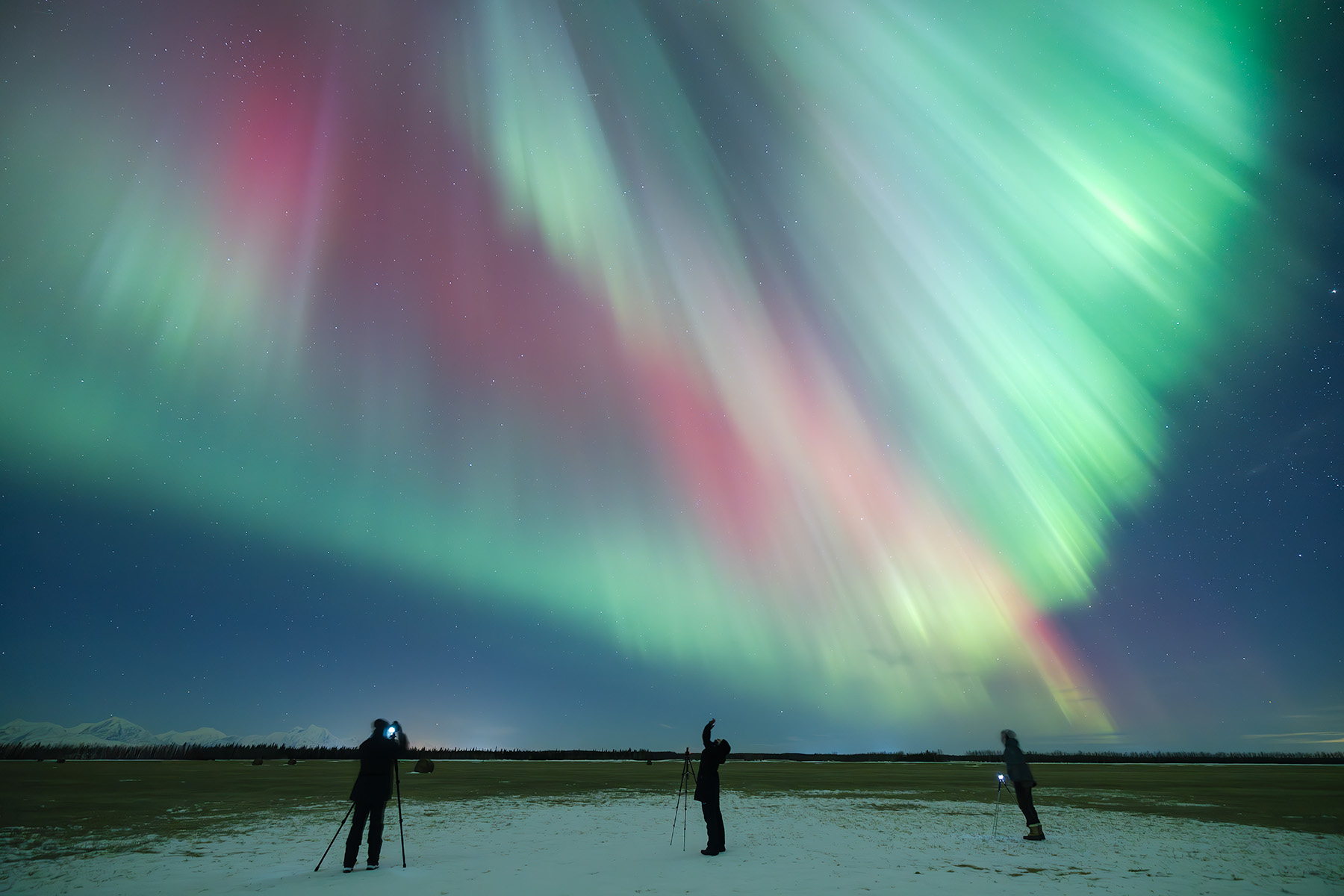
The aurora can appear anytime after dark, but consistent patterns emerge across the season. The best viewing hours — the sweet spot — are typically between 10 PM and 2 AM, with activity peaking around magnetic midnight — roughly 1:30 AM in Fairbanks.
- 8–10 PM
Early Activity
Often starts as a faint arc on the northern horizon, slowly brightening. Worth watching, but usually just the warmup.
- 10 PM–2 AM
Peak Hours
Curtains fill the sky, colors intensify. If you can only stay up for one window, this is your best shot to see the northern lights.
- 2–4 AM
Secondary Peak
Some of the most dramatic "breakup" displays happen here — the aurora suddenly exploding across the entire sky after hours of steady activity.
- 4–5 AM
Dawn Approach
Activity can continue right up to twilight on strong nights. We stay out as long as the show keeps going.
Our small-group northern lights tours start around 8 PM and return to Fairbanks by 5 AM. We monitor conditions all night — you won't miss the show.
Why Fairbanks Is the Best Place to Time Your Trip
Not every northern destination gives you the same odds. The Fairbanks area stands out for reasons that are hard to replicate elsewhere — just south of the Arctic Circle, in the prime aurora viewing zone.
Directly Under the Aurora Oval
At 65°N, Fairbanks sits beneath the ring-shaped zone where charged particles from the solar wind interact with Earth's magnetosphere. You see the northern lights here on nights when other destinations see nothing.
Continental Climate, Clear Skies
Interior Alaska is dry. Unlike coastal areas with persistent cloud cover, Fairbanks' position produces more clear nights through aurora season — critical for northern lights viewing.
240+ Nights of Aurora Season
August 20 through April 20. No other accessible destination in North America offers this length of season. Nearby Denali National Park adds mountain backdrops for those extending their trip.
National Geographic Recognized
Face The Outdoors is featured in National Geographic as a premier aurora outfitter. That credential is built on a lifetime under these skies — knowing where, when, and how to find the aurora at its best.
When to Book: Our Recommendation
Each window offers a different combination of darkness, temperature, and aurora characteristics. The aurora makes possible not only spectacular light displays but, on rare occasions, faint crackling sounds — all the result of charged solar particles interacting with Earth's atmosphere. Plan 5-7 nights for the best odds.
Early Season
One of the two shoulder seasons — comfortable temperatures, fall colors, and equinox storms. Great for first-time visitors wanting to see the northern lights without extreme cold. Plan 5-7 nights.
Peak Season
Maximum darkness, highest consistency. The winter solstice around December 21 marks the longest night — nearly 20 hours of dark sky. Your best shot at seeing the aurora. Plan 5-7 nights.
Late Season
Warming temperatures, equinox-driven geomagnetic storms, and often the most colorful auroral displays of the year. Plan 5-7 nights.
* Odds based on multi-night trips with a guide who chases clear skies. Single-night visits drop to 50-60% regardless of season.
Check Availability & Book Now →Tips From a Native Alaskan Guide
Knowing the best time to see the northern lights in Alaska is half the battle. Here's how to make the most of it once you're here.
Book Multiple Nights
Non-negotiable. Weather and solar activity are variable — spreading your visits across 5-7 nights dramatically increases your odds. You need at least five nights to push past 90%.
Get Away from City Lights
Northern lights viewing from a Fairbanks parking lot vs. a lodge with zero light pollution is the difference between a green smudge and curtains dancing horizon to horizon. Dark skies matter more than almost anything else.
Stay Up Late and Stay Warm
Peak hours are 10 PM to 2 AM, but the most dramatic displays often happen between 2-4 AM. Layer up — thermal base, insulated mid-layer, windproof shell, warm boots, insulated mittens. Our lodge has heated indoor viewing for warming up between viewings.
Trust Your Guide Over Your Phone
Forecast apps give you a Kp number. A guide who's lived here for decades knows which valleys fog over and which ridges stay clear. Local knowledge finds the lights when apps can't.
Be Patient and Flexible
The aurora operates on its own schedule. Sometimes you wait an hour, then the sky erupts. Being flexible — especially with a guide who chases clear skies — makes the difference between a good trip and an unforgettable northern lights adventure.
Frequently Asked Questions
Can you see the northern lights in summer in Fairbanks?
No. From May through July, Fairbanks experiences nearly 24 hours of daylight. The aurora is still occurring in Earth's upper atmosphere, but the sky never gets dark enough to see it. Plan your trip between August 20 and April 20.
What Kp index do I need to see the aurora in Fairbanks?
Fairbanks sits under the aurora oval, so aurora is visible here at Kp 1-2 — significantly lower than most destinations require. Higher Kp levels (3-5+) produce more intense, colorful displays, but you don't need a major geomagnetic storm to see the northern lights here.
What are the best months for northern lights in Fairbanks?
December through February for maximum darkness and consistency. September and March for equinox-driven storms that produce the most colorful aurora borealis displays. Any month from September through March is a strong choice.
What if it's cloudy during my visit?
This is exactly why we recommend 5-7 nights with multiple northern lights tour outings. We use real-time weather and satellite cloud imagery to chase clear skies up to 100 miles along four highway corridors. We never give up on your night.
Should I book a guided tour or go on my own?
A guide who monitors space weather forecasts all night and chases clear skies will find you the aurora on nights when you'd give up on your own. Aurora hunting with a knowledgeable local dramatically improves your odds. We're a National Geographic-featured aurora outfitter running small-group tours from a private lodge under the aurora oval.
How cold does it get during aurora season?
September and March are mild by Alaska standards (0°F to 30°F). Peak winter months (December-February) range from -10°F to -40°F. Our lodge has heated indoor viewing with panoramic windows — you can warm up anytime and step back out when the display picks up.
What causes the aurora borealis?
The aurora is caused by solar wind — charged particles from the sun — colliding with oxygen and nitrogen in Earth's upper atmosphere after Earth's magnetic field funnels them toward the poles. Those collisions release light, mostly green from oxygen, with reds, blues, and purples on stronger nights. Most of the display happens about 60 miles up. Because Fairbanks sits directly beneath the auroral oval, you can see it here on clear nights regardless of where the solar cycle stands.
See It for Yourself
Now you know the best time to see northern lights in Alaska, what to expect, and how to maximize your odds. The next step is picking your dates.
Call (907) 590-1567 or email michael@facetheoutdoors.com